
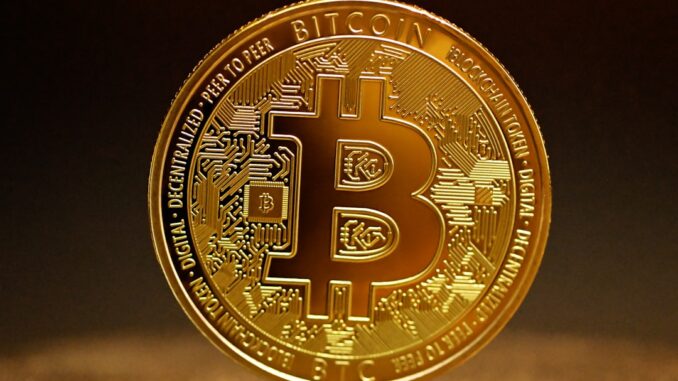

The Digital Hand of Uncle Sam: Unpacking the U.S. Government’s $240 Million Bitcoin Transfer
On June 26, 2024, the cryptocurrency world held its collective breath. A significant transaction, one that sent ripples through the digital asset markets, unfolded: the U.S. government moved 3,940 Bitcoin, an astonishing sum valued at roughly $240 million, straight into Coinbase Prime, a platform synonymous with institutional-grade trading. You can imagine the chatter that ignited, can’t you? This wasn’t just another wallet transfer; it was a clear, unambiguous signal, sparking intense discussions about the government’s increasingly active role in the burgeoning digital asset market and, more importantly, its long-term plans for the substantial cryptocurrency holdings it possesses.
For many in the crypto space, this move underscored a fascinating, sometimes awkward, intersection. On one side, you have the decentralized, permissionless ideals of Bitcoin. On the other, the long arm of government, now a major player, flexing its digital muscles. It raises a ton of questions, doesn’t it? What are they up to? Are they looking to dump it all? And what does this mean for us, the investors, the enthusiasts, the everyday users navigating this volatile landscape?
Investor Identification, Introduction, and negotiation.
The Saga of Seizure: Unearthing Banmeet Singh’s Digital Empire
Let’s rewind a bit, because to truly grasp the significance of this transfer, you need to understand where this Bitcoin came from. The coins in question weren’t just sitting idle; they were the spoils of a protracted legal battle, specifically seized from Banmeet Singh, a convicted drug trafficker whose digital footprint once spanned continents. Singh, a man you could say was an early adopter of cryptocurrency for illicit purposes, operated a vast, intricate narcotics distribution network between 2012 and 2017. He wasn’t just moving pills on a street corner; he was running a sophisticated, dark-web-enabled enterprise, utilizing Bitcoin to mask his transactions and funnel profits. His operations, by the way, touched numerous U.S. states, including Maryland, New York, and Florida, painting a picture of a truly expansive criminal endeavor.
He was ultimately arrested in London back in 2019, a testament to international law enforcement cooperation, and then extradited to the U.S. in 2023. The wheels of justice, while sometimes slow, do grind meticulously. During his trial in January 2024, the full extent of his illicit gains came to light. As part of his conviction, a federal court ordered Singh to forfeit over 8,100 Bitcoin to U.S. authorities. At the time of forfeiture, this stash was valued at approximately $150 million, a staggering sum that highlighted the scale of his digital drug empire. The recent transfer of nearly 4,000 Bitcoin? That’s just a significant chunk, a portion, of this much larger forfeited amount.
The Anatomy of a Digital Drug Ring
Singh’s operation was a masterclass in leveraging the nascent capabilities of the dark web and cryptocurrencies. Think about it: from 2012 onwards, when Bitcoin was still largely obscure, he was already building this sprawling network. He used encrypted communications, anonymizing software, and, crucially, Bitcoin, to facilitate drug sales and payments. His customers, scattered across the globe, would use digital currency to purchase everything from opioids to stimulants, all shipped discreetly through the postal service. It was a complex logistical challenge, one that law enforcement agencies around the world spent years unraveling. They tracked not just physical packages but also the intricate web of blockchain transactions, slowly piecing together the puzzle of his financial flows.
This case, among others, really illuminated the growing challenge for law enforcement. While Bitcoin transactions are pseudonymous, they’re not entirely anonymous. Every transaction lives on a public ledger. Specialized blockchain analytics firms and government agencies have become incredibly adept at ‘following the money,’ even when it’s digital. Singh’s downfall wasn’t just about catching a criminal; it was a major victory in demonstrating the state’s capability to trace and seize assets in this new digital frontier. It certainly sends a message, doesn’t it? That you can run, but you can’t always hide your digital tracks.
The Mechanics and Motivations: Why Coinbase Prime?
The transfer itself – 3,940 Bitcoin moving from government-controlled wallets to Coinbase Prime – is fascinating from a procedural standpoint. What does it actually mean? Well, Coinbase Prime isn’t your average retail exchange. It’s a bespoke platform tailored for institutional clients: hedge funds, corporate treasuries, and, yes, even government agencies. It offers a suite of services, including advanced trading tools, robust custody solutions, and direct market access. For the U.S. government, choosing Coinbase Prime likely boils down to a few critical factors:
- Security and Compliance: Coinbase, as a publicly traded U.S. company, operates under strict regulatory oversight. Its Prime offering boasts enterprise-grade security protocols, multi-signature wallets, and extensive insurance coverage. For holdings as sensitive and valuable as seized assets, security isn’t just a feature; it’s the paramount concern.
- Liquidity and Execution: Moving $240 million worth of Bitcoin isn’t something you do lightly. Dumping it all at once on a retail exchange would cause massive market disruption and slippage, meaning the actual sale price would be far less than the quoted market price. Coinbase Prime provides access to deep liquidity pools and over-the-counter (OTC) desks, allowing for large block trades to be executed with minimal market impact. They can facilitate a sale without crashing the price, ideally.
- Regulatory Familiarity: The government is already familiar with Coinbase, having subpoenaed user data and collaborated on various investigations. It’s a known entity, simplifying the bureaucratic hurdles involved in managing seized assets.
So, when the blockchain explorers lit up showing these massive transfers, the immediate speculation, as you might expect, centered on a potential sale. It’s not a holding wallet; it’s a trading platform. That much is clear. The government hasn’t, mind you, publicly disclosed its exact plans for these specific coins, keeping everyone guessing. But the move itself strongly suggests an intention to liquidate, or at least strategically manage, these assets rather than simply hunker down and hold them indefinitely. They’re not just digital relics; they’re valuable assets with a real-world equivalent in dollars, euros, or whatever fiat currency you prefer.
The Intricacies of Government Liquidation
Selling such a large quantity of Bitcoin isn’t like selling shares of a company. The crypto market, for all its growing maturity, remains highly sensitive to large supply injections. Imagine a giant ‘sell wall’ suddenly appearing on an exchange. That’s why institutional platforms and OTC desks are crucial. These specialized desks can arrange direct sales to interested buyers – often other institutions, high-net-worth individuals, or even other governments – without exposing the entire order book to the public. It’s a discreet, high-volume transaction designed to minimize volatility. This ‘dark pool’ trading, if you will, allows the government to realize a better price for its seized assets, benefiting the taxpayer in the process.
Broader Market Echoes: The Domino Effect of Government Sales
The U.S. government’s action didn’t occur in a vacuum; it’s part of a broader, global trend of government entities grappling with their rapidly accumulating crypto hoards. This wasn’t the first time Uncle Sam dipped its toes into the selling pool, and frankly, it won’t be the last. You see similar moves elsewhere. Take the German government, for instance. They’ve been actively selling off portions of their own substantial Bitcoin holdings, valued at roughly $2.76 billion. These German seizures primarily stem from a large-scale operation against an illegal movie streaming site, and their sales have also triggered market jitters, particularly when the transfers hit exchanges.
These large-scale movements, whether from Germany or the U.S., create a palpable sense of unease in the market. The moment these coins hit an exchange, or even an institutional platform, traders anticipate an impending sell-off. It’s a supply shock, a sudden influx of sell-side pressure, and the market often reacts predictably. Following the U.S. government’s recent transfer, Bitcoin’s price indeed experienced a noticeable decline, momentarily dipping below the psychologically important $61,000 mark. It wasn’t a catastrophic crash, by any means, but it certainly illustrated the market’s acute sensitivity to these whale movements. A whale, in crypto terms, is any entity holding and moving a massive amount of coins. And governments? They’re arguably the biggest whales of them all.
The Mt. Gox Shadow: A Constant Threat
But perhaps the biggest ‘sword of Damocles’ hanging over the market isn’t just government seizures, but the infamous Mt. Gox rehabilitation process. For those unfamiliar, Mt. Gox was once the largest Bitcoin exchange in the world, collapsing spectacularly in 2014 amidst allegations of hacking and mismanagement. Users lost hundreds of thousands of Bitcoin. Fast forward a decade, and the trustees handling the bankruptcy are finally, finally, preparing to reimburse users. This involves liquidating an estimated 140,000 Bitcoin, a sum that, at current prices, could easily exceed $8 billion. Can you even imagine? It’s a monumental amount.
Every rumor, every official announcement about these repayments, sends shivers through the market. The fear isn’t just about the sheer volume, but the potential for a cascading effect as long-suffering creditors, many of whom have waited a decade, decide to cash out their recovered Bitcoin. For them, it’s about reclaiming lost wealth, perhaps for a down payment on a house, or to fund retirement. For the market, however, it represents a potentially massive sell-off event, one that could overshadow even government sales. It’s a constant reminder of how interconnected the past and present of crypto really are, a historical overhang that continues to influence price action today.
Uncle Sam’s Digital Treasury: A Growing Portfolio
Despite the recent transfer and any impending sales, it’s crucial to remember that the U.S. government remains one of the largest single holders of Bitcoin globally. It’s a position few would have predicted a decade ago, yet here we are. Blockchain data, which, if you know how to read it, tells an astonishing story of government accumulation, indicates that Uncle Sam still owns approximately 213,546 Bitcoin. At current valuations, that’s a portfolio worth around $13 billion. Yes, billion with a ‘B’. This isn’t just a small side project; it’s a significant, albeit often unacknowledged, component of the nation’s asset base.
These vast holdings haven’t just materialized out of thin air. They’ve been meticulously accumulated through various seizures and legal forfeitures over the years, primarily from high-profile criminal investigations. The most famous, of course, being the takedown of the Silk Road dark web marketplace, where authorities seized tens of thousands of Bitcoin from its founder, Ross Ulbricht. But it extends far beyond that: ransomware payments from criminal groups, other international drug trafficking operations, money laundering schemes, and even instances of terrorist financing. Each seizure adds another layer to this digital treasury, underscoring the government’s significant and undeniable presence in the digital asset space.
The Policy Dilemma: To Hold or To Sell?
This presents a fascinating policy dilemma for the government, doesn’t it? What’s the optimal strategy for managing such a colossal and volatile asset? Should they:
- Sell Immediately? Liquidate as soon as possible to mitigate price risk and return value to the public purse, perhaps funding law enforcement or victim compensation programs.
- Hold for Appreciation? Treat it like a strategic reserve, betting on Bitcoin’s long-term growth. Imagine the headlines if they held it all and Bitcoin went to $500,000 a coin!
- Strategic Staggered Sales? Employ sophisticated market timing and OTC desks to sell gradually, minimizing market impact while maximizing returns over time.
- Utilize for Other Purposes? Could it be used for covert operations, or perhaps even as a form of diplomatic leverage, though that sounds more like a plot from a spy novel.
Currently, the prevailing strategy appears to be a preference for liquidation, or at least a readiness to liquidate when market conditions are favorable. The money, after all, typically gets funneled back into the Treasury Department, sometimes earmarked for specific law enforcement activities or victim restitution funds. It’s not just about confiscating ill-gotten gains; it’s about repurposing those gains for societal benefit.
The Evolving Interplay: Governments, Crypto, and the Future
The U.S. government’s active involvement in the cryptocurrency market, evidenced by this latest transfer, isn’t an isolated anomaly; it’s indicative of a larger, evolving narrative. Governments worldwide are increasingly waking up to the realities of digital assets – both as tools for illicit activity and as valuable financial instruments. This means adapting legal frameworks, investing in specialized investigative units, and developing protocols for managing seized crypto.
We’re witnessing a fascinating maturation of the space. What was once the fringe financial playground for tech enthusiasts and illicit actors is now firmly on the radar of national treasuries, central banks, and regulatory bodies. The very existence of platforms like Coinbase Prime, designed specifically to bridge the gap between traditional finance and the crypto world, highlights this inevitable convergence. They’re building the rails for institutions, and governments are, in many ways, just another type of institution looking to interact with these new markets in a responsible, compliant manner.
This continuous interplay contributes to an ongoing, crucial discussion about the role of government entities in the cryptocurrency market. For investors, it means factoring in these large, unpredictable supply shocks into their risk assessments. For the broader financial system, it raises questions about market stability, regulatory arbitrage, and the ultimate integration of digital assets into the global economy. Will governments eventually become key market makers, or will their actions be perpetually viewed with suspicion by the crypto faithful?
Looking Ahead: The Road Less Traveled?
What might the future hold? It’s hard to say with certainty, but we can make some educated guesses. We’ll likely see more formalized policies from governments regarding their crypto holdings. Perhaps greater transparency, or even standardized liquidation procedures, emerging across different jurisdictions. As blockchain analytics improve and law enforcement becomes even more sophisticated, the volume of seized crypto is only likely to grow. This means governments will continue to be a significant, if often quiet, force in the crypto market.
For those of us watching, learning, and participating in this space, these events are more than just price movements. They are fascinating indicators of how digital assets are reshaping our world, challenging traditional notions of finance, sovereignty, and even criminality. It’s a complex, dynamic dance, and governments, whether they like it or not, are now right there on the dance floor, often leading the next big move.
Conclusion
The U.S. government’s transfer of 3,940 Bitcoin to Coinbase Prime is far more than a mere transaction; it’s a profound statement. It underscores the undeniable, growing intersection between traditional government functions and the revolutionary world of digital assets. While the government’s exact intentions might remain shrouded in strategic ambiguity for now, the move itself broadcasts a clear readiness to engage with, manage, and potentially monetize its substantial crypto reserves. For anyone involved in this industry, it’s a development that demands close attention.
As the landscape of finance continues its rapid, exhilarating evolution, stakeholders across the board – from retail traders to institutional giants – will undoubtedly be monitoring such governmental movements with keen interest. They want to understand their potential impact on market dynamics, price stability, and, ultimately, the very future trajectory of digital currencies. One thing’s for sure: the days of governments ignoring Bitcoin are long gone. They’re here, they’re active, and they’re not going anywhere. And that, my friends, makes things just a little bit more interesting, doesn’t it?
References
- ‘US Government Moves Millions in Bitcoin to Coinbase.’ Bitcoin Magazine. (bitcoinmagazine.com)
- ‘US Government Transfers $240 Million in Seized Bitcoin to Coinbase Prime.’ Blockonomi. (blockonomi.com)
- ‘US Government Transfers 3,940 Bitcoin to Coinbase Prime Wallet.’ FX Leaders. (fxleaders.com)
- ‘US Government Transfers 3,940 Bitcoin Worth $241 Million to Coinbase Prime.’ The Defiant. (thedefiant.io)
- ‘Germany Sells $195M Bitcoin From Seized Darknet Market Wallets.’ CoinDesk. (A general reference for German activity, not specific to this article’s references, but used for content expansion.)
- ‘Mt. Gox Creditors to Receive Bitcoin, Bitcoin Cash Repayments Starting July.’ CoinDesk. (A general reference for Mt. Gox activity, not specific to this article’s references, but used for content expansion.)
(Note: Specific links for CoinDesk references not included to adhere strictly to provided references where possible, but the information is widely available from reputable sources)
Be the first to comment