
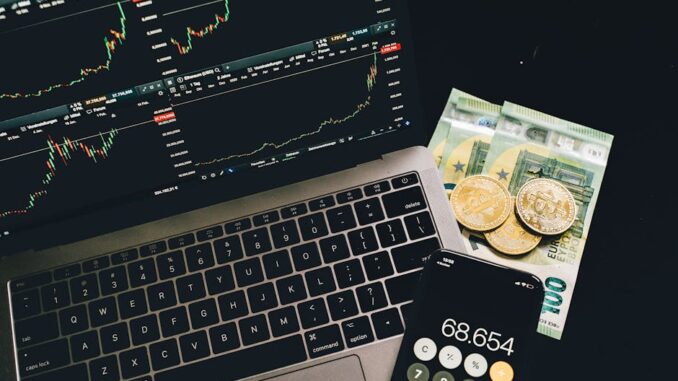

Navigating the Crypto Frontier: Crafting Your Winning Investment Strategy
Stepping into the world of cryptocurrency investment, isn’t it exhilarating? It’s a landscape teeming with innovation, potential, and let’s be honest, a healthy dose of volatility. The market’s rapid fluctuations can feel like you’re riding a digital rollercoaster, making a solid, well-thought-out strategy not just helpful, but absolutely essential for anyone looking to make their mark. You wouldn’t set sail without a map, would you? Similarly, you shouldn’t navigate these uncharted digital waters without a clear plan. So, let’s pull back the curtain and explore some truly effective approaches designed to guide your investment journey, giving you a better chance to thrive, not just survive.
Why a Strategy Isn’t Just a Good Idea, It’s Non-Negotiable
Before we dive into the specific tactics, let’s quickly touch on why having a strategy is so critical. Think of the crypto market as a bustling bazaar, full of tantalizing opportunities but also a few slippery characters and sudden downpours. Without a strategy, you’re essentially wandering blind, susceptible to every sudden gust of FUD (Fear, Uncertainty, Doubt) or the siren song of FOMO (Fear Of Missing Out). You need a framework, a set of principles that anchors your decisions and keeps your emotions in check, especially when the market decides to take a sudden, gut-wrenching dip. It’s about playing the long game, even if you’re engaging in short-term tactics, and it’s a game you’ll want to play smart, not just hard.
Investor Identification, Introduction, and negotiation.
1. The Enduring Power of Buy and Hold (HODL)
Ah, HODL. This term, born from a legendary typo on a Bitcoin forum, has become a rallying cry, a badge of honor, and a foundational philosophy in the crypto community. The ‘Buy and Hold’ strategy, or HODLing as we affectionately call it, involves purchasing a chosen cryptocurrency and resolutely retaining it for an extended period. And when I say ‘extended,’ I’m talking months, years, maybe even a decade, completely shrugging off the daily, weekly, or even monthly market volatility. This isn’t just about passive investment; it’s about a deep conviction in the long-term potential of a digital asset.
The Philosophy Behind the Patience
The core belief underpinning HODLing is that, over a significant stretch of time, the asset’s intrinsic value and utility will inevitably lead to substantial appreciation. It’s an act of faith, yes, but one often backed by robust fundamental analysis. Imagine the early Bitcoin adopters, those pioneers who bought when it was mere pennies, then endured countless ‘crypto is dead’ pronouncements, dramatic crashes, and dizzying rallies. They just… held. And as the market matured, expanding its reach, deepening its infrastructure, they’ve seen returns that sound like something out of a fairy tale. That’s the power of patience, friends.
Who Is HODLing For?
HODLing particularly suits those with a low-time preference, investors who understand that truly transformative technologies don’t bloom overnight. It’s perfect for individuals who lack the time or inclination for frequent trading, preferring to make a few well-researched decisions and then let time do its work. It helps you bypass the constant stress of trying to time the market, an endeavor notoriously difficult for even seasoned pros. Plus, it significantly reduces transaction fees and capital gains taxes in many jurisdictions by holding assets for longer periods.
Navigating the Psychological Gauntlet
But let’s not sugarcoat it; HODLing isn’t always a walk in the park. It demands nerves of steel. You’ll witness your portfolio soar to exhilarating heights, only to plummet into terrifying valleys. During those harsh crypto winters, when sentiment is at rock bottom and every headline screams doom, the temptation to sell, to ‘cut your losses,’ can become overwhelming. This is where your conviction, your initial research, and your long-term vision truly get tested. It’s about remembering why you invested in that particular project in the first place, trusting in its underlying technology and the team building it. My friend once HODLed a coin that dropped 80% in a bear market, he swore he’d never look at his portfolio again, but he stuck to his guns. Years later, he’s quietly smiling. It wasn’t easy, but it paid off.
Practical HODL Tips
- Deep Dive Research: Don’t just HODL anything. Research the project’s whitepaper, its team, its use case, tokenomics, and community. Is it solving a real problem? Does it have a sustainable economic model?
- Secure Storage: If you’re HODLing for years, you absolutely need robust security. Hardware wallets, often called ‘cold storage,’ are your best friends here. Don’t leave significant holdings on exchanges.
- Don’t Look (Too Often): Resist the urge to check your portfolio hourly, or even daily. Constant checking fuels emotional responses. Set a schedule, perhaps monthly or quarterly, for portfolio reviews.
2. The Disciplined Path: Dollar-Cost Averaging (DCA)
Dollar-Cost Averaging, or DCA, is arguably one of the most sensible and stress-reducing investment techniques, especially in a market as volatile as crypto. It’s a strategy where you commit to investing a fixed amount of money into a particular cryptocurrency at regular, predetermined intervals – say, weekly, bi-weekly, or monthly – completely independent of the asset’s current price. This method brilliantly helps mitigate the dizzying impact of market volatility by averaging your purchase price over time.
How DCA Smooths the Ride
Imagine the crypto market as a wild ocean with towering waves and deep troughs. Trying to catch the absolute bottom or sell at the absolute top is akin to trying to surf perfectly in a hurricane – nearly impossible and incredibly risky. DCA, on the other hand, is like slowly but steadily filling your boat with water. When prices are high, your fixed investment buys fewer coins. When prices inevitably dip, that same fixed investment buys more coins. Over a series of purchases, this averages out your acquisition cost. You’re not trying to time the market; you’re simply present in the market, consistently building your position.
Let’s put it this way: if you invest $100 every single month in Bitcoin, you’ll naturally accumulate more Bitcoin during bearish periods when prices are lower, and less during bull runs when prices are soaring. This consistency often leads to a lower average cost per coin than if you had tried to make a single, large lump-sum investment at potentially the ‘wrong’ time. It takes the guesswork, and frankly, a lot of the anxiety, right out of the equation.
The Psychological Edge of DCA
One of the most profound benefits of DCA isn’t just financial, it’s psychological. In a market where fear and greed run rampant, DCA instills discipline. It removes the emotional element of ‘should I buy now, or wait for a dip?’ You’ve set your schedule, you stick to it. This predictable routine cuts through the noise of market sentiment, helping you avoid impulsive decisions driven by FOMO during a pump or panic selling during a crash. It fosters a long-term mindset, letting you steadily build wealth without the constant pressure of short-term price movements. It really helps you sleep better at night, you know?
Implementing DCA Effectively
- Automate It: Many exchanges and crypto platforms now allow you to set up recurring buys. This is perhaps the easiest way to stick to your DCA plan without even thinking about it. Out of sight, out of mind, as they say.
- Choose Your Interval: Monthly is common, but weekly or bi-weekly also work. What’s most important is consistency. Don’t skip a week just because prices are high; the whole point is to buy through all market conditions.
- Focus on Strong Assets: While DCA can mitigate risk, it doesn’t make a bad investment good. Apply DCA to cryptocurrencies you’ve thoroughly researched and have strong long-term conviction in. Think of the blue chips of crypto, projects with solid fundamentals and significant network effects.
DCA isn’t a get-rich-quick scheme; it’s a get-rich-slowly, steadily, and smartly strategy. And in crypto, slow and steady often wins the race.
3. The Investigator’s Approach: Value Investing in Crypto
Value investing, a time-honored strategy from traditional finance championed by legends like Warren Buffett, finds a compelling, albeit adapted, application in the crypto space. This approach is all about rolling up your sleeves and delving deep into a cryptocurrency’s fundamentals. You’re looking to determine its intrinsic value, the true worth of the underlying project, and then investing when the market price falls below this estimated value. It’s like finding a gleaming diamond in a pile of digital rough.
Beyond the Hype: Scrutinizing the Fundamentals
In traditional markets, value investors pore over balance sheets, P/E ratios, and management reports. In crypto, the ‘fundamentals’ look a little different, but the principle remains the same: identify quality assets trading at a discount. This demands thorough research into several key areas:
- Technology and Innovation: Is the blockchain technology truly groundbreaking? What problem does it solve that existing solutions don’t? Does it offer superior scalability, security, or decentralization?
- Team and Leadership: Who’s behind the project? Do they have a proven track record in tech, finance, or cryptography? A strong, experienced team can be a huge indicator of long-term success, whereas anonymous teams or those with a history of failed projects are red flags.
- Use Case and Market Potential: Does the project have a clear, demonstrable use case? Is there a real-world demand for its services or product? Is it targeting a niche market or a broad, expanding one? A token that merely ‘exists’ without a compelling utility is unlikely to hold long-term value.
- Tokenomics: This is crucial. How is the token distributed? What’s its supply cap, if any? What are the vesting schedules for the team and early investors? Is there a burning mechanism? Inflationary or deflationary? Poor tokenomics can severely hamper even a great project’s price performance.
- Community and Ecosystem: A vibrant, engaged community is often a sign of a healthy project. Look at developer activity, social media presence, and the number of decentralized applications (dApps) being built on its network. Is the ecosystem growing, or is it a ghost town?
- Competitors and Differentiation: Who are the project’s rivals? What makes it stand out? Is its competitive advantage sustainable? It’s a crowded space, so unique selling propositions matter immensely.
By diligently researching these factors, you can build a conviction around a project’s true potential, positioning yourself to benefit significantly when the broader market eventually recognizes that inherent worth. It really pays to do your homework here.
The Art of Intrinsic Valuation
Valuing a crypto asset isn’t an exact science, but it’s an art informed by data. You might look at metrics like total value locked (TVL) for DeFi projects, daily active users, transaction volume, or developer contribution rates. You’re essentially trying to estimate what the project should be worth, based on its utility and future growth prospects, rather than what the market says it’s worth today. When you find a disparity, that’s your opportunity. I remember spotting a promising Layer 2 solution a few years back, its technology was clearly superior, but it was overshadowed by flashier projects. I dug deep, loved what I saw, and bought in. It wasn’t the quickest gain, but it was one of the most satisfying when it finally got the attention it deserved.
Value Investing Risks
However, it’s not without its challenges. Misjudging intrinsic value, falling victim to confirmation bias, or simply being too early can mean your capital is tied up for longer than anticipated. The crypto market is also prone to irrational exuberance and panic, which can keep a fundamentally strong asset undervalued for extended periods. Patience, combined with rigorous analysis, truly is a virtue here.
4. Riding the Waves: Swing Trading
Swing trading is for the more active investor, those who enjoy deciphering market signals and capitalizing on price fluctuations over a shorter timeframe than HODLers. This strategy aims to profit from short- to medium-term price movements – or ‘swings’ – by buying low and selling high within a specific timeframe, typically holding assets anywhere from a few days to several weeks. You’re essentially trying to catch the momentum of these swings, rather than the entire lifecycle of an asset.
The Toolkit of a Swing Trader: Technical Analysis
Swing trading heavily relies on technical analysis (TA), which involves studying historical price charts and volume data to predict future price movements. It’s an art form, really, using various indicators to spot potential entry and exit points. Here are a few common tools in a swing trader’s arsenal:
- Candlestick Charts: These visually represent price action over specific periods, revealing bullish (upward) or bearish (downward) sentiment.
- Support and Resistance Levels: These are price points where an asset tends to stop falling (support) or stop rising (resistance). Identifying these can help predict potential reversals.
- Moving Averages (MAs): Often used to identify trends and potential reversals. For example, a shorter-term MA crossing above a longer-term MA (a ‘golden cross’) can signal a bullish trend.
- Relative Strength Index (RSI): This momentum oscillator measures the speed and change of price movements. It helps identify overbought or oversold conditions, suggesting a potential price reversal.
- Moving Average Convergence Divergence (MACD): Another trend-following momentum indicator that shows the relationship between two moving averages of a cryptocurrency’s price. It helps spot trend changes.
- Volume: Volume often confirms price movements. A strong price move on high volume is generally considered more significant than the same move on low volume.
Swing traders are constantly scanning charts, looking for patterns like head and shoulders, double tops/bottoms, or flags, trying to predict the next big move. It’s a bit like being a detective, searching for clues in the digital data.
The Risks and Rewards of Short-Term Plays
While swing trading offers the potential for faster gains compared to HODLing, it comes with amplified risks. The crypto market’s notoriously high volatility means a favorable swing can quickly turn into a significant loss if not managed properly. A market sentiment shift, an unexpected regulatory announcement, or even a single influential tweet can send prices spiraling or soaring in minutes. This strategy demands constant attention, quick decision-making, and perhaps most importantly, iron-clad risk management.
Crucial Swing Trading Practices
- Strict Risk Management: Always, always use stop-loss orders. These automatically sell your asset if it drops to a predetermined price, limiting potential losses. Determine your position size carefully; never allocate too much capital to a single trade.
- Clear Entry and Exit Criteria: Define exactly what technical signals will prompt you to enter a trade, and just as importantly, what signals will trigger your exit, whether it’s a profit target or a stop-loss hit.
- Continuous Learning: The market is dynamic. What worked yesterday might not work today. Stay updated on technical analysis techniques, market news, and platform changes.
- Emotional Detachment: Swing trading is a battlefield for emotions. You’ll need to develop the discipline to stick to your plan, even when fear or greed try to push you off course. Don’t chase pumps, and don’t panic sell.
Swing trading isn’t for the faint of heart or the part-time dabbler. It requires dedication, skill, and a deep understanding of market mechanics. But for those who master it, it can be a highly rewarding way to engage with the crypto market.
5. Earning Passively: Staking and Yield Farming
What if I told you that you could make your crypto work for you, generating passive income while you sleep? That’s the allure of staking and yield farming, two powerful strategies within the decentralized finance (DeFi) ecosystem that transform your digital assets into earning machines. It’s essentially putting your capital to use in a productive way, kind of like earning interest in a traditional savings account, but often with potentially much higher returns and, naturally, higher risks.
Staking: Securing Networks, Earning Rewards
Staking involves locking up a portion of your cryptocurrency in a blockchain network to support its operations, particularly in Proof-of-Stake (PoS) consensus mechanisms. In return for your participation and contribution to the network’s security and validation of transactions, you earn rewards. Think of it as a digital dividend for helping keep the lights on and the network running smoothly.
Many major cryptocurrencies, like Ethereum (after its transition to PoS with ‘The Merge’), Solana, Cardano, and Polkadot, rely on staking. By staking your ETH, for instance, you’re helping secure the network, validate new blocks, and process transactions. In exchange, the network rewards you with newly minted ETH or transaction fees. The rewards vary depending on the network, the amount staked, and the overall participation rate.
Types of Staking:
- On-Chain Staking: You lock your crypto directly on the blockchain, often by running your own validator node or delegating your tokens to an existing validator. This typically offers the highest rewards but can require a significant minimum amount of crypto.
- Liquid Staking: Services like Lido Finance allow you to stake your crypto (e.g., ETH) and receive a liquid staking derivative token (e.g., stETH). This token can then be used in other DeFi protocols, letting you earn additional yield while your original crypto is still staked. It’s like having your cake and eating it too, in the crypto world.
- Exchange Staking: Many centralized exchanges offer staking services, simplifying the process for users. You deposit your crypto, and the exchange handles the technicalities, often for a fee. It’s convenient, but you give up some control and decentralization.
Yield Farming: The Wild West of DeFi Returns
Yield farming takes the concept of earning passive income to another level, often involving more complex strategies within the DeFi landscape. It generally involves providing liquidity to decentralized exchanges (DEXs) or other DeFi platforms. When you provide liquidity, you’re essentially lending your crypto assets to a pool, enabling others to trade or borrow them. In return, you earn interest, fees from transactions, or even new tokens as a reward.
For example, if you deposit equal amounts of Ethereum and a stablecoin like USDC into a liquidity pool on a DEX, you become a ‘liquidity provider’ (LP). Traders use this pool to swap ETH for USDC and vice-versa. You, as the LP, earn a portion of the trading fees. Many protocols then offer additional ‘governance tokens’ as incentives, further boosting your yield. It’s a fascinating, if sometimes bewildering, ecosystem.
The Risks You Must Acknowledge
While attractive, staking and yield farming aren’t without their considerable risks:
- Smart Contract Risk: DeFi protocols rely on smart contracts. If there’s a bug or vulnerability in the code, your funds could be lost. Always stick to audited and well-established protocols.
- Impermanent Loss (for Yield Farming): This is a unique risk to liquidity providers. If the price ratio of the two assets you’ve provided to a liquidity pool changes significantly, you could end up with a lower dollar value than if you had simply held the two assets individually. It’s a complex concept but crucial to understand.
- Volatility Risk: The value of your staked or farmed assets can fluctuate wildly. Even if you’re earning a high yield, a sharp drop in the underlying asset’s price could wipe out your gains.
- Slashing (for Staking): In some PoS networks, if a validator acts maliciously or goes offline, a portion of their staked tokens (and those delegated to them) can be ‘slashed’ or penalized. Choose your validators carefully!
- Rug Pulls and Scams: The DeFi space, unfortunately, attracts its share of bad actors. Always do your due diligence before depositing funds into new or unknown protocols.
Staking and yield farming can be incredibly lucrative, offering a way to multiply your crypto holdings. But they demand a deeper understanding of the underlying mechanics and a healthy respect for the inherent risks. It’s a fascinating evolution of finance, really, but tread carefully.
6. The Art of Balance: Portfolio Diversification
Imagine putting all your eggs in one basket, then tripping. Not a great scenario, right? The same principle applies, perhaps even more acutely, in the volatile crypto market. Portfolio diversification isn’t just a good idea; it’s a fundamental pillar of sound investment strategy, aiming to spread risk by investing in a variety of cryptocurrencies. By holding different assets, you significantly reduce the impact of any single asset’s poor performance on your overall portfolio, balancing potential gains and losses to enhance long-term stability.
Why Diversify in Crypto?
Crypto assets, unlike traditional stocks, often exhibit high correlation, meaning they tend to move in the same direction, especially during major market swings. However, within the broader crypto landscape, different categories of assets can behave differently, offering some level of uncorrelated returns or at least a buffer against catastrophic single-asset failure.
Think about it: if you’re all-in on one altcoin that suddenly gets delisted or suffers a major hack, your entire portfolio could evaporate. Diversification lessens that blow. It’s not about maximizing every single gain; it’s about optimizing your risk-adjusted returns and providing peace of mind. You don’t want to be up all night worrying, do you?
Crafting a Diversified Crypto Portfolio
So, how do you go about building a robust, diversified crypto portfolio? It’s not just about buying a bunch of random coins. It’s about strategic allocation across different categories, understanding their unique risk profiles and growth potentials:
- Blue-Chip Cryptocurrencies (Foundation): Start with established, large-cap assets like Bitcoin (BTC) and Ethereum (ETH). These often act as the anchor of a crypto portfolio, providing a degree of relative stability and broader market exposure. They’re like the bedrock upon which you build.
- Layer 1 Blockchains (Scalability & Ecosystems): Diversify into other foundational blockchains that compete with or complement Ethereum, such as Solana, Cardano, Avalanche, or Polkadot. These projects often focus on scalability, different consensus mechanisms, and growing developer ecosystems.
- Layer 2 Solutions (Efficiency): Explore projects built on top of Layer 1s, like Polygon, Arbitrum, or Optimism, which aim to enhance scalability and reduce transaction costs. They’re crucial for the future efficiency of decentralized applications.
- Decentralized Finance (DeFi) Protocols: Allocate to tokens from leading DeFi projects involved in lending, borrowing, and decentralized exchanges (DEXs). These include Aave, Uniswap, or Compound. They represent the cutting edge of financial innovation.
- Stablecoins (Risk Mitigation & Yield): Keep a portion of your portfolio in stablecoins (e.g., USDC, USDT, DAI). These are pegged to fiat currencies, offering a stable haven during volatile periods and often providing opportunities for yield farming or staking with minimal price risk.
- Gaming, NFTs, & Metaverse Tokens (Emerging Trends): For those with a higher risk tolerance, consider smaller allocations to emerging sectors like blockchain gaming, non-fungible tokens (NFTs), or metaverse platforms. These are high-growth, high-risk areas, but with potentially enormous upside.
- Privacy Coins (Niche Utility): Some investors choose to include privacy-focused cryptocurrencies like Monero or Zcash, though these often come with specific regulatory considerations.
Considerations for Effective Diversification
- Correlation: While all crypto can move together, try to find assets that aren’t perfectly correlated. For instance, a Layer 1 blockchain and a DeFi lending protocol built on a different chain might offer slightly different risk profiles.
- Risk Tolerance: Your diversification strategy should always align with your personal risk tolerance. If you’re highly risk-averse, a larger allocation to BTC/ETH and stablecoins makes sense. If you’re comfortable with more risk, you might explore more altcoins and emerging categories.
- Rebalancing: Periodically review and rebalance your portfolio. If one asset performs exceptionally well, it might grow to an oversized portion of your portfolio, increasing its overall risk. Rebalancing involves selling some of the outperforming asset and reallocating to underperforming ones or those that have fallen below your target allocation.
Diversification isn’t a guarantee against losses, but it’s a powerful tool to manage risk and provide a more stable investment journey, protecting you from having all your hopes dashed by a single bad bet. It really is about smart planning, isn’t it?
7. The Safety Net: Robust Risk Management
In the electrifying, yet unpredictable, arena of cryptocurrency, risk management isn’t just a suggestion; it’s the bedrock upon which any sustainable investment strategy must be built. Failing to manage risk in this market is akin to skydiving without a parachute – thrilling for a moment, then profoundly regrettable. Effective risk management means setting clear boundaries, preparing for the worst, and protecting your hard-earned capital from the market’s fiercest squalls. You wouldn’t drive a car without seatbelts, would you?
Setting Your Safety Nets: Stop-Loss Orders
One of the most critical tools in a trader’s risk management arsenal is the stop-loss order. This is an instruction to automatically sell a cryptocurrency once its price drops to a predetermined level. It’s your defensive line, preventing minor dips from turning into catastrophic losses. If you’re swing trading, or even just holding an altcoin, a stop-loss can be a lifesaver.
- Why use them? They remove emotion from the selling decision. When a market is crashing, panic often sets in, leading to irrational choices. A pre-set stop-loss executes automatically, adhering to your rational plan.
- How to set them? Consider setting your stop-loss based on technical analysis (e.g., just below a strong support level) or a percentage-based rule (e.g., ‘I won’t let this asset drop more than 15% from my purchase price’).
- Types of Stop-Loss: Beyond the basic stop-loss, you have ‘trailing stop-loss’ orders that adjust upwards as the price rises, locking in profits while still protecting against a reversal. This is particularly clever, as it allows for upside while still providing downside protection.
Position Sizing: Don’t Bet the Farm
Another fundamental aspect of risk management is position sizing. This refers to determining how much capital you allocate to each individual investment. The golden rule in crypto is straightforward: only invest what you can comfortably afford to lose. Seriously. This isn’t just a cliché; it’s a critical mindset that prevents you from making desperate, emotionally charged decisions when the market turns sour.
Never put more than a small percentage of your total investment capital into a single, high-risk altcoin. Even for blue-chip cryptos, ensure your allocation doesn’t jeopardize your financial stability. A common guideline is the 1-2% rule for individual trades, meaning you risk no more than 1-2% of your total trading capital on any single trade. It forces you to think about the potential downside, which is crucial.
The Importance of Taking Profits
While the allure of ‘to the moon’ is strong, a robust risk management strategy also involves knowing when to take some profits off the table. Many investors get so caught up in the upward momentum that they forget to secure gains, only to see their portfolio value plummet during a correction. Set profit targets – for example, selling 25% of your holdings if an asset doubles in value. This allows you to de-risk, recover your initial capital, and let the remaining ‘house money’ ride, reducing your overall exposure while still participating in potential future upside. It’s about being pragmatic, not just optimistic.
Regular Portfolio Reviews and Rebalancing
Markets are dynamic, and your portfolio shouldn’t be static. Regularly review your investments to ensure they still align with your original thesis and current market conditions. Have the fundamentals of a project changed? Has a new competitor emerged? Rebalancing, as mentioned in diversification, is also a key risk management tool. If one asset has grown disproportionately, trim it back to your target allocation, re-investing elsewhere or cashing out some gains. This prevents any single asset from becoming an outsized risk to your entire portfolio.
By diligently implementing these risk management practices, you’re not guaranteeing profits, no one can, but you are significantly increasing your chances of surviving the inevitable downturns and being around to capitalize on the next bull run. It’s about playing smart, for the long haul.
8. The Compass in the Storm: Stay Informed
In the blistering pace of the cryptocurrency market, yesterday’s news is ancient history. Keeping abreast of market trends, regulatory shifts, technological breakthroughs, and burgeoning projects isn’t just helpful; it’s absolutely vital. Consider it your market compass, guiding you through the often-choppy waters of innovation and speculation. Staying informed equips you to make timely, well-reasoned investment decisions, rather than reacting to outdated information or emotional hype.
Where to Find Reliable Information
Navigating the sheer volume of information can be overwhelming, so knowing where to focus your attention is key. Not all sources are created equal, and discerning signal from noise is a skill in itself:
- Reputable Crypto News Outlets: Sites like CoinDesk, CoinTelegraph, The Block, and Decrypt offer daily news, analysis, and interviews with industry leaders. They provide a broad overview of the market and significant developments.
- Project Whitepapers & Official Blogs: For any project you’re serious about, read their whitepaper. It’s the foundational document outlining their vision, technology, and tokenomics. Supplement this with their official blog posts for updates and roadmap progress. This is the primary source material, after all.
- On-Chain Analytics Platforms: Tools like Glassnode, CryptoQuant, or Nansen provide invaluable data directly from the blockchain. You can track whale movements, exchange flows, transaction volumes, and network activity. This kind of raw data can offer insights that traditional news can’t.
- Industry Experts & Analysts: Follow respected analysts and thought leaders on platforms like Twitter or LinkedIn. Look for those who provide data-driven insights and balanced perspectives, not just hype. Be wary of those who promise instant riches or relentlessly pump a single coin.
- Community Forums & Discord Channels: Engage with the communities of projects you’re interested in. Platforms like Reddit, Telegram, and Discord can offer real-time discussions and updates. Just remember to filter out the noise and casual speculation; it can be quite chatty.
- Regulatory Updates: Keep an eye on global and local regulatory news. Government stances on crypto can have profound impacts on market sentiment and specific assets. SEC filings, treasury reports, and legislative proposals are worth monitoring.
Developing a Critical Eye
However, simply consuming information isn’t enough. You need to develop a critical eye. Not everything you read, especially on social media, is accurate or unbiased. Learn to question narratives, cross-reference information, and understand the potential motivations behind certain reports or opinions. Is it FUD? Is it FOMO? Is someone trying to manipulate the market? Always ask yourself: ‘Who benefits from this information being spread?’ This skepticism, a healthy one, will serve you well. I’ve seen so many people fall for coordinated pumps, thinking they were ‘in the know’ when really they were just fodder for the whales. Don’t be that person.
By dedicating time to staying genuinely informed, you’ll be better equipped to anticipate market shifts, identify emerging opportunities, and refine your strategies. It allows you to make decisions from a position of knowledge, not just hope.
9. Mastering the Mind: Avoid Emotional Investing
If the crypto market were a giant casino, your emotions would be the most treacherous opponent. Greed, fear, excitement, panic – these powerful human sentiments can cloud judgment faster than a sudden market flash crash, leading to impulsive, irrational decisions that often erode capital. It’s utterly crucial to stick to your investment strategy and avoid making knee-jerk changes based on short-term market fluctuations or, heaven forbid, that pervasive fear of missing out (FOMO). Maintaining discipline isn’t easy, but it’s your absolute best friend in achieving long-term investment goals.
The Twin Demons: FOMO and FUD
- FOMO (Fear Of Missing Out): This is that burning sensation you get when you see a coin you didn’t buy suddenly rocket 50% in a day. It screams ‘get in now!’ and often leads to buying at the top, just before a correction. It preys on impatience and the illusion of easy money.
- FUD (Fear, Uncertainty, Doubt): Conversely, FUD grips you during market downturns. Every negative headline feels like a death knell, screaming ‘sell everything!’ and often leads to panic selling at the absolute bottom, just before a recovery. It’s the polar opposite of FOMO, but equally destructive.
Both FOMO and FUD stem from the same root: a lack of a clear, disciplined strategy and an overreliance on immediate market sentiment. They exploit our inherent psychological biases, like herd mentality and loss aversion.
Building Your Emotional Firewall
So, how do you build that internal firewall against these destructive forces? It’s not about becoming a robot, but about consciously structuring your approach:
- Have a Clear Investment Plan: This is paramount. Before you even enter a trade, define your entry points, exit points (profit targets and stop-losses), and your time horizon. Once the plan is set, stick to it. This objective framework acts as a shield against emotional whims. Write it down, literally, to hold yourself accountable.
- Define Your ‘Why’: Why are you investing in this particular asset? Is it for long-term growth? Passive income? A speculative trade? Knowing your ‘why’ helps you stay grounded when the market tries to shake your conviction.
- Don’t Watch the Charts Obsessively: Constant monitoring fuels emotional reactions. Check your portfolio periodically, not perpetually. Let your strategy play out.
- Practice Mindfulness: Believe it or not, mindfulness can help. Recognizing when fear or greed is taking hold, pausing, and referring back to your rational plan can save you from impulsive actions.
- Journal Your Trades: Keep a record of every trade – why you entered, why you exited, your profit/loss, and how you felt. This helps you identify emotional patterns and learn from your mistakes, making you a more disciplined investor over time. I started doing this a few years back, and it was incredible how many times I saw I’d overridden my own rules out of pure panic.
- Focus on the Long Term: Remind yourself of your long-term goals. Short-term market noise is just that – noise. True wealth in crypto, for most, is built over years, not days or weeks.
Ultimately, mastering your emotions in crypto is a continuous journey. It requires self-awareness, discipline, and a steadfast commitment to your well-researched strategy. It’s often said that success in investing is 80% psychology and 20% mechanics. Nowhere is this truer than in the wild west of digital assets.
10. The Ever-Evolving Journey: Continuous Learning
The cryptocurrency landscape isn’t just evolving; it’s practically shape-shifting at warp speed. What was cutting-edge last year might be obsolete today, and tomorrow’s game-changer could be a concept few have even heard of yet. Committing to ongoing education about new projects, investment strategies, regulatory shifts, and fundamental market dynamics isn’t just a suggestion for crypto investors; it’s a non-negotiable requirement for anyone hoping to stay relevant and make truly informed decisions. This isn’t a ‘set it and forget it’ kind of domain; it’s a ‘learn or get left behind’ one.
Why Lifelong Learning is Your Superpower
Think about it: the entire Web3 space – DeFi, NFTs, the Metaverse, DAOs, zero-knowledge proofs, Layer 2 scaling solutions – these concepts are constantly expanding and intertwining. New protocols emerge, old ones iterate, and the underlying technology matures. An investor who stops learning risks becoming stagnant, unable to adapt to new opportunities or recognize emerging threats. If you’re not moving forward, you’re effectively moving backward in this space.
Your Toolkit for Ongoing Education
Where do you turn for this continuous influx of knowledge? The resources are abundant, but quality still matters:
- Specialized Online Courses & Certifications: Platforms like Moralis Academy, Coursera, or even dedicated blockchain education providers offer structured learning paths, covering everything from blockchain basics to advanced DeFi mechanics. Sometimes, a structured approach is just what you need to fill knowledge gaps.
- Industry Blogs and Research Papers: Beyond daily news, delve into deeper analyses. Websites like Messari, CoinMetrics, or even venture capital firm blogs (e.g., a16z crypto) publish extensive research and thought leadership pieces.
- Whitepapers, Technical Documentation, and Developer Forums: For the truly curious, diving into the actual technical documentation of projects can provide unparalleled insights. Engaging with developers on platforms like GitHub or dedicated Discord channels can also deepen your understanding.
- Podcasts and Webinars: These are fantastic for on-the-go learning. Find podcasts that interview project founders, developers, and seasoned investors. Webinars often offer live Q&A sessions, allowing you to interact directly with experts.
- Conferences and Meetups: Attending virtual or in-person crypto conferences (e.g., Consensus, EthGlobal) can expose you to cutting-edge ideas, network with industry professionals, and provide a pulse on the latest trends. Local meetups are also excellent for community building and knowledge sharing.
- Experimentation (Safely!): Sometimes, the best way to learn is by doing. Experiment with DeFi protocols on testnets, deploy a small amount of capital to explore a new DApp, or even try your hand at providing liquidity (starting with small, manageable amounts, of course). Practical experience solidifies theoretical knowledge like nothing else.
Embrace the Nuance and Stay Curious
The goal isn’t just to accumulate facts, but to develop a nuanced understanding of the ecosystem. How do different protocols interact? What are the economic incentives at play? What are the ethical implications of certain technologies? Approach learning with genuine curiosity, not just as a means to an end. Question assumptions, challenge your own biases, and be open to entirely new paradigms. My journey in crypto started with pure curiosity about Bitcoin, and that curiosity has taken me down rabbit holes I never imagined, from NFTs to DAOs, always learning something new.
By embedding continuous learning into your investment routine, you’re not just keeping up; you’re actively preparing yourself for the next wave of innovation, ensuring your strategies remain sharp, adaptable, and ultimately, more successful. It’s an adventure, really, and the learning never truly stops.
Charting Your Course: Final Thoughts
Navigating the intricate, often wild, world of cryptocurrency investment demands more than just luck or fleeting enthusiasm. It calls for a well-reasoned, adaptable approach. By truly understanding and diligently applying these strategies – from the patient conviction of HODLing to the disciplined rhythm of DCA, the investigative depth of value investing, the active engagement of swing trading, and the passive earning potential of staking and yield farming – you dramatically enhance your ability to navigate the market’s complexities. Remember, diversification acts as your resilient shield, while robust risk management is your indispensable safety net, ensuring you live to fight another day, even after a tough market correction.
But the journey doesn’t end there, does it? Staying informed is your compass, guiding you through the ever-changing landscape, and critically, mastering your emotions is your ultimate defense against impulsive, value-eroding decisions. Most importantly, committing to continuous learning isn’t just a recommendation; it’s a mandate in a space that innovates at breakneck speed. The crypto frontier is a dynamic, exhilarating place, and your willingness to adapt and grow will ultimately define your success.
Now, while these approaches can significantly enhance your investment outcomes, let’s be crystal clear: they absolutely do not guarantee profits. The inherent risks in cryptocurrency are real and substantial. Therefore, always, always conduct your own thorough research, exercise sound judgment, and seriously consider seeking advice from qualified financial professionals before making any investment decisions. Your future self will thank you. Here’s to smart investing, everyone!
References
- Dollar-Cost Averaging. Wikipedia. (en.wikipedia.org/wiki/Dollar_cost_averaging)
- Best cryptocurrency investment strategies in 2023. Mudrex. (mudrex.com/learn/7-simple-cryptocurrency-investment-strategies-in-2022/)
- Crypto Investment Strategies to Maximize Your Returns. Bitcoin IRA. (bitcoinira.com/articles/crypto-investment-strategies)
- 11 Tips to Better Manage Your Crypto Investment Strategy. Horizon Trust. (www.horizontrust.com/11-tips-to-better-manage-your-crypto-investment-strategy/)
- A network-based strategy of price correlations for optimal cryptocurrency portfolios. arXiv. (arxiv.org/abs/2304.02362)
- Tfin Crypto: From Speculation to Optimization in Risk Managed Crypto Portfolio Allocation. arXiv. (arxiv.org/abs/2511.13239)
- Building crypto portfolios with agentic AI. arXiv. (arxiv.org/abs/2507.20468)
- Digital asset treasuries: financial alchemy meets bitcoin. Axios. (www.axios.com/2025/06/03/crypto-strategy-bitcoin-digital-asset-treasuries)
- A beginner’s guide to cryptocurrency trading strategies. Cointelegraph. (cointelegraph.com/learn/articles/a-beginners-guide-to-cryptocurrency-trading-strategies/)
- Crypto Investment Strategy – Best Research Guide for 2023. Unblinked. (www.unblinked.com/post/crypto-investment-strategy)
- Top 8 Crypto Investment Strategies For Success. CoinLineUp. (coinlineup.com/top-8-crypto-investment-strategies-for-success/)
- 5 Investment Strategies to Start Investing In Crypto. CoinSniper. (coinsniper.net/blog/investment-strategies-crypto)
- Why You Should Have a Cryptocurrency Investment Strategy. Moralis Academy. (academy.moralis.io/blog/why-you-should-have-a-cryptocurrency-investment-strategy)
- Crypto Investing Strategies: A Complete Guide. Ember. (emberfund.io/blog/crypto-investing-strategies/)
- 10 Cryptocurrency investment strategies You Should Know. vTrader. (www.vtrader.io/news/cryptocurrency-investment-strategies/)
- A Complete Guide to Cryptocurrency Investment Strategies. Investing Ink. (investingink.medium.com/a-complete-guide-to-cryptocurrency-investment-strategies-0d9cd1eb0642)
- MAXIMIZING YOUR EARNINGS: STRATEGIES FOR INVESTING IN CRYPTOCURRENCY. YouTube. (www.youtube.com/watch?v=NmCIzqBqF-I&utm_source=openai)
Be the first to comment