
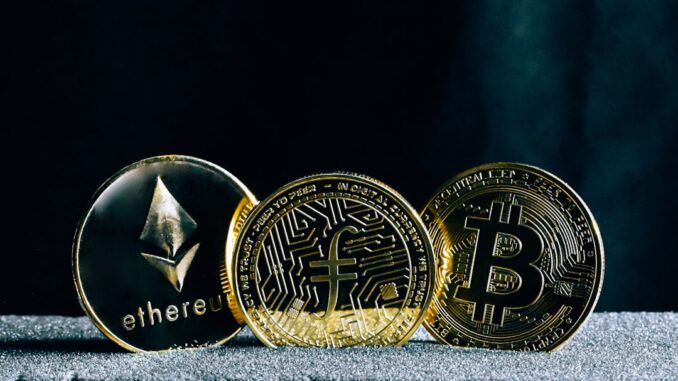

Crypto’s Crossroads: Mining vs. Staking — A Deep Dive into Passive Income Potential
Hey there, fellow crypto enthusiast. You’re probably here because you’ve heard the buzz about generating passive income in the digital asset space, and honestly, who wouldn’t want a piece of that action? In the ever-evolving, often exhilarating, world of cryptocurrency, two primary methods consistently surface for individuals looking to grow their holdings without constant trading: crypto mining and crypto staking. While both are absolutely foundational to the security and operation of blockchain networks, contributing immensely to the decentralised ethos we all value, they really do diverge quite significantly in their processes, requirements, and, crucially, their potential rewards.
Today, we’re not just scratching the surface. We’re diving deep into each method, unearthing their nuances, the gritty details, and the strategic considerations you’ll need to make. This isn’t just about understanding what they are; it’s about helping you determine which path truly aligns best with your financial goals, your technical prowess, and even your ethical compass. It’s a big decision, and getting it right can make all the difference.
Investor Identification, Introduction, and negotiation.
Let’s get into it, shall we?
Unearthing the Digital Gold: Understanding Crypto Mining
Crypto mining, in its purest form, is the original method of earning cryptocurrency rewards. It’s intrinsically tied to the Proof-of-Work (PoW) consensus mechanism, the very engine that powers iconic networks like Bitcoin. Imagine a vast, global ledger that needs constant validation and new pages added; that’s essentially what miners do. They’re the digital scribes, the security guards, the very backbone of the network. They use powerful, specialised computers to solve incredibly complex mathematical problems – often referred to as cryptographic puzzles or hash functions – to add new ‘blocks’ of verified transactions to the blockchain. This isn’t just a simple calculation; it’s a monumental computational race, a high-stakes competition where speed and power are paramount.
The Mechanics of Proof-of-Work
To really grasp mining, you’ve got to understand PoW. Each block on a PoW blockchain contains a list of verified transactions. Before a new block can be added, a miner must find a specific numeric value, known as a ‘nonce’, that, when combined with the block’s data and run through a hashing algorithm, produces a result (a ‘hash’) that meets certain criteria. This criterion is usually that the hash must start with a certain number of zeroes, and the more zeroes required, the ‘harder’ the puzzle is. It’s pure brute force, a guessing game on an astronomical scale. Think of it like trying to find a needle in an impossibly large haystack, but instead of one needle, there are millions of computers simultaneously searching for it. The first miner to find that specific nonce broadcasts it to the network, their block is verified by other nodes, and then it’s added to the chain. This process ensures the integrity of the network, making it incredibly difficult and expensive for any single entity to maliciously alter past transactions.
The Evolution of Mining Hardware: From CPUs to ASICs
Back in Bitcoin’s nascent days, folks could actually mine with their regular desktop CPUs. Imagine that! It was a simpler time, a wild west of sorts. But as Bitcoin’s price climbed and its network grew, the ‘difficulty’ of these puzzles automatically adjusted upwards to maintain a consistent block time. This meant more computational power was needed, and fast. The arms race began:
- CPUs (Central Processing Units): Early miners used these. They were general-purpose and relatively inefficient for the specific task of hashing. Pretty quickly, they became obsolete for profitable mining.
- GPUs (Graphics Processing Units): Gamers rejoice! The powerful graphics cards designed for rendering complex visuals turned out to be far more efficient at the parallel processing required for mining. For a while, the GPU market was utterly ravaged by miners snapping up every card they could find, much to the chagrin of gamers, I’m sure. They still have some utility for mining certain altcoins, particularly those resistant to ASIC mining.
- FPGAs (Field-Programmable Gate Arrays): A brief interlude saw FPGAs, which offered better efficiency than GPUs but were harder to program and less flexible than ASICs.
- ASICs (Application-Specific Integrated Circuits): These are the kings of the mining world today. ASICs are custom-built hardware designed solely for mining a specific algorithm (e.g., Bitcoin’s SHA-256). They are incredibly powerful, consume a lot of electricity, and can be deafeningly loud, sounding like a jet engine taking off inside your server room. Investing in ASICs represents a substantial upfront capital outlay, often tens of thousands of dollars for a serious setup, but they offer the best chance at profitability for major PoW coins.
Solo Mining vs. Mining Pools: Strength in Numbers
Once you have your hardware, you’ve got a choice to make. Are you going it alone or joining forces?:
- Solo Mining: This is exactly what it sounds like: you’re competing against the entire global network by yourself. The chances of you, as an individual, solving a block first for a major cryptocurrency like Bitcoin are astronomically small, unless you have truly massive computational power. But if you do win, you get the entire block reward. It’s a bit like winning the lottery – huge payout, tiny odds. For smaller, newer coins, solo mining might still be viable for a time.
- Mining Pools: This is where most serious miners operate. A mining pool is a group of miners who combine their computational resources (hash power) to increase their collective chance of solving a block. When the pool successfully mines a block, the reward is distributed among all participants proportional to the amount of hash power they contributed. It reduces the variance and provides a more consistent, albeit smaller, stream of income. Most pools charge a small fee for their services, typically 1-3%. My colleague, Liam, used to run a small home setup back in the day and quickly found out solo mining was a fool’s errand. ‘The electricity bill alone was enough to make my eyes water,’ he’d say, ‘joining a pool saved my sanity and my wallet, providing that steady drip of sats instead of hoping for a miracle.’
The Rewards: New Coins and Transaction Fees
Miners who successfully add a new block to the blockchain are rewarded in two primary ways:
- Block Reward: This is the primary incentive – newly minted coins native to the blockchain. For Bitcoin, this reward halves approximately every four years, a process known as the ‘halving.’ This scarcity mechanism is central to Bitcoin’s economic model, reducing the supply of new coins over time and theoretically increasing its value.
- Transaction Fees: Each transaction included in a block carries a small fee, paid by the sender. These fees are also collected by the successful miner. As block rewards decrease over time (due to halvings), transaction fees are expected to play an increasingly significant role in miner compensation, ensuring the network remains secure and decentralised long-term.
The Environmental Elephant in the Room: Energy Consumption
This is perhaps the most contentious aspect of PoW mining. The sheer computational power required translates directly into colossal energy consumption. The constant hum of fans trying to dissipate the intense heat generated by thousands of chips working in unison, making the air thick with the smell of warm electronics and a faint ozone tang, isn’t just a metaphor; it’s a reality in large mining farms. While much progress has been made, with many operations shifting towards renewable energy sources like hydro, solar, and geothermal power, the overall carbon footprint remains a significant point of criticism. It’s a valid concern, and one that the industry is actively working to address, but it undeniably places a heavy burden on the environment.
Challenges and Considerations in Mining
Beyond the energy debate, mining isn’t without its operational hurdles:
- Increasing Difficulty: The network difficulty automatically adjusts to keep block times consistent. As more miners join, or hardware becomes more efficient, the difficulty rises, making it harder for individual miners to compete. What was profitable yesterday might be a net loss tomorrow.
- Hardware Obsolescence: ASICs, while powerful, have a limited lifespan and quickly become outdated as newer, more efficient models are released. This necessitates frequent upgrades, adding to the capital expenditure.
- Electricity Costs: This is often the single biggest operational expense. Access to cheap, reliable electricity is paramount for profitability. Miners often seek locations with abundant, low-cost power, often in remote areas.
- Heat and Noise: Home mining setups can be problematic due to the heat generated and the incessant noise, leading to discomfort or even equipment damage if not properly managed.
- Regulatory Scrutiny: Governments worldwide are increasingly looking at the energy consumption of mining, leading to potential bans or restrictions in certain regions.
Safeguarding the Network: Exploring Crypto Staking
On the other side of the consensus coin, we have crypto staking. This method validates and verifies transactions on a blockchain network that doesn’t require the same power-intensive computational effort as mining. Instead, staking is foundational to Proof-of-Stake (PoS) blockchains. Here, instead of solving complex mathematical equations, participants called ‘validators’ commit a certain amount of cryptocurrency they own – their ‘stake’ – to support the network’s operations. Think of it as putting up collateral, a bond, to prove your commitment and trustworthiness. This commitment is absolutely crucial for securing PoS blockchains and is a cornerstone of their wider adoption.
By requiring validators to stake their own tokens, the system inherently aligns their incentives with the network’s health and security. They’re literally putting their money where their mouth is; they have a financial interest in ensuring the network remains secure and functions correctly because if they act maliciously or incompetently, they stand to lose part or all of their staked assets. This mechanism, called ‘slashing’, acts as a powerful disincentive against bad behaviour.
How Proof-of-Stake Works
In a PoS system, validators are chosen to propose and validate new blocks (containing transaction data) based on a combination of factors: the number of tokens they hold (their stake), the length of time they’ve been staking, and sometimes a random element. The more cryptocurrency a staker holds and the longer it has been committed, the higher their chances of being selected to validate transactions and earn rewards. Once a validator is chosen to propose a new block, other validators confirm its validity, and once enough attestations are received, the block is added to the blockchain.
Staking Models: Your Path to Participation
Just like mining, there are several ways to participate in staking, each with its own level of commitment and convenience:
- Solo Staking (Running Your Own Validator Node): This is the most decentralised and permissionless way to stake. You run your own node software on dedicated hardware, connect it to the network, and deposit the required minimum amount of tokens (e.g., 32 ETH for Ethereum 2.0). This gives you full control and the highest potential rewards, but it demands technical expertise, constant uptime, and a significant capital investment. You’re responsible for maintaining the node, ensuring its security, and avoiding any actions that could lead to slashing. It’s a bit like being your own bank, which is empowering but also a lot of responsibility.
- Delegated Staking (Staking Pools/Providers): For many, solo staking is too resource-intensive. Delegated staking allows you to ‘delegate’ your tokens to a professional validator operator. You retain ownership of your coins, but the validator performs the technical operations. They typically charge a commission fee on the rewards earned. This is a fantastic option for those who want to participate without the technical headaches. Think of it as entrusting your investment to a fund manager who specialises in staking.
- Liquid Staking: This is a newer, increasingly popular model, offering a solution to the liquidity lock-up problem. When you stake your tokens through a liquid staking protocol (like Lido or Rocket Pool for Ethereum), you receive a ‘liquid staking derivative’ (LSD) token in return (e.g., stETH for ETH). This LSD represents your staked asset plus any accumulated rewards and can be freely traded, used in DeFi protocols, or even sold while your original asset remains staked. It offers the best of both worlds: staking rewards and liquidity. It’s truly a game-changer for many who previously felt constrained by staking’s illiquidity.
- Exchange Staking: Most major centralised exchanges (like Binance, Coinbase, Kraken) offer staking services. You simply hold your coins on the exchange, opt into their staking program, and they handle all the technical complexities. It’s incredibly convenient and beginner-friendly, but you typically earn lower rewards due to exchange fees, and you’re entrusting your assets to a third party, which goes against the decentralised ethos of crypto. ‘It’s a convenient on-ramp for sure,’ my old mentor once told me, ‘but always remember, not your keys, not your coins.’
Earning Rewards and Understanding Slashing
Stakers receive rewards primarily in the form of additional tokens of the cryptocurrency they are staking. These rewards can come from block proposals, transaction fees, and sometimes even newly minted coins (inflationary rewards). The Annual Percentage Yield (APY) can vary significantly based on network activity, the number of validators, and the specific protocol’s reward mechanism. It’s not uncommon to see APYs ranging from 4% to 20% or even higher for some newer, smaller projects, though higher APYs usually come with higher risks.
Crucially, alongside rewards, there’s the concept of slashing. This is the penalty system designed to maintain network integrity. If a validator acts maliciously (e.g., double-signing transactions) or performs poorly (e.g., going offline for extended periods, failing to attest to blocks), a portion of their staked tokens can be ‘slashed’ or confiscated by the network. This mechanism is a powerful deterrent, forcing validators to act diligently and honestly, ensuring the network’s security remains robust. It’s a critical component for trust in a decentralised system.
The Unbonding Period: A Liquidity Trade-off
Unlike liquid staking, many traditional staking mechanisms involve an ‘unbonding period’. This is a cool-down period, often several days or even weeks, during which your staked tokens are locked after you decide to ‘unstake’ them. During this time, they aren’t earning rewards and can’t be traded. This delay is a security feature, giving the network time to finalise any potential slashing events related to your validator before your funds are released. It’s a trade-off: security and stability for a temporary lack of liquidity. My colleague Sarah, who I mentioned earlier, started with a modest stake in a smaller PoS coin. ‘It wasn’t much initially,’ she recalled, ‘but seeing those rewards compound, even through some market dips, it really opened my eyes to the power of holding and earning. The unbonding period felt long the first time, though, I won’t lie.’
Advantages and Challenges of Staking
Staking presents a compelling alternative to mining:
- Energy Efficiency: This is a huge win for PoS. Without the need for constant, energy-intensive computations, PoS networks consume a fraction of the energy of PoW networks, making them a much more environmentally friendly option.
- Lower Barrier to Entry: While solo staking still requires significant capital, participating through pools or exchanges makes staking accessible to almost anyone with a modest amount of crypto. You don’t need specialised hardware or technical know-how.
- Compounding Returns: Rewards are often distributed regularly, allowing you to re-stake them and compound your earnings over time, similar to traditional interest-bearing accounts.
- Network Governance: In many PoS networks, staking also grants you voting rights in network governance decisions, allowing you to influence the future direction of the blockchain.
However, it’s not without its challenges:
- Price Volatility: Your staked assets are still subject to market fluctuations. If the price of your staked token drops significantly, it can outweigh any staking rewards you earn.
- Liquidity Lock-up: As mentioned, unbonding periods can tie up your capital, preventing you from reacting quickly to market movements (though liquid staking mitigates this).
- Technical Risks (for solo stakers): Running your own validator node requires consistent uptime, security measures, and the risk of slashing if you make errors.
- Centralisation Concerns: While PoS aims for decentralisation, the concentration of large stakes in a few hands (or large staking pools) can lead to concerns about centralisation of power.
Key Differences: Mining vs. Staking — A Side-by-Side View
While both mining and staking are vital participation methods in a blockchain network, securing it and enabling its function, they are fundamentally different beasts. Understanding these distinctions is crucial for anyone considering jumping into either arena. Let’s really hammer home those differences:
-
Computational Power vs. Capital Commitment:
- Mining: Think of mining as an active, hardware-intensive endeavour. It demands colossal computational power, usually from highly specialized, purpose-built hardware like ASICs. This is an engineering problem at its core, requiring raw processing grunt.
- Staking: Conversely, staking is primarily a capital commitment. It requires holding a certain amount of digital assets (coins or tokens) in a designated wallet, essentially locking them up as collateral. It’s an economic problem, secured by the value and quantity of assets held.
-
Energy Consumption: A Stark Contrast:
- Mining: The poster child for high energy use. Mining consumes a truly substantial amount of electricity due to the continuous, intense computational work required to solve those cryptographic puzzles. It’s a major environmental talking point, often leading to fierce debates about sustainability.
- Staking: On the other hand, staking is incredibly energy-efficient. Validators on PoS networks consume noticeably less energy – often compared to running a small home computer – because they’re not engaged in a constant race to solve complex equations. This is a significant advantage in an increasingly eco-conscious world.
-
Rewards: The Payout Structure:
- Mining: Miners receive newly minted cryptocurrency native to the blockchain, alongside transaction fees, as a reward for their successful efforts in finding a block. These rewards can be quite chunky if you’re lucky or have significant hash power.
- Staking: Stakers receive additional cryptocurrency, typically in the same token they’re staking, for participating in the validation process. These rewards are often presented as an Annual Percentage Yield (APY) and tend to be more predictable and consistent, like earning interest.
-
Security Mechanisms: How Trust is Built:
- Mining: The security of a PoW network hinges on the sheer computational power of the network. A ‘51% attack’ – where a single entity controls more than half the network’s hash rate – is theoretically possible but incredibly expensive and difficult to execute for established chains like Bitcoin. It relies on the economic disincentive of wasting vast amounts of energy to attack a network you’ve invested heavily in.
- Staking: PoS networks rely on the economic value of the tokens held by stakers. Security is enforced through the threat of ‘slashing,’ where malicious or incompetent validators lose a portion of their staked assets. To launch a 51% attack on a PoS network, an attacker would need to acquire a majority of the network’s staked tokens, an incredibly expensive and logistically challenging feat, and doing so would likely crash the price of the very asset they hold, making the attack self-defeating.
-
Accessibility and Barrier to Entry:
- Mining: This can be far more complex, requiring significant technical knowledge to set up and maintain hardware, manage cooling, deal with software configurations, and optimize electricity costs. The upfront hardware investment is also substantial, making it less accessible for the average individual.
- Staking: Staking is generally much more accessible. While solo staking requires technical chops and significant capital, participating through staking pools or centralised exchanges is often as simple as clicking a few buttons. You can get started with a relatively small amount of capital, and you don’t need any specialised hardware beyond a personal computer or even just a mobile device if you’re using an exchange.
Profitability Considerations: Crunching the Numbers
When you’re trying to decide between mining and staking, it’s not just about technical preference; it’s about the bottom line. What’s going to give you the best return on your investment, considering all the variables? Both have the potential for significant gains, but the path to profitability looks very different.
Dissecting Mining Profitability
Mining profitability is a dynamic, often volatile, beast. It’s a constant balancing act with several moving parts:
- Upfront Hardware Costs: This is your biggest initial hurdle. ASICs aren’t cheap, often running into thousands, if not tens of thousands, of dollars per unit. And you usually need more than one to be competitive. The Return on Investment (ROI) period for these rigs can stretch for years, especially as new generations of hardware emerge.
- Electricity Rates: The single most critical operational cost. A difference of even a few cents per kilowatt-hour can completely flip a mining operation from profitable to loss-making. Miners actively seek out regions with the cheapest electricity, often where renewable energy is abundant and thus cheaper. I’ve heard stories of miners literally chasing cheap power across continents, it’s that important.
- Network Difficulty: This automatically adjusts upwards as more miners join the network and more hash power comes online. Higher difficulty means it’s harder to find blocks, reducing individual miner rewards unless your hash power scales proportionally. It’s a never-ending arms race.
- Coin Price Volatility: The value of the cryptocurrency you’re mining directly impacts your revenue. A sudden drop in price can erase your profits, even if your operational costs remain stable. Conversely, a price surge can make even a marginal operation incredibly profitable.
- Pool Fees: If you’re in a mining pool (and you likely will be for major coins), you’ll pay a percentage of your earnings as a service fee.
- Maintenance and Cooling: Mining hardware generates immense heat and dust. Proper cooling systems are essential, adding to initial setup and ongoing operational costs. Hardware failures are also a constant threat.
Profit margins can be razor-thin. It’s a game best suited for those who can optimize every single variable, negotiate electricity contracts, and are prepared for significant capital expenditure and ongoing management. For many, the dream of a ‘set-and-forget’ mining rig quickly becomes a reality of constant monitoring, troubleshooting, and worrying about the next electricity bill.
Navigating Staking Profitability
Staking, by contrast, often offers a more predictable, passive income stream. It’s generally less volatile in terms of operational costs, as you’re not battling rising electricity bills or hardware obsolescence:
- APY (Annual Percentage Yield): This is your headline number, representing the percentage return you can expect on your staked assets over a year. It’s usually a nominal figure, meaning it doesn’t account for compounding, which can actually increase your effective yield. APY varies wildly between different cryptocurrencies and staking platforms.
- Token Price Movements: Just like mining, the price of your staked asset is a huge factor. A 10% APY means little if the underlying asset drops 20% in value. Staking is often a long-term play, and you need to believe in the long-term appreciation or stability of the token you’re committing.
- Inflation Rate: Some PoS networks issue new tokens as staking rewards, which can lead to inflation. While you’re earning rewards, if the inflation rate is higher than your APY, your purchasing power might actually decrease relative to the overall supply. It’s a subtle but important point to consider.
- Platform Fees: If you’re using a staking pool or a centralised exchange, they will take a percentage cut of your rewards, similar to mining pool fees. Always factor this into your expected net returns.
- Compounding: One of staking’s most attractive features. If your rewards are automatically or easily re-staked, you can leverage the power of compound interest, watching your crypto grow exponentially over time. It’s a truly beautiful thing for patient investors.
For many everyday crypto holders, especially those with smaller portfolios, staking often yields steadier returns because it avoids the heavy upfront and ongoing operational costs associated with mining. You’re leveraging capital you already possess. However, it’s critical to remember that high crypto price volatility can still significantly impact your actual earnings, regardless of how high the APY looks on paper. Always consider the total value of your assets, not just the percentage yield.
Key Considerations When Choosing: Your Strategic Framework
Alright, so we’ve broken down the mechanics and the money. Now, how do you decide which path is right for you? This isn’t a one-size-fits-all situation; it requires a thoughtful assessment of your personal resources, risk tolerance, and long-term vision. Let’s frame this decision with some crucial considerations.
1. Technical Skill Level: Are You a Coder or a Collector?
- Mining: This path is decidedly best for advanced users. We’re talking about those comfortable with managing complex hardware setups, navigating Linux command lines, optimizing network configurations, and troubleshooting electrical issues. While some plug-and-play solutions exist, competitive mining usually requires a deep dive into technical expertise. You’ll likely need to join mining pools and understand their payout structures. It’s a hands-on, often demanding, undertaking.
- Staking: Largely beginner-friendly, particularly if you opt for delegated staking through a reputable platform or exchange. Many platforms offer incredibly simple, intuitive staking tools that are literally a few clicks away. Even running a solo validator node, while requiring more technical acumen, is becoming increasingly user-friendly with detailed guides and community support. You don’t need to be an engineer; basic computer literacy is often enough to get started, especially with pooled solutions.
2. Capital Investment: How Much Skin Are You Willing to Put in the Game?
- Mining: This requires a substantial upfront capital expenditure. We’re talking thousands, potentially tens of thousands, of dollars for specialized equipment, not to mention the ongoing costs of electricity and maintenance. Your capital is locked up in physical assets that depreciate over time and can quickly become obsolete. It’s a hardware play.
- Staking: The capital investment here is simply owning the cryptocurrency itself. While solo staking might require a significant amount of a particular token (like the 32 ETH for Ethereum), participation in staking pools or through exchanges allows you to start with much smaller amounts. Your capital is in liquid digital assets (or becomes liquid again after an unbonding period), which, while volatile, are more easily transferable and less prone to physical obsolescence.
3. Environmental Impact: Your Eco-Conscious Footprint
- Mining: Its high energy consumption draws significant criticism and increasing regulatory scrutiny globally. If you’re environmentally conscious, this is a major hurdle. While many miners are shifting to renewable energy, the aggregate impact remains considerable. It’s a constant battle for public perception and a target for environmental activists.
- Staking: This is widely touted as a far more eco-friendly option. PoS networks drastically reduce energy consumption, aligning with broader sustainability goals. If you’re looking to participate in crypto without contributing to a large carbon footprint, staking is undeniably the greener choice.
4. Risk Tolerance: How Much Are You Willing to Lose (or Manage)?
- Mining: The risks here are multifaceted. Hardware failures are a constant worry, leading to downtime and repair costs. Electricity price spikes can decimate profitability overnight. Network difficulty jumps can render your expensive equipment unprofitable. There’s also the risk of regulatory crackdowns or outright bans in certain regions. It’s a high-stress, high-management environment.
- Staking: Risks include the omnipresent token price drops – a bear market can quickly eat into your rewards. For solo stakers, there’s the ‘slashing penalty’ risk (losing part of your stake if your validator goes offline or acts incorrectly), which demands careful operation. There’s also smart contract risk if you’re using decentralised staking protocols. While generally less volatile in terms of operational risk than mining, the market risk for your underlying asset is still very real. You’re relying on the software and the network’s health.
5. Blockchain Network and Coin Preference: Where Do Your Loyalties Lie?
- Mining: Certain networks, primarily Bitcoin, are staunchly PoW. If your conviction lies with these foundational, often more established chains, then mining (or investing in mining companies) is your only direct participation route for generating passive income. You can’t stake Bitcoin.
- Staking: Many newer, often more scalable, networks like Ethereum (post-Merge), Solana, Polkadot, Cardano, and Avalanche operate on PoS. If you’re interested in the innovation and growth potential of these newer ecosystems, then staking is your natural fit. It really just depends on the specific digital asset you believe in.
6. Liquidity Needs: Accessing Your Funds
- Mining: Your primary asset is physical hardware, which isn’t very liquid. Selling mining rigs can be difficult and may involve significant losses, especially for older models. Your profits come in crypto, which is liquid, but the underlying investment in the infrastructure is not.
- Staking: Your staked tokens are digital assets. While many staking protocols involve unbonding periods (where your tokens are temporarily locked), liquid staking derivatives (LSDs) have largely solved this issue, offering immediate liquidity. This means you can often access your capital much faster than if it were tied up in mining hardware.
7. Time Commitment: Set It and Forget It, or Constant Vigilance?
- Mining: This is not a ‘set it and forget it’ venture. It demands active management, including monitoring hardware, updating software, managing cooling systems, optimizing electricity usage, and troubleshooting issues. It’s a business that requires ongoing attention and effort.
- Staking: Once set up, especially through a reputable pool or exchange, staking is relatively passive. You don’t need to constantly monitor hardware or manage complex operations. While solo stakers need to ensure uptime and security, it’s generally far less demanding on a day-to-day basis than running a mining farm. It’s definitely more conducive to true ‘passive’ income.
The Evolving Landscape: Where We’re Headed
The crypto world is never static, is it? We’ve seen monumental shifts, perhaps none more significant than Ethereum’s transition from PoW to PoS, famously dubbed ‘The Merge.’ This wasn’t just a technical upgrade; it was a philosophical statement, a powerful demonstration that a major blockchain could successfully pivot away from energy-intensive mining. This event has undoubtedly spurred a lot of conversation and innovation in the PoS space.
So, what does the future hold?
- The Endurance of Bitcoin Mining: Bitcoin, the king of crypto, remains staunchly PoW. Its security model is proven, and its community is highly resistant to change. Bitcoin mining will continue to evolve, with increasing focus on renewable energy integration and potentially more geographically diverse operations to leverage different energy sources. I don’t see PoW disappearing anytime soon for Bitcoin, and rightly so, it’s its core strength.
- The Rise of PoS Ecosystems: We’re witnessing an explosion of innovation in PoS. New chains are launching with PoS from day one, offering high scalability, energy efficiency, and diverse use cases. Expect more advanced staking mechanisms, improved decentralisation in validator sets, and tighter integration with the broader DeFi landscape.
- Liquid Staking Derivatives (LSDs) and Restaking: These are massive trends. LSDs free up capital, allowing stakers to earn rewards and participate in other DeFi protocols simultaneously. Restaking, an even newer innovation, allows staked assets (like ETH) or their LSDs to be ‘restaked’ to secure other networks or protocols, creating a layered security model and potentially earning additional rewards. These innovations are making staking more flexible and capital-efficient than ever before, creating entirely new financial primitives within crypto.
- Regulatory Adaptation: As these technologies mature, regulators worldwide will continue to grapple with how to classify and oversee mining and staking operations. Expect ongoing debates about environmental impact, investor protection, and financial stability. Navigating this evolving regulatory maze will be a key challenge for all participants.
Conclusion: Your Choice, Your Journey
Both staking and mining aren’t just ways to earn crypto; they play absolutely critical roles in the crypto ecosystem. They are the very engines that secure and decentralise these revolutionary networks. But they appeal to very different kinds of participants, demanding distinct commitments and offering unique reward profiles. Mining is a power-intensive, competitive process, best suited for those with a high tolerance for risk, technical skills, and substantial capital for hardware investment. It’s a bit like running a small industrial operation, demanding constant vigilance and adaptation.
Staking, on the other hand, is generally more accessible, significantly more energy-efficient, and often delivers a more consistent, truly passive income stream for holders looking to grow their digital assets without the operational complexities. It’s about leverage your existing capital to contribute to network security and earn a yield.
Choosing between the two ultimately comes down to a deeply personal assessment: your financial goals, the resources you have at your disposal (both capital and time), your individual risk appetite, and, critically, the specific blockchain networks and projects you believe in. There’s no single ‘best’ option; there’s only the option that’s best for you. Do your research, understand the trade-offs, and then embark on your chosen path. The world of passive crypto income is vast and full of opportunity, ready for those who are willing to engage with it thoughtfully.
Be the first to comment