
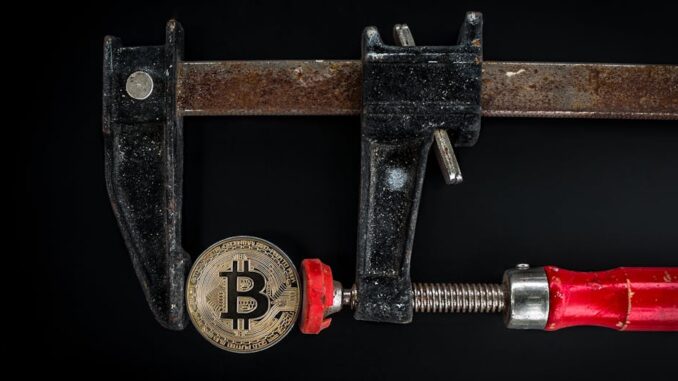

In December 2025, Iran’s government took a decisive step by imposing a global ban on cryptocurrency transactions and transfers, including gold, in an effort to stabilize its economy. This move follows a series of regulatory actions aimed at controlling the rial’s depreciation and circumventing international sanctions. The ban has significant implications for Iran’s digital asset landscape and its broader economic strategies.
Background and Rationale
Iran’s relationship with cryptocurrencies has been complex and evolving. In 2018, the Central Bank of Iran officially prohibited the use of cryptocurrencies in financial transactions, citing concerns over money laundering and terrorism financing. Despite this, the digital asset market continued to thrive in parallel markets, with Iranians trading between $16 and $20 million in 12 different cryptocurrencies daily as of December 2020. The government’s stance shifted in 2019 when it recognized cryptocurrency mining as a legal industry, aiming to regulate the sector and harness its potential benefits. However, the energy-intensive nature of mining led to power shortages, prompting a temporary ban on mining activities in 2021.
Investor Identification, Introduction, and negotiation.
The rial’s persistent decline against major currencies, exacerbated by international sanctions, has further strained Iran’s economy. In response, the government has implemented various measures, including the December 2024 freeze on cryptocurrency-to-rial conversions on domestic exchanges. This freeze lasted for 23 days, during which over one million Iranians were unable to access their funds, leading to public outcry and economic hardship. The ban lifted in January 2025, but only after the government installed its own API to monitor every single transaction, effectively increasing state control over the digital asset market.
Implications of the Ban
The December 2025 ban on cryptocurrency transactions and transfers marks a significant escalation in Iran’s regulatory approach. By prohibiting the use of digital assets and gold in financial payments, the government aims to curb capital flight and stabilize the rial. This move aligns with broader efforts to control the currency market and prevent the use of cryptocurrencies for illicit activities.
The ban has profound implications for Iran’s digital asset landscape. Domestic exchanges, such as Nobitex, have been heavily monitored and restricted, with the government mandating that all user data pass through state-run APIs. International exchanges have also ceased operations in Iran due to compliance risks and sanctions enforcement, effectively isolating Iranian users from the global cryptocurrency market.
Broader Economic Context
The cryptocurrency ban is part of a series of measures Iran has taken to address its economic challenges. In September 2025, the U.S. Treasury Department sanctioned Iranian nationals and entities accused of facilitating over $100 million in cryptocurrency transactions derived from Iranian oil sales. These sanctions targeted individuals and companies in Hong Kong and the UAE, highlighting the use of digital assets to circumvent international sanctions and fund military operations. The U.S. sanctions freeze U.S.-based assets and prohibit American entities from engaging with the targeted individuals and firms, intensifying the economic pressure on Iran.
The government’s crackdown on cryptocurrency transactions also reflects its broader strategy to control financial flows and maintain economic stability. By restricting access to digital assets, the government aims to prevent capital outflows and mitigate the rial’s depreciation. However, these measures have sparked debates about their effectiveness and the potential impact on the Iranian population, many of whom have turned to cryptocurrencies as a hedge against inflation and economic instability.
Conclusion
Iran’s December 2025 ban on cryptocurrency transactions and transfers, including gold, represents a significant shift in its economic and regulatory policies. While the government asserts that these measures are necessary to stabilize the economy and prevent illicit activities, they have raised concerns about their impact on the population and the broader digital asset ecosystem. As Iran continues to navigate its economic challenges, the effectiveness of these policies will become increasingly apparent, shaping the future of its financial landscape.
References
- Report: Iran officially bans use of cryptocurrencies. CNBC. (cnbc.com)
- Virtual currency law in Iran. Wikipedia. (en.wikipedia.org)
- Iran bans bitcoin mining as its cities suffer blackouts. CNBC. (cnbc.com)
- Hackers say they wiped out $90 million from Iran cryptocurrency exchange. AP News. (apnews.com)
- US sanctions Iranian financiers, others over $100M in cryptocurrency transfers from Iran oil sales. AP News. (apnews.com)
- Central Bank Clamps Down on Crypto as Iranians Dodge Regulations to Hedge Rial’s Freefall. AInvest. (ainvest.com)
- Crypto market becomes a new battlefield in the secret war between Israel and Iran, and the crypto market is overshadowed by the theocracy. PANews. (panewslab.com)
- Internet censorship in Iran. Wikipedia. (en.wikipedia.org)
- Mining Crypto in Iran: Law and Restrictions in 2025. Eatcm. (eatcm.net)
- Crypto Exchanges Banned in Iran – 2025 Restrictions Explained. Docsue. (docsue.org)
- Iran Crypto Exchange Bans 2025: Which Platforms Are Blocked and Why. Tokenmessage. (tokenmessage.com)
- Cryptocurrency Regulations in Iran. Coinfomania. (coinfomania.com)
- Iran bans banks from using cryptocurrencies. Business Standard. (business-standard.com)
- Kraken settles $1 million in apparent sanctions violations for $360,000. Axios. (axios.com)
- Is Crypto Regulated in Iran? The Real Rules, Bans, and Workarounds in 2025. Eatcm. (eatcm.net)
- Rolling blackouts plague Iran and some suspect bitcoin mining may have a role in the outages. AP News. (apnews.com)
Be the first to comment