
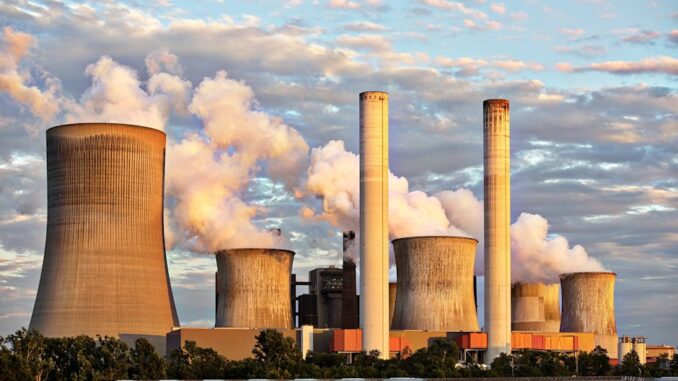

Token Cat’s Nuclear Bet: Powering AI’s Future with Fission
It’s a really interesting time in tech, isn’t it? Just when we thought we had a handle on things, along comes another curveball. Token Cat Limited (Nasdaq: TC), a name some might not have immediately associated with cutting-edge energy, recently threw one of those curveballs. In a bold strategic shift that’s got a few eyebrows raised, the company has greenlit its U.S. subsidiary to kick off evaluations for a whopping $500 million fundraising plan. What’s it for, you ask? Nuclear fission research and some strategic mergers and acquisitions. This isn’t just a minor pivot; it’s a full-throttle commitment to high-technology and next-generation energy, coming right after they shed some long-unprofitable baggage and did a bit of internal reshuffling. This isn’t just about a company finding its footing; it’s about a tech player looking to redefine its role in the unfolding energy narrative of our digital age.
The Insatiable Appetite of Artificial Intelligence
Assistance with token financing
Let’s be frank, the rapid ascent of artificial intelligence and high-performance computing has placed an almost terrifying strain on global energy resources. You’ve seen the headlines, haven’t you? Data centers sprouting up like mushrooms after a spring rain, each one gobbling megawatts like they’re going out of style. Companies like Token Cat, who operate squarely within this intensely competitive space, are truly feeling the heat. It’s not just an abstract problem; it’s a very tangible, operational headache. They’re grappling with the spiraling demand for stable, incredibly efficient, and crucially, cost-effective power sources. It’s a foundational issue. Without reliable, affordable energy, the promise of AI – its incredible processing power, its ability to transform industries – well, it just can’t be fully realized. We’re talking about models that take weeks, even months, to train, demanding uninterrupted power, or you’re effectively back to square one.
Consider the sheer scale for a moment. Training a single large language model, for instance, can consume as much electricity as several homes in a year. Multiply that by hundreds, or thousands, of models being developed concurrently across the globe, and you begin to understand the dilemma. This isn’t just about keeping the lights on; it’s about powering the very brains of our future economy. As a result, Token Cat is eyeing nuclear fission as a profoundly promising frontier. They aim to assess its potential not just as an energy source, but as the long-term, stable backbone for their incredibly energy-intensive AI operations. It’s a vision of energy independence, really, for the digital frontier. And, frankly, it’s a vision many in the industry are quietly, or not so quietly, exploring.
Why Nuclear? Deconstructing the Fission Advantage
Now, you might be wondering, ‘Nuclear? Really? Isn’t that a bit… old school?’ And you wouldn’t be alone in thinking that. For decades, nuclear power has carried a heavy baggage of public perception, often tainted by historical accidents and concerns over waste. However, the energy landscape is changing dramatically, and with it, the conversation around nuclear power. What makes nuclear fission, especially modern iterations, so compelling for a tech company like Token Cat?
Firstly, it’s the sheer energy density. You get an astonishing amount of power from a relatively small amount of fuel. This means a compact footprint, which is a huge advantage when you’re thinking about situating power sources close to data centers or specialized computing facilities. We’re not talking about sprawling solar farms or wind turbine arrays that demand vast tracts of land. A small modular reactor, for instance, can fit on a fraction of the real estate, yet deliver megawatts of continuous power.
Then there’s the baseload stability. Unlike renewables, which are inherently intermittent – the sun doesn’t always shine, the wind doesn’t always blow – nuclear power provides constant, 24/7, carbon-free electricity. For AI operations that require uninterrupted power flows to prevent costly reboots and data loss, this stability isn’t just a nice-to-have; it’s absolutely critical. Imagine a massive AI training run being interrupted because the grid flickered, or the local solar farm wasn’t producing enough. The financial implications alone are staggering, let alone the lost computational time.
Furthermore, when we talk about ‘next-generation’ nuclear, we’re largely discussing Small Modular Reactors (SMRs) and even microreactors. These aren’t your grandfather’s massive, multi-gigawatt plants. SMRs are designed to be factory-built, standardized, and then transported to sites, significantly reducing construction times and costs, and enhancing safety features through passive cooling systems. They’re also scalable, meaning you can add units as your energy demands grow, rather than committing to an enormous upfront investment for a single, colossal plant.
For Token Cat, this translates into a potential solution that offers grid independence, reduced exposure to volatile fossil fuel prices, and a significantly lower carbon footprint compared to traditional energy sources powering most data centers today. It’s about moving from being an energy consumer reliant on external grids to a potential energy producer with greater control over its operational destiny. This autonomy, in a world grappling with energy security and climate change, truly is a game-changer.
The Strategic Pivot: Beyond Unprofitable Endeavors
To fully appreciate the significance of Token Cat’s move, we really need to understand where they’re coming from. The press release mentions the ‘divestiture of its long-term unprofitable business and organizational restructuring.’ This isn’t just corporate jargon; it’s the foundation upon which this ambitious nuclear venture is built. While the specific details of the divested business weren’t disclosed, one can infer it was likely a legacy segment that no longer aligned with their forward-looking vision or simply couldn’t turn a profit in an increasingly competitive market. Perhaps it was an older software division, a niche hardware line, or even a service sector that just wasn’t scaling.
Making the tough call to cut ties with something that’s been a drag on the balance sheet, even if it has historical roots within the company, takes real courage. It frees up capital, yes, but more importantly, it refocuses management’s attention and energy. It clears the deck, if you will, for bold new initiatives like this. This restructuring wasn’t merely about shedding weight; it was about reorienting the entire organization towards high-growth, high-impact sectors. They’re not just iterating on existing products; they’re looking to leapfrog into entirely new paradigms.
This $500 million fundraising target isn’t just a random figure either. It suggests a serious, multi-year commitment, likely encompassing both fundamental research into advanced fission technologies and, crucially, strategic M&A. Imagine them acquiring smaller, innovative startups specializing in reactor design, nuclear fuel cycle optimization, or even companies focused on integrating power generation directly with high-performance computing infrastructure. The M&A component suggests they’re looking to buy expertise and accelerate their timeline, rather than building everything from scratch. It’s a smart play, leveraging existing innovations to jumpstart their own journey in this complex field. This dual approach of R&D and acquisition could significantly de-risk and speed up their entry into the nuclear energy space.
Forging Alliances: The Collaborative Research Framework
Token Cat knows it can’t go it alone in this arena. Nuclear energy is a field defined by deep expertise, complex regulations, and multi-disciplinary collaboration. That’s why their U.S. subsidiary plans to engage in wide-ranging discussions with a diverse array of partners: research institutions, energy engineering firms, and naturally, AI computing infrastructure companies. This isn’t just about sharing ideas; it’s about building an ecosystem.
Think about the intellectual firepower required. They’ll likely be knocking on the doors of top-tier universities with established nuclear engineering programs – places like MIT, UC Berkeley, or the University of Michigan. These institutions bring theoretical knowledge, experimental capabilities, and access to a pipeline of future talent. National laboratories, such as Argonne, Idaho National Lab, or Oak Ridge, which have been at the forefront of nuclear research for decades, will also be invaluable partners. They possess unparalleled expertise in reactor design, materials science, and safety analysis, often with specialized facilities unavailable elsewhere.
Then there are the energy engineering firms. These are the titans who know how to design, build, and operate massive, complex energy projects. Companies like Bechtel, Fluor, or SNC-Lavalin have decades of experience navigating the intricate world of power plant construction, regulatory compliance, and project management. Their expertise is absolutely critical for translating cutting-edge research into tangible, deployable power solutions. You can’t just slap a reactor next to a data center; there’s an immense amount of engineering, safety analysis, and infrastructure integration involved.
And let’s not forget the AI computing infrastructure companies themselves. Partners from the likes of NVIDIA, Google, Microsoft, or even AWS, would bring a vital perspective. They understand the exact power requirements, the thermal management challenges, and the physical constraints of housing immense computing power. Collaborating with them means the nuclear solutions aren’t just theoretically viable, but practically optimized for AI workloads. Imagine a scenario where waste heat from a small reactor is directly used to cool data center components or even to generate additional electricity through advanced thermodynamic cycles. That’s the kind of integrated thinking this collaborative approach aims to foster.
This comprehensive research framework isn’t some nebulous idea; it has clear focal points:
- Advanced Fission Reactor Technologies: This goes beyond conventional light-water reactors. They’ll be exploring Generation IV designs like molten salt reactors, high-temperature gas reactors, or fast neutron reactors, which offer enhanced safety, fuel efficiency, and even the ability to consume existing nuclear waste.
- Small Modular Energy Systems: This is where the rubber meets the road. Developing and optimizing SMRs and microreactors specifically for industrial, and crucially, AI data center applications. This means focusing on aspects like autonomous operation, load following capabilities, and rapid deployment.
- Integrated Nuclear-Powered Computing Architectures: This is the truly futuristic part. How do you seamlessly merge a nuclear power source with a supercomputer or a massive data center? It’s about designing facilities where the power generation and computing infrastructure are intrinsically linked, optimizing for efficiency, resilience, and security. We’re talking about direct current (DC) power transmission, advanced cooling systems leveraging the reactor’s heat, and perhaps even modular, relocatable AI computation units powered by microreactors. Think of it, a self-contained AI processing hub, able to operate anywhere with minimal external infrastructure. It’s a compelling vision, for sure.
Guangsheng Liu’s Vision: Caution, Ambition, and the Future Cycle
Guangsheng Liu, the CEO of Token Cat, isn’t just making a casual observation; he’s laying down a strategic marker for the company’s future. His statement, ‘AI’s growing energy demands are reshaping the global tech landscape. We see next-generation energy solutions as a key factor in future computing competitiveness,’ speaks volumes. He understands that energy isn’t just an overhead cost anymore; it’s becoming a differentiator, a competitive advantage.
Consider this: if a company can secure a stable, affordable, and clean energy supply for its AI operations, it can outcompete rivals who are still beholden to volatile fossil fuel markets or constrained by grid limitations. This isn’t just about reducing operational costs; it’s about ensuring uninterrupted innovation. Imagine the edge a company would have if it could run its most demanding AI models without worrying about power outages, surging electricity prices, or carbon emission regulations. That’s what ‘future computing competitiveness’ truly means in this context.
Liu’s emphasis on ‘both caution and ambition’ is also telling. It suggests a phased, risk-managed approach to what is undeniably a complex and highly regulated industry. They won’t be rushing into building reactors tomorrow. The early-stage research by the U.S. subsidiary is exactly that: early-stage. It’s about understanding the technological readiness, the regulatory hurdles, the economic viability, and yes, the public acceptance challenges before committing billions to deployment. It’s a prudent step, but one taken with clear intent.
His concluding thought, ‘to secure a strong position in the coming technology cycle,’ hints at a much broader vision. This isn’t just about powering Token Cat’s current AI needs; it’s about positioning them as a leader in a future where energy resilience and sustainability are paramount. This could involve licensing their proprietary integrated designs, offering energy-as-a-service to other tech firms, or even pioneering new models of energy infrastructure development. It’s a long game, and Liu clearly sees the strategic value in being ahead of the curve. Aren’t all the truly visionary companies playing that long game, trying to anticipate what’s next?
Broader Implications for the Tech Industry and Beyond
This isn’t just Token Cat’s story; it’s a potential bellwether for the entire tech industry. This development really marks a significant, perhaps even revolutionary, shift in how the tech sector approaches energy sourcing. As companies like Token Cat, and undoubtedly others watching closely from the sidelines, explore nuclear fission, it could very well pave the way for more sustainable, more resilient, and far more efficient energy solutions in computing. But it’s not without its profound implications.
Economic Shifts and New Paradigms
First off, let’s talk economics. A successful deployment of nuclear energy for AI could dramatically alter the cost structure of computing. Imagine stable energy prices for decades, free from the volatility of oil and gas markets. This could unleash a new wave of innovation, allowing for even more complex and energy-intensive AI models to be developed economically. It also creates entirely new supply chains, new jobs in nuclear engineering, manufacturing, and operations, and fosters regional economic development where these facilities are located. We could see a shift in where data centers are built, moving away from areas with cheap but dirty power to places with robust, next-generation nuclear infrastructure.
Environmental Impact and Decarbonization Goals
From an environmental perspective, the potential is immense. Nuclear fission is a zero-emission power source during operation. Coupling this with AI, one of the fastest-growing carbon footprints in tech, offers a powerful pathway to decarbonization. It allows the tech industry to meet its ambitious climate goals while simultaneously supporting unprecedented computational growth. This isn’t just good PR; it’s fundamental to global climate efforts. While renewables are crucial, nuclear offers a non-intermittent, high-density alternative that fits perfectly where space is limited or baseload power is essential.
Navigating the Regulatory Labyrinth
However, we can’t ignore the very real hurdles. Nuclear energy is arguably the most heavily regulated industry on the planet, and for good reason. Safety is paramount. Token Cat will need to navigate a veritable labyrinth of licensing, safety protocols, and environmental assessments, particularly with the U.S. Nuclear Regulatory Commission (NRC). This process is notoriously lengthy and expensive. It requires deep institutional knowledge and a commitment to meticulous compliance. Any misstep, even minor, could set the project back years, or scuttle it entirely. It’s a testament to Token Cat’s ambition that they’re willing to engage with such a formidable regulatory environment.
The Public Perception Challenge
And then there’s the public. The shadow of Chernobyl and Fukushima still looms large in the collective consciousness. Despite vast improvements in safety and design, nuclear energy often faces strong public opposition. Token Cat, and its partners, will need to invest heavily in transparent communication, public education campaigns, and community engagement to build trust and demonstrate the safety and benefits of modern fission technology. This isn’t just a technical challenge; it’s a sociological one. People need to understand what SMRs are, how they differ from older plants, and why they’re safe. That’s a huge undertaking, let me tell you.
Geopolitical Ramifications and Energy Security
Finally, let’s touch on the geopolitical aspects. For any nation, securing reliable, independent energy sources is a matter of national security. If tech giants can develop and deploy their own independent nuclear power infrastructure, it enhances their own operational resilience, but also contributes to broader energy security. It reduces reliance on potentially unstable energy supply chains, giving countries more leverage and stability in a volatile world. This could spark a new kind of ‘energy arms race’ in the tech sector, where securing advanced power generation becomes as crucial as securing talent or capital.
Looking Ahead: The Road Less Traveled
While Token Cat’s plans are still very much in the evaluation phase – let’s be clear, this isn’t a done deal – the potential impact on the tech industry’s energy landscape is absolutely substantial. We’re talking about a fundamental rethinking of how computation is powered. Their proactive approach to addressing AI’s ravenous energy demands through innovative solutions like nuclear fission isn’t just smart business; it could really set a precedent for others in the industry. It puts them in a leadership position, showing a way forward that other tech giants, currently burning through fossil fuels or struggling with intermittent renewables, will eventually need to consider.
As this initiative progresses, you can bet stakeholders from every corner – investors, environmental groups, regulatory bodies, and even other tech competitors – will be keenly watching. How will Token Cat manage the technical complexities? How will they navigate the regulatory quagmire? Can they win over public opinion? What will it mean for the costs of AI, the location of data centers, and the carbon footprint of our digital future? These are huge questions, and the answers Token Cat finds could resonate for decades to come.
I, for one, find this incredibly exciting. It’s a tangible step towards a more sustainable and powerful future for technology. It won’t be easy, nothing worthwhile ever is, but the potential rewards – energy independence, decarbonization, and unlocking new computational frontiers – are too significant to ignore. It makes you wonder, doesn’t it, if this is the start of a whole new chapter for energy and tech, intertwined in a way we’ve only just begun to imagine. It’s truly a fascinating space to watch unfold.
Be the first to comment