
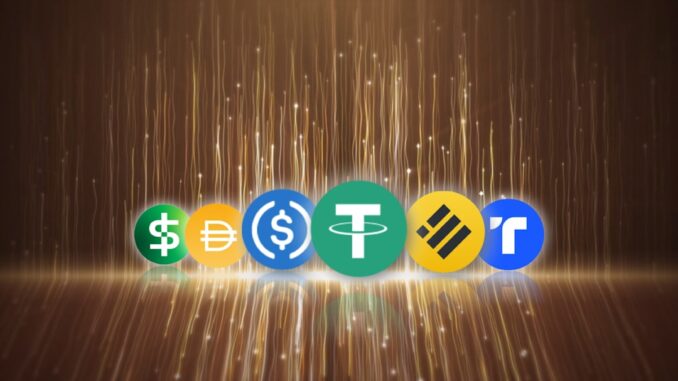

Stablecoins: The Unsung Architects of Digital Finance’s Future
Stablecoins, my friend, have quietly yet profoundly reshaped the very foundations of digital finance, acting as an indispensable conduit between the time-honored traditional financial system and the electrifying, often tempestuous, realm of cryptocurrencies. They’re not just another digital asset; they’re the steady hand in a volatile landscape, meticulously pegged to stable assets, most notably the omnipresent U.S. dollar. This inherent stability has, understandably, captured the imagination and scrutiny of everyone from seasoned institutional investors to the most vigilant of financial regulators.
Think about it for a moment: if Bitcoin is the wild, untamed frontier of digital gold, stablecoins are the dependable, paved highways that connect settlements, allowing commerce to flow without the constant fear of a sudden market tremor. They offer that crucial ‘semblance of stability,’ a phrase that doesn’t quite capture the revolutionary impact of not having your digital dollar lose 10% of its value overnight. We’re talking about a tool that, in essence, brings predictability to an inherently unpredictable space, and you can’t really overstate its importance.
Investor Identification, Introduction, and negotiation.
The Intricate Choreography: Designing and Measuring Stablecoins
The architecture underpinning stablecoins is anything but simplistic; it’s a sophisticated interplay of mechanisms, each designed with a singular, vital purpose: to maintain its elusive peg to an underlying asset. Understanding these intricate systems is key to appreciating both their power and their inherent vulnerabilities. They broadly fall into three principal categories, each with its own philosophy and engineering.
Fiat-Collateralized Stablecoins: The ‘Gold Standard’ (or Dollar Standard)
First, you’ve got the fiat-collateralized stablecoins, the most straightforward and, arguably, the most widely adopted. These digital assets are meant to be backed 1:1 by traditional fiat currencies, typically the U.S. dollar, held in reserve accounts. Tether (USDT) and USD Coin (USDC) are the undisputed titans in this arena, their combined market capitalization often dwarfing many traditional banks. The premise here is simple: for every USDT or USDC token in circulation, there should be one U.S. dollar, or an equivalent high-quality liquid asset, securely tucked away in a bank account. It’s an intuitive model, right? You issue a digital token, you hold the real-world equivalent.
But here’s where the plot thickens a bit. The ‘should be’ part has, historically, been a source of significant controversy, particularly for Tether. For years, questions swirled around the transparency and quality of its reserves, leading to regulatory scrutiny and public skepticism. Was it all cash? Or was it a mix of commercial paper, corporate bonds, and other less liquid assets? This lack of absolute clarity underscored the critical need for robust, independent audits and transparent attestations. USDC, on the other hand, has generally taken a more proactive approach, with frequent reports detailing its reserves, often consisting predominantly of cash and short-term U.S. Treasuries, fostering greater trust among institutions and everyday users alike. For these stablecoins, the peg is maintained by market arbitrage: if USDT dips below $1, traders buy it cheap and redeem it for the full dollar, profiting and driving the price back up; if it goes above $1, they mint new tokens (if they’re an authorized participant) and sell them, again, pulling the price back.
Crypto-Collateralized Stablecoins: Decentralization’s Pledge
Then we venture into the world of crypto-collateralized stablecoins, a fascinating beast that dares to maintain stability using only other cryptocurrencies as backing. MakerDAO’s DAI is the quintessential example here. Instead of a bank account full of dollars, DAI is collateralized by a diverse basket of cryptocurrencies like Ethereum (ETH) and various other assets locked into smart contracts on the blockchain. The genius—and the complexity—lies in its over-collateralization model. You typically need to deposit more than $1 worth of crypto (say, $1.50 or $2.00) to mint $1 worth of DAI. Why? Because the underlying collateral is volatile, and that buffer protects the system against sudden price crashes.
Smart contracts are the unwavering custodians of this system. They manage the collateralization ratios, automate liquidations if the collateral value drops too much, and govern the stability fees that users pay for borrowing DAI. It’s a remarkably intricate dance, entirely on-chain, and largely immune to traditional censorship. However, it’s not without its own set of high-stakes risks: smart contract vulnerabilities, the sheer volatility of the underlying crypto collateral, and the ever-present danger of oracle failures that feed incorrect price data to the system. It’s a bold experiment in decentralized money, but it demands constant vigilance.
Algorithmic Stablecoins: The Audacious Experiment
The most ambitious, and perhaps the most perilous, category involves algorithmic stablecoins. These rely not on direct collateral, but on sophisticated algorithms and smart contracts to dynamically adjust the stablecoin’s supply, essentially playing a game of digital supply and demand to maintain the desired price peg. Think of it as a central bank, but one run by lines of code rather than humans, constantly expanding or contracting the money supply.
Terra’s UST, tragically, remains the most prominent, and cautionary, tale here. Its mechanism involved a dual-token system: UST (the stablecoin) and LUNA (the volatile governance token). If UST dipped below $1, users could burn UST to mint LUNA, reducing UST supply and theoretically pushing its price back up. If UST went above $1, users could burn LUNA to mint UST, increasing supply and bringing the price down. It sounded elegant, didn’t it? The problem was, this system worked beautifully during periods of growth and confidence. But when extreme market pressure hit, confidence evaporated, triggering a catastrophic ‘death spiral’ where UST lost its peg entirely, and LUNA hyper-inflated into oblivion. It was a stark, brutal lesson in the limits of purely algorithmic stability, highlighting the absolute reliance on market confidence and the fragility when that confidence shatters.
Evaluating the Pillars: Key Metrics for Stablecoin Health
Regardless of their design, assessing a stablecoin’s viability means looking beyond the headlines and diving into several critical metrics. You wouldn’t buy a house without an inspection, would you? So why would you trust a digital currency without understanding its foundational health?
-
Stability: This is the big one, isn’t it? It’s the stablecoin’s raison d’être. We’re talking about its ability to relentlessly maintain its value relative to the pegged asset. How tight is the peg? Does it deviate frequently, or only in extreme market conditions? A stablecoin that consistently de-pegs is, frankly, just another volatile crypto. We measure this through price charts, observing deviations, and understanding the mechanisms that restore the peg. Market events, regulatory announcements, or even FUD (fear, uncertainty, doubt) can test this stability, and how a stablecoin responds reveals its true resilience.
-
Liquidity: Picture a bustling marketplace. Can you easily buy or sell significant amounts of the stablecoin without causing a noticeable ripple in its price? That’s liquidity. High liquidity means you can move large sums in and out without slippage, which is absolutely crucial for institutional adoption and for DeFi applications that handle vast sums. Lack of liquidity, conversely, means even relatively small trades can cause significant price fluctuations, eroding trust and utility. Market makers, exchange listings, and integration into various DeFi protocols all contribute to a stablecoin’s liquidity.
-
Transparency: Can you, the user, independently verify the claims made by the issuer? This is about clear, verifiable information regarding reserve assets, the mechanisms in place to maintain the peg, and any associated risks. For fiat-backed stablecoins, this means regular, independent attestations or audits, detailing the composition of reserves. For crypto-collateralized ones, it’s about open-source code and clear on-chain data. Opaque systems breed distrust, and in finance, trust is the ultimate currency.
-
Security: This refers to the robustness of the underlying smart contracts and protocols against exploits, hacks, and other malicious attacks. For crypto-collateralized and algorithmic stablecoins, smart contract audits by reputable firms are non-negotiable. For fiat-backed ones, it extends to the security of the custodial banks and the legal frameworks protecting the reserve assets. A breach of security can wipe out value and permanently damage user confidence. It’s about protecting the digital plumbing from digital saboteurs.
-
Scalability: Can the stablecoin system handle a rapidly increasing number of transactions and users without becoming slow or prohibitively expensive? As global adoption grows, this becomes paramount. Solutions often involve moving to faster, cheaper blockchains or employing layer-2 scaling solutions.
-
Censorship Resistance: Particularly important in the decentralized ethos of crypto, can governments or powerful entities easily freeze or seize stablecoin holdings? While some centralized stablecoins do have mechanisms to freeze illicit funds, truly decentralized ones aim to minimize such vulnerabilities, offering a different value proposition for users prioritizing financial sovereignty.
-
Accessibility: How easy is it for a global user base to acquire, use, and redeem the stablecoin? This involves integration with various exchanges, fiat on/off-ramps, and user-friendly interfaces. A stablecoin that’s difficult to use won’t achieve widespread adoption, no matter how stable.
Fueling the Revolution: Stablecoin Applications in Digital Transformation
Stablecoins aren’t just theoretical constructs; they are, right now, actively driving digital transformation across a plethora of sectors. They’re solving real-world problems, making existing processes more efficient, and enabling entirely new paradigms that simply weren’t possible before.
Payments and Remittances: Bridging Borders, Saving Pennies
Perhaps one of the most immediately impactful applications of stablecoins is in the realm of payments and remittances. If you’ve ever sent money internationally through traditional banking channels, you know the drill: high fees, slow settlement times often measured in days, and opaque exchange rates. It’s a frustrating, antiquated system.
Enter stablecoins. Imagine a migrant worker in the U.S. wanting to send money home to Mexico. Instead of wiring money through a traditional service, incurring significant fees and waiting perhaps 3-5 business days, they could convert their USD to USDC or USDT, send it across the blockchain to a family member in minutes, and that family member could instantly convert it to Mexican Pesos at a local crypto exchange or even a crypto-enabled ATM. The fees are a fraction of the cost, and the speed is almost instantaneous. It’s a game-changer for financial inclusion, unlocking economic activity for millions who are currently underserved by traditional finance. We’re talking about enabling micro-payments that were previously uneconomical and facilitating global trade with newfound velocity. The potential here, especially for emerging economies, is truly immense, offering a pathway to cheap, borderless value transfer.
Decentralized Finance (DeFi): The Bedrock of a New Financial System
In the sprawling, innovative ecosystem of Decentralized Finance (DeFi), stablecoins aren’t just useful; they’re absolutely indispensable. They serve as the stable medium of exchange, the store of value, and the unit of account that makes the whole chaotic, creative system function. Without stablecoins, DeFi would be a much more speculative, niche endeavor, constantly battling the wild price swings of assets like Ether or Solana.
Think about it: lending and borrowing protocols like Aave or Compound, decentralized exchanges (DEXs) like Uniswap or Curve, and the myriad of yield farming strategies that promise attractive returns—they all rely heavily on stablecoins. You wouldn’t want to borrow a volatile asset if you need predictable repayment, would you? And you certainly wouldn’t want your collateral to suddenly plummet in value while you’re taking out a loan. Stablecoins provide that essential ballast, allowing users to lend, borrow, trade, and earn yield without the heart-stopping volatility associated with other cryptocurrencies. They’re the ‘cash’ of DeFi, enabling complex financial maneuvers and helping to build what many envision as the next generation of financial services, entirely transparent and programmable. They allow you to participate in these cutting-edge financial activities without constantly stressing about the market going sideways on you.
Tokenization of Real-World Assets (RWA): Unlocking Illiquidity
The tokenization of real-world assets (RWA) represents another frontier where stablecoins are playing a starring role. This process involves representing tangible assets—like real estate, art, commodities, or even corporate bonds—as digital tokens on a blockchain. It’s about taking something inherently physical or illiquid and making it programmable, divisible, and globally accessible.
Stablecoins act as the primary medium of exchange for these tokenized assets. Imagine buying a fractional share of a multi-million-dollar skyscraper. You wouldn’t want to pay for it with Bitcoin if its value might fluctuate wildly during the settlement period, would you? Using a stablecoin ensures price predictability for both the buyer and the seller. This process enhances liquidity for traditionally illiquid assets, allowing for fractional ownership, lower transaction costs, and 24/7 trading. A stable and programmable medium for transactions is critical for the seamless exchange and settlement of these digital representations. It opens up investment opportunities to a far broader audience, democratizing access to assets once reserved for the ultra-wealthy. From digital art to tokenized carbon credits, stablecoins are the transactional glue making this future possible. It’s pretty exciting when you stop and think about it.
Beyond the Big Three: Other Emerging Use Cases
But the stablecoin story doesn’t end there. We’re seeing them integrate into various other niches, each highlighting their versatility:
- Trade Finance: Streamlining cross-border trade settlements, reducing delays, and improving transparency in supply chains. Imagine a letter of credit executed via smart contract, settled instantly with stablecoins.
- Hedging against Volatility: For crypto traders, stablecoins are the preferred safe haven during market downturns. Instead of selling to fiat and incurring bank fees, they can quickly move into USDT or USDC to ‘wait out’ the storm, then easily re-enter the market.
- On-ramp/Off-ramp for Crypto: They provide an easy way for new users to enter the crypto ecosystem without immediately facing the full brunt of volatility, and for existing users to cash out or temporarily hold value within the digital space.
- Payroll: Some forward-thinking companies are exploring paying employees in stablecoins, especially in regions with high inflation or limited access to traditional banking.
The Regulatory Minefield: Navigating the GENIUS Act and Global Concerns
The explosive growth and widespread adoption of stablecoins have, as you might expect, drawn the keen attention of regulators worldwide. Governments and central banks simply can’t ignore assets that are increasingly intertwined with global finance, and they shouldn’t. The imperative to establish robust frameworks to govern their use, mitigate risks, and protect consumers has become a top priority.
The GENIUS Act: A Landmark in the U.S.
In the United States, the passage of the Guiding and Establishing National Innovation for U.S. Stablecoins Act, or the GENIUS Act, in July 2025 marked a truly significant legislative milestone. This wasn’t just another piece of legislation; it was an attempt to provide a comprehensive, albeit controversial, regulatory framework specifically tailored for stablecoins. It aimed to bring clarity to an asset class that had, for too long, operated in a legal gray area.
The Act, as I understand it, tackles several crucial areas head-on. Firstly, it mandates stringent reserve requirements, insisting that stablecoin issuers maintain reserves fully backed by high-quality liquid assets. This isn’t just about having some assets; it’s about having the right kind of assets—easily convertible to cash, ensuring that each stablecoin truly is redeemable at par, meaning you can always exchange it for one U.S. dollar. Secondly, it demands standardized disclosure and regular attestations by registered accounting firms, a move designed to enhance transparency and, crucially, build much-needed trust among users and the broader financial community. Gone, theoretically, are the days of vague reserve statements. Issuers now face licensing requirements, bringing them more fully under the purview of financial oversight bodies, which, let’s be honest, is a reasonable expectation for entities handling billions in digital value.
The Shadow of Controversy: Dollarization and Systemic Risk
However, the GENIUS Act, like any ambitious piece of legislation, hasn’t emerged without its fair share of critics and controversy. Some argue that, despite its intentions, the legislation could inadvertently destabilize the global payments system by accelerating what’s known as ‘dollarization’ in foreign economies. Vincent Mortier, the Chief Investment Officer at Amundi, a major asset manager, voiced quite strong concerns, warning that the proliferation of dollar-backed stablecoins might well undermine other countries’ monetary sovereignty. He laid out a compelling argument: if people in emerging markets flock to dollar-denominated stablecoins as a safe haven from local currency inflation or instability, it could lead to significant capital flight, reduce local central banks’ control over their own monetary policy, and potentially destabilize those economies. It’s a very real concern, isn’t it? The U.S. dollar is already the world’s reserve currency; digital dollarization could amplify its influence to unprecedented levels.
Adding to these concerns, the Bank for International Settlements (BIS), often referred to as the ‘central bank for central banks,’ has repeatedly sounded the alarm about the risks posed by stablecoins. Their warnings aren’t just theoretical; they highlight very practical dangers regarding monetary sovereignty, the need for absolute transparency, and the potential for broader economic instability if not managed correctly. The BIS emphasizes that without strict, harmonized regulation, stablecoins could create new avenues for contagion within the financial system, facilitate illicit activities, and even create ‘runs’ akin to traditional bank runs, but at digital speed. Imagine a digital bank run; it would be incredibly fast and potentially devastating. They’re basically saying, ‘Hey, this innovation is cool, but let’s not break the whole system in the process.’
Stablecoins vs. CBDCs: A Future of Coexistence or Competition?
This regulatory discussion invariably leads to the broader debate surrounding Central Bank Digital Currencies (CBDCs). Many central banks are actively exploring or developing their own digital currencies. So, what’s the relationship between private stablecoins and public CBDCs? Are they competitors, or can they coexist?
Some argue that CBDCs, being state-backed, offer an even higher degree of stability and trust, and would give central banks greater control over monetary policy. Others believe that private stablecoins, driven by market demand and innovation, will naturally find their niche, perhaps excelling in specific use cases like DeFi, where the permissionless nature is valued. The truth is likely somewhere in the middle: we might see a future where both coexist, with stablecoins fulfilling niche roles and CBDCs forming the bedrock of national digital payment systems. It’s a fascinating policy tightrope, ensuring innovation isn’t stifled while systemic risk is contained.
The Path Forward: Navigating Opportunity and Risk
There’s simply no denying it: stablecoins have cemented their place as a cornerstone of digital transformation in the financial sector. They offer a potent combination of stability, programmability, and efficiency that facilitates a staggering array of applications, from speeding up global remittances to powering the most sophisticated corners of decentralized finance. Their ingenious designs, whether fiat-backed, crypto-collateralized, or algorithmically driven, alongside the critical metrics used to evaluate their health—stability, liquidity, transparency, security—are all crucial for their effective and responsible integration into the global financial fabric.
However, as with any powerful innovation, the road ahead isn’t without its potholes and potential pitfalls. The regulatory landscape, as exemplified by the GENIUS Act in the U.S., is evolving rapidly, seeking to harness the benefits while mitigating the very real risks. The concerns raised by economists and international bodies about dollarization, monetary sovereignty, and systemic financial stability are not to be dismissed lightly; they demand thoughtful consideration and proactive solutions.
Moving forward, it’s absolutely imperative for all stakeholders—from stablecoin issuers and developers to regulators and international organizations—to engage in continuous, open dialogue. We need to collaboratively address these complex concerns, ensuring that the transformative benefits of stablecoins can be fully realized without inadvertently compromising the stability and sovereignty of our financial systems. The future of global finance is, increasingly, digital, and stablecoins are undeniably a critical part of that unfolding narrative. So, the question remains: are we ready to build this future responsibly? I certainly hope we are.
Be the first to comment