
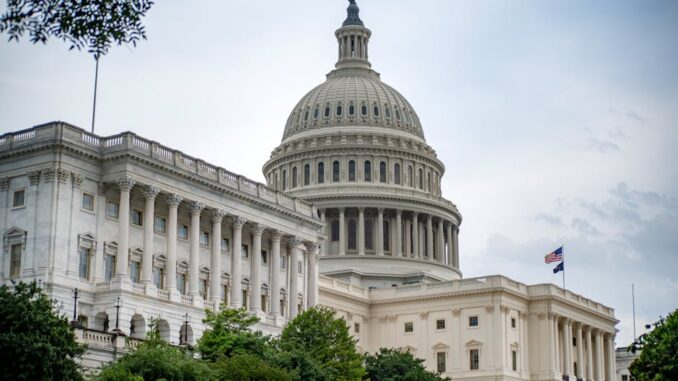

Regulatory Roadblock: The CLARITY Act’s Long Haul to 2026
Well, here we are again, staring down another stretch of uncharted regulatory waters. The U.S. Senate Banking Committee, in a move that frankly didn’t surprise many of us tracking the digital assets space closely, has officially hit the pause button on the much-anticipated markup of the crypto market structure bill, affectionately known as the CLARITY Act. We’re now talking early 2026 for a potential revival of this critical legislative effort, pushing the period of regulatory limbo for digital asset firms operating stateside even further into the future. It’s a delay attributed, quite predictably, to the labyrinthine dance of bipartisan negotiations and the ever-present scheduling woes that plague Capitol Hill as the year-end recess looms.
For anyone invested in the future of crypto in America, this isn’t just a minor blip; it’s a significant extension of uncertainty. Think about it: businesses are trying to innovate, expand, and hire, all while operating under a cloud of ‘what if.’ It’s like trying to build a skyscraper without knowing if the ground beneath you is solid or shifting sand. And honestly, it’s frustrating, isn’t it?
Investor Identification, Introduction, and negotiation.
The CLARITY Act: A Beacon, Yet Out of Reach
At its core, the CLARITY Act isn’t some obscure piece of legislative jargon; it’s meant to be a foundational document. Its ambition? To establish a comprehensive regulatory framework for digital assets, finally providing some much-needed direction on how federal regulators – think SEC, CFTC, Treasury, you name it – actually oversee this burgeoning industry. For years, the crypto community has championed this kind of clear, consistent regulation, arguing vehemently that it’s the only path to fostering genuine innovation, attracting serious capital, and, critically, protecting consumers from bad actors.
We’ve seen how a lack of clarity stifles growth. Startups, often the lifeblood of technological advancement, hesitate to launch groundbreaking products or services if they can’t accurately assess the legal risks. Existing firms face exorbitant compliance costs trying to guess at what rules apply, often relying on expensive legal interpretations that can change at the drop of a hat. It’s an environment that frankly pushes talent and capital overseas, and that’s something the U.S. can ill afford to let happen given the global race for crypto leadership.
Dissecting the Delay: A Confluence of Factors
The decision to postpone the CLARITY Act until 2026 wasn’t a singular event but rather the culmination of several interlocking challenges, each complex in its own right.
The Partisan Tug-of-War
Chief among these is the ongoing, often contentious, dance of bipartisan negotiations. You see, while both sides generally agree that something needs to be done about crypto regulation, the devil, as always, is in the details. Republicans often lean towards empowering the CFTC, viewing many digital assets as commodities, and generally advocate for less heavy-handed regulation, aiming to foster innovation. Democrats, on the other hand, frequently express greater concern for consumer protection and market stability, often suggesting a more prominent role for the SEC, particularly in areas they see as resembling securities.
Senator Mark Warner, a key voice in these discussions, openly acknowledged the vast chasm between the two sides. He put it pretty starkly, noting that lawmakers don’t even have agreed-upon language for some sections of the bill. Can you imagine trying to draft a major piece of legislation when you can’t even agree on the basic terminology? It’s like trying to build a house when the architects can’t decide if they’re constructing a bungalow or a skyscraper. This isn’t just about minor tweaks; it’s about fundamental disagreements on jurisdiction, scope, and the very definition of what constitutes a ‘crypto asset’ in the eyes of the law. Should NFTs be treated the same as stablecoins? What about decentralized finance (DeFi) protocols? These aren’t simple questions, and they invite fierce debate.
A Jam-Packed Legislative Calendar
Then there’s the perennial problem of the Senate’s legislative calendar. It’s always a tight squeeze, but this year seems particularly congested. Other pressing priorities—budget negotiations, essential appropriations bills, perhaps even some geopolitical wrangling—have consistently pushed crypto to the back burner. Lawmakers, it seems, simply haven’t had sufficient bandwidth to tackle the immense complexities inherent in a comprehensive digital asset framework before the end of the year. You can’t just wave a magic wand and make these things happen; they require painstaking hours of debate, amendment, and compromise. And when the clock is ticking towards recess, and everyone’s minds are already on returning to their districts, complex, novel legislation like the CLARITY Act often gets punted.
Moreover, we shouldn’t forget the influence of various lobbying groups. The crypto industry itself, though united on the need for clarity, isn’t entirely monolithic in its desires. Different sectors—exchanges, stablecoin issuers, DeFi developers—all have unique concerns, and they’re all vying for their voices to be heard. This advocacy, while crucial, can also add layers of complexity to the negotiation process, making consensus even more elusive. When everyone’s pushing their own agenda, finding common ground becomes an even tougher job.
The Lingering Chill: Implications for the Crypto Industry
The implications of this postponement are, to put it mildly, significant. For digital asset firms—the exchanges facilitating trades, the brokers connecting investors, the token issuers raising capital, and the developers building the next generation of financial infrastructure—this extended period of regulatory uncertainty feels like a constant headwind. It impacts almost every facet of their operations.
Think about it: new product launches might stall, or perhaps even be shelved indefinitely. Investment decisions, particularly from institutional players who demand clear regulatory guardrails, could be put on hold. Imagine a venture capital firm looking to pour millions into a promising crypto startup; without clear rules, they face an elevated risk profile, potentially leading them to look elsewhere, maybe even to more crypto-friendly jurisdictions overseas. This isn’t just hypothetical; it’s a very real concern I hear from founders and investors regularly.
A Brain Drain and Capital Exodus?
This isn’t merely about inconvenience; it’s about a potential chilling effect on innovation. When the regulatory landscape is foggy, companies become risk-averse. They might choose to relocate parts of their operations, or even their entire business, to countries that have established clear rules. We’ve seen the EU take decisive steps with MiCA (Markets in Crypto-Assets) regulation, offering a harmonized framework across member states. The UK is making moves, and places like Dubai and Singapore are actively courting crypto businesses with clear, forward-thinking approaches. The U.S. risks falling behind in this global race for digital asset leadership if it can’t provide a predictable environment for growth.
Furthermore, this uncertainty can impact hiring. Why bring on a large team if you’re unsure what your operational constraints will be next year? It creates a kind of paralysis, hindering job creation and economic growth in a sector that’s otherwise brimming with potential. And what about consumer protection? In the absence of federal oversight, state-by-state regulations or, worse, no regulation at all, leaves consumers vulnerable to scams and poorly managed platforms. It’s a Wild West scenario that nobody truly wants.
Market’s Measured Tremors: The Price of Uncertainty
Predictably, the market responded to the news of the delay with a heightened sense of caution, if not outright concern. Bitcoin, often seen as the bellwether of the crypto market, certainly experienced fluctuations in its price. This wasn’t a catastrophic crash, mind you, but more of a steady downward pressure and increased volatility, reflecting investor anxieties over the prolonged lack of regulatory clarity.
But it’s not just Bitcoin. You’d have seen similar, if not more pronounced, reactions across various altcoins and even in the performance of publicly traded companies with significant exposure to the digital asset space. Investor confidence, a fragile beast at the best of times, thrives on predictability. When that’s absent, capital tends to retreat to safer havens. The market’s reaction, then, really underscores a fundamental truth: clear and timely regulations are absolutely essential for maintaining investor confidence, fostering long-term stability, and allowing markets to mature properly. Without them, we’re perpetually operating on edge, susceptible to every whisper and rumor.
Peering into the Crystal Ball: What Awaits in 2026?
As Congress (eventually) reconvenes in early 2026, all eyes, especially those within the crypto industry, will be fixed on the progress of the CLARITY Act. The pervasive hope is that renewed bipartisan efforts will finally coalesce into meaningful legislative action, culminating in the passage of this crucial bill. This isn’t just about a piece of paper; it’s about providing the foundational regulatory framework necessary for the continued, healthy growth and development of digital assets in the United States. Many believe that without it, the sector’s full potential here remains tragically untapped.
Potential Paths Forward
So, what might 2026 actually look like? Well, several scenarios could unfold. We could see a focused effort to tackle specific, less controversial aspects of crypto regulation first, perhaps stablecoins, which have garnered a fair bit of bipartisan agreement. Think of it as chipping away at the problem, rather than trying to swallow it whole. This ‘bite-sized’ approach might gain traction, delivering some wins even if a comprehensive bill remains elusive.
Another possibility is that the political landscape shifts significantly after the upcoming election cycles. A different balance of power in Congress, or even a new administration, could either invigorate efforts or, conversely, create new ideological roadblocks. It’s a gamble, really. What we can be sure of, though, is that industry stakeholders won’t be sitting idly by. They’ll continue their advocacy, pushing for common-sense regulations that protect consumers without stifling the very innovation that makes this space so exciting.
The Call for a ‘Whole-of-Government’ Approach
Ultimately, what’s really needed, I believe, is a more coordinated, ‘whole-of-government’ approach to digital assets. This isn’t just about the Senate Banking Committee; it involves the SEC, the CFTC, the Treasury Department, the Federal Reserve, and even agencies like FinCEN. Each has a piece of the puzzle, but without a cohesive strategy, they often work in silos, leading to overlapping jurisdictions, regulatory gaps, and, yes, more uncertainty. It’s a complex beast, this crypto world, and it demands a nuanced, coordinated response, not just sporadic, fragmented attempts at legislation.
For now, the industry must continue to navigate this opaque environment, making strategic decisions with incomplete information. It’s a testament to the resilience and sheer innovative drive of the digital asset community that it continues to push forward despite these headwinds. But wouldn’t it be refreshing if, by 2026, we could actually see some clear skies on the regulatory horizon? One can hope, right?
In a Global Context
It’s also worth briefly stepping back and considering where the U.S. stands globally. As mentioned, the European Union has already rolled out its MiCA framework, providing a relatively comprehensive regulatory blueprint for digital assets across its member states. The United Kingdom is actively pursuing its own robust regulatory regime, and nations like the UAE and Singapore have positioned themselves as crypto-friendly hubs, attracting significant investment and talent. While the U.S. debates, others are building the frameworks that will shape the future of finance. We risk not just falling behind, but losing our competitive edge entirely if we can’t get our act together.
This delay isn’t just about market fluctuations today; it’s about the long-term positioning of the United States in a rapidly evolving global economy. Let’s hope that when 2026 rolls around, our lawmakers aren’t just restarting the conversation, but are ready to finish it, decisively.
Be the first to comment