
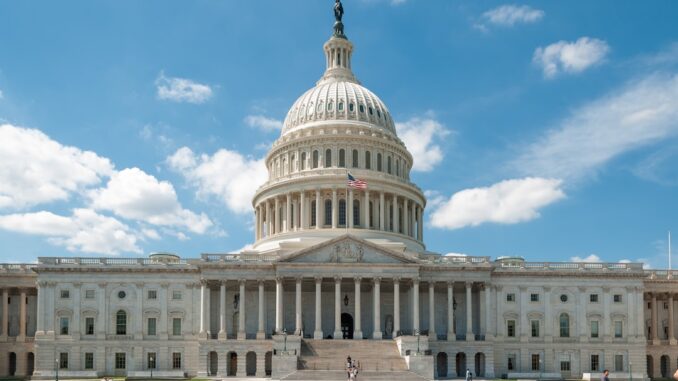

Navigating the Digital Wild West: A Deep Dive into the DCCPA’s Quest for Clarity
The digital asset landscape, often characterized by its electrifying innovation and dizzying volatility, has long resembled something of a Wild West – a frontier brimming with opportunity, certainly, but also fraught with peril for the unwary. For years, the calls for clearer regulatory signposts have grown louder, a chorus from both wary investors and legitimate businesses alike. Finally, it seems, Washington is answering that call.
In a truly significant stride towards bringing order to this complex domain, the U.S. Senate Agriculture Committee, under the bipartisan stewardship of Chairman John Boozman (R-AR) and Senator Cory Booker (D-NJ), has unveiled a draft of the Digital Commodities Consumer Protection Act (DCCPA). This isn’t just another piece of paper; it’s a meticulously crafted proposal designed to lay down a comprehensive regulatory framework for digital commodity markets, squarely placing them under the watchful eye of the Commodity Futures Trading Commission (CFTC). Building on the groundwork, and perhaps lessons learned, from the House-passed CLARITY Act of July 2025, the DCCPA aims to cut through the murk, providing much-needed clarity and robust consumer protections in an asset class that frankly, often moves at warp speed.
Investor Identification, Introduction, and negotiation.
You know, it’s about time we saw some serious movement on this front. The industry’s been clamoring for it, and frankly, consumers deserve better than the uncertainty and occasional outright scams that have plagued the space. This bill, if it passes, could really change the game.
Drawing the Lines: What Exactly is a ‘Digital Commodity’?
Defining ‘digital commodities’ isn’t just an academic exercise; it’s the bedrock upon which the entire regulatory structure rests. The DCCPA’s draft attempts to delineate this crucial boundary with precision. It refers to ‘digital commodities’ as fungible digital assets, capable of peer-to-peer transfer, and recorded on distributed ledgers. Simple enough, right? But the real nuance, the true legislative tightrope walk, lies in what it excludes.
The draft explicitly carves out securities, payment stablecoins, deposits, derivatives, pooled investment vehicles, and even collectibles like NFTs from this definition. This isn’t an oversight; it’s a deliberate, strategic maneuver to ensure that the CFTC’s expanded jurisdiction remains laser-focused on commodities, leaving other types of digital assets to fall under the established purviews of different regulatory bodies, primarily the Securities and Exchange Commission (SEC). Think about it: trying to regulate a unique, one-of-a-kind digital painting (an NFT) with the same brushstrokes as a fungible asset like Bitcoin or Ethereum, where every unit is interchangeable, simply doesn’t make sense. The legislative intent here is clear: leverage existing expertise where it makes sense, and create new frameworks where unique characteristics demand it.
This distinction is vital because it addresses one of the most contentious debates in the digital asset space: the jurisdictional tug-of-war. For too long, the question of ‘is it a security or a commodity?’ has hung over countless projects, stifling innovation and leaving developers, investors, and legal teams scratching their heads. The DCCPA endeavors to provide a definitive answer, at least for a significant portion of the market, letting the CFTC step up to oversee assets that behave more like traditional commodities – raw materials, energy products, or agricultural goods, which are its historical domain.
For instance, consider Bitcoin. It’s traded globally, its units are interchangeable, and its value is largely determined by supply and demand, much like gold or oil. It doesn’t typically represent an ownership stake in a company or a share of future profits, which are hallmarks of a security. Therefore, slotting it under the CFTC’s umbrella feels intuitively correct to many, and the DCCPA embraces this perspective. On the other hand, an initial coin offering (ICO) that promises investors a share of a platform’s future revenue often smells a lot like a security, requiring SEC oversight. This bill isn’t trying to usurp the SEC’s authority; it’s trying to clarify the boundaries, which, honestly, is a monumental task in itself.
The Road Paved: CLARITY’s Role as a Precursor
It’s important to understand that the DCCPA didn’t just appear out of thin air. It stands on the shoulders of earlier legislative efforts, most notably the House-passed Digital Asset Market Clarity (CLARITY) Act of July 2025. That bill was a crucial, albeit imperfect, precursor that signaled Congress’s growing recognition of the need for digital asset regulation. The CLARITY Act primarily aimed to direct the CFTC and SEC to define their respective jurisdictions more clearly and established a framework for classifying digital assets as either securities or commodities. It was a good first step, a foundational blueprint if you will.
However, some critics, including consumer advocacy groups like Consumer Reports, argued that while CLARITY was a step in the right direction, it didn’t go far enough in protecting consumers and investors. They felt it lacked the teeth necessary to truly safeguard market participants from abusive practices. The CLARITY Act was more about establishing who regulates what, rather than how those entities would actually regulate to ensure market integrity and consumer safety.
The DCCPA, in many ways, addresses these perceived shortcomings. It takes the jurisdictional delineation further and then layers on robust operational standards and consumer protections that CLARITY perhaps only hinted at. You could see it as a natural evolution; CLARITY identified the problem and assigned the homework, while DCCPA is delivering a much more detailed, action-oriented solution. This progression showcases a learning curve in Congress, which, let’s be honest, is sometimes a rare sight. Lawmakers aren’t just identifying issues; they’re actually refining their approach based on previous attempts and feedback, which is encouraging.
The Operational Blueprint: Registration and Compliance Requirements
If the DCCPA defines what is regulated, its registration and compliance requirements dictate how these entities will operate. This section is where the rubber meets the road for digital commodity exchanges, brokers, dealers, and custodians. Under the proposed framework, these vital cogs in the digital asset machine won’t just operate freely; they must register with the CFTC and adhere to a strict set of standards. This isn’t a suggestion; it’s a mandate, and it’s designed to inject a much-needed dose of institutional rigor into an often-unregulated sector. Let’s break down what these stringent standards entail, because it’s here that we see the true ambition of the bill:
-
Market Integrity: Keeping the Playing Field Level
- The bill explicitly prohibits abusive trading practices. What does that mean in the context of digital commodities? Think wash trading, where a trader simultaneously buys and sells an asset to create misleading activity; front-running, using advance knowledge of a customer’s order to make a profit; or spoofing, placing large orders with no intention of executing them to manipulate prices. These are tactics that erode trust and distort fair market pricing. The DCCPA aims to stamp these out, creating a market where honest price discovery can thrive.
- Minimum capital requirements are also a critical component here. This isn’t just about having money in the bank; it’s about ensuring that firms have sufficient financial reserves to absorb losses, manage operational risks, and, crucially, protect customer assets in times of market stress or unforeseen events. For smaller firms, this could be a significant hurdle, potentially driving consolidation, but it’s a necessary safeguard against the ‘move fast and break things’ mentality that has occasionally led to spectacular failures in the crypto space.
-
Consumer Protection: Safeguarding Your Digital Assets
- Robust cybersecurity measures aren’t just a buzzword here; they’re an imperative. We’re talking about mandates for multi-factor authentication, regular security audits, secure cold storage solutions for a significant portion of customer assets (meaning offline, inaccessible to internet attacks), and perhaps even mandatory insurance against hacks or breaches. This will dramatically elevate the baseline security posture for platforms, giving users more confidence that their hard-earned digital wealth isn’t just one phishing attack away from disappearing.
- Safeguarding customer assets also means clear rules against commingling customer funds with operational capital. Think of what happened with FTX; customer funds were treated as the exchange’s own piggy bank. The DCCPA would seek to prevent such egregious misuse, ensuring customer assets are held in segregated accounts, distinct from the firm’s own capital, and readily identifiable. This offers a vital layer of protection against insolvency and fraud.
-
Transparency: Lifting the Veil of Obscurity
- Clear disclosures about digital commodities and associated risks are paramount. This goes beyond just a ‘crypto is risky’ disclaimer. It means detailed explanations of an asset’s technology, its intended use, its governance structure, and any significant risks unique to that asset. Platforms would likely need to provide plain-language explanations of fees, trading mechanisms, and custody arrangements.
- Imagine a world where you’re truly informed, not just about the potential gains, but the very real risks, presented in a digestible format. It’s about empowering consumers to make informed decisions, not just speculative bets. This could also extend to proof-of-reserve requirements, where platforms periodically demonstrate that they actually hold the digital assets they claim to custody for their users.
-
Operational Standards: Building a Foundation of Trust
- Maintaining sufficient financial resources means ongoing liquidity and solvency requirements, not just minimum capital. This ensures firms can meet their obligations even during market downturns. It’s about operational resilience.
- Adhering to governance protocols implies established corporate structures, independent board oversight, clear internal controls, and ethical guidelines. It moves firms away from being run by a handful of individuals in an opaque manner to a more traditional, accountable financial institution model. Audits, both financial and operational, would likely become standard practice, fostering accountability and trust.
These requirements, collectively, aren’t just about stopping bad actors. They’re about cultivating a fertile ground for legitimate innovation, where participants can trust the infrastructure. It’s a huge undertaking, and it won’t be easy for many existing firms to adapt, but it’s absolutely essential if digital assets are to achieve mainstream acceptance and institutional adoption.
Strengthening the Shields: Enhanced Consumer Protection Measures
The DCCPA really leans into consumer protection, making it a cornerstone of its proposed framework. It’s not enough to just define what a digital commodity is; we need to ensure people using these markets are safe. The bill mandates that digital commodity platforms implement measures that genuinely put the user first. Here’s a closer look at the concrete protections being put in place:
-
Prohibiting Abusive Practices with Vigor: We touched on market integrity, but here, it’s about active enforcement against manipulation and deceptive activities. This means the CFTC would have explicit powers to investigate and prosecute bad actors. Remember the wild stories of ‘pump and dump’ schemes or coordinated market manipulation on social media? This bill is aimed squarely at giving regulators the tools to prevent those and hold perpetrators accountable. If you’ve ever seen a meme coin skyrocket only to crash moments later, leaving countless retail investors holding the bag, you’ll appreciate the necessity of this provision.
-
Ensuring Asset Security, No Exceptions: This is about more than just cybersecurity. It’s about the fundamental safety of your funds and data. The mandate goes beyond basic protection, potentially requiring multi-signature wallets for large holdings, mandating specific cold storage percentages, and even requiring external audits of security systems. Think of it as a digital vault, not just a digital wallet. The goal is to minimize the chances of catastrophic losses due to hacks, internal malfeasance, or operational failures. For anyone who’s had that knot in their stomach wondering if their exchange is truly secure, this offers a much-needed layer of reassurance.
-
Enhancing Transparency for Informed Decisions: Transparency isn’t just about disclosing risks; it’s about providing clear, accurate, and understandable information. This means platforms can’t hide behind complex jargon or obscure terms of service. They’ll need to clearly outline fee structures, withdrawal policies, the underlying technology of the assets they list, and even potential conflicts of interest. Imagine buying a digital asset and truly understanding its whitepaper, its utility, and the risks involved, without needing a blockchain degree. That’s the vision. This empowers individuals to make decisions based on facts, not just hype or speculation.
-
Maintaining Financial Integrity for Market Stability: This is critical for preventing contagion. Adhering to robust financial standards isn’t just good practice; it’s essential for the stability of the entire market. The collapse of major crypto entities in recent years, like FTX or Celsius, demonstrated how quickly financial instability at one firm can ripple through the entire ecosystem, shaking consumer confidence and wiping out billions. The DCCPA aims to prevent such systemic shocks by ensuring firms maintain adequate liquidity, conduct regular audits, and have clear insolvency procedures. It’s about building a robust financial foundation for the entire digital commodity ecosystem, fostering trust and confidence among all participants.
These provisions aren’t just bullet points in a bill; they represent a fundamental shift towards accountability and safety in digital asset markets. They’re designed to foster a sense of trust, encouraging broader participation from both retail investors and institutional players who’ve been hesitant to dip their toes into these waters without a clearer regulatory roadmap. After all, if you can’t trust the platform, you can’t trust the market, can you?
The Jurisdictional Tug-of-War: CFTC vs. SEC
You can’t talk about digital asset regulation without talking about the elephant in the room: the ongoing, sometimes quite vocal, jurisdictional dispute between the Commodity Futures Trading Commission (CFTC) and the Securities and Exchange Commission (SEC). It’s a fundamental challenge that has plagued the industry for years, creating ambiguity that stifles innovation and opens the door to regulatory arbitrage. The DCCPA, by giving the CFTC clear authority over ‘digital commodities,’ is a significant attempt to resolve at least part of this wrestling match.
Historically, the CFTC oversees futures and derivatives markets for traditional commodities like oil, gold, and wheat. Its focus is on market integrity and preventing manipulation in these markets. The SEC, on the other hand, regulates securities markets, protecting investors in stocks, bonds, and other investment contracts. Its primary tool for determining what constitutes a security is the ‘Howey Test,’ derived from a 1946 Supreme Court case, which essentially asks if there’s an ‘investment of money in a common enterprise with a reasonable expectation of profits to be derived from the entrepreneurial or managerial efforts of others.’
Now, here’s where it gets tricky: many digital assets, especially newer ones, don’t fit neatly into either box. Is a new token, initially sold to fund a blockchain project, an investment contract (a security) because investors expect profits from the team’s efforts? Or does it, once fully developed and decentralized, become more like a fungible commodity? This is the million-dollar question that Gary Gensler, the SEC Chair, and Rostin Behnam, the CFTC Chair, have often publicly disagreed on.
Chair Gensler often argues that ‘most crypto tokens are securities’ because they involve an expectation of profit from the efforts of others. He’s been quite firm on that. Chair Behnam, conversely, has pushed for the CFTC to have more authority over cash-settled digital asset spot markets, seeing many of the dominant cryptocurrencies as commodities. The DCCPA clearly favors Behnam’s perspective for a specific class of digital assets, giving the CFTC explicit statutory authority over these spot markets.
Why is this distinction so important? Because the regulatory requirements for securities are vastly different and generally far more stringent than for commodities. Registering a security is a complex, costly, and time-consuming process. Misclassifying an asset can lead to enforcement actions, hefty fines, and significant legal battles, as many projects have unfortunately discovered. The DCCPA attempts to draw a clear line in the sand, saying, ‘If it meets this definition, it’s a digital commodity, and the CFTC is in charge.’ This specificity, while not solving every single jurisdictional nuance, is a monumental step forward in providing clarity for market participants.
But don’t for a second think this completely ends the debate. There will undoubtedly be grey areas, and the precise boundaries will likely be tested in courts for years to come. Still, it provides a much stronger framework than the fragmented, often reactive approach we’ve seen so far. It’s about moving from a reactive stance to a proactive, rules-based one.
Implications for the Digital Asset Industry: Opportunity and Evolution
The introduction of the DCCPA isn’t just a regulatory update; it’s a pivotal moment that will reshape the digital asset industry. By establishing a clear federal framework, the act aims to achieve several critical outcomes, fostering both opportunities and presenting new challenges that will require adaptation from all players.
-
Providing Regulatory Clarity: Unlocking Stifled Innovation and Investment
- For too long, the nebulous regulatory environment has acted as a significant headwind, particularly for institutional investors. Large financial institutions, pension funds, and corporations operate under strict compliance mandates. The lack of clear rules regarding digital assets meant they couldn’t confidently enter the market, fearing unforeseen legal risks or future regulatory crackdowns. This uncertainty has pushed some innovation offshore, or kept it confined to smaller, more agile (and sometimes less compliant) entities.
- The DCCPA provides much-needed guidelines for market participants, offering a roadmap for how to operate legally and compliantly within the U.S. This clarity is expected to unlock a significant wave of institutional investment, as traditional finance finally gets the green light to engage with digital assets without fear of regulatory ambiguity. When you know the rules, you can play the game, right? This could lead to a massive influx of capital and expertise, accelerating the maturation of the market.
-
Enhancing Consumer Confidence: Paving the Way for Broader Adoption
- Let’s be honest, the average person is still wary of crypto. Stories of hacks, scams, and sudden exchange collapses fill the news, creating a perception of an unsafe, speculative gamble. The robust consumer protections embedded in the DCCPA – from stringent cybersecurity to segregated customer funds – are designed to rebuild and strengthen trust.
- This isn’t just about protecting existing users; it’s about making digital assets accessible and trustworthy for the mainstream. When people feel confident their investments are safe, and that there are clear avenues for redress if something goes wrong, they’re far more likely to participate. This could drive broader adoption, moving digital assets from a niche investment to a more integrated part of the global financial system.
-
Fostering Innovation: The Delicate Balance of Regulation and Progress
- A common concern with regulation is that it can stifle innovation. Critics often argue that heavy-handed rules can choke nascent technologies before they have a chance to flourish. The DCCPA faces the delicate task of balancing robust oversight with the need to support technological advancements.
- However, it’s also true that lack of regulation can create a chaotic environment that also stifles innovation, as legitimate projects struggle to compete with unregulated, riskier ventures. By providing a clear framework, the DCCPA could actually foster responsible innovation, encouraging developers to build within established guidelines, knowing that their products will eventually find a legitimate, compliant path to market. It’s about smart regulation, not just regulation for regulation’s sake. The goal isn’t to freeze the industry in place, but to guide its growth in a secure and sustainable manner.
-
Market Structure Impact: Consolidation and New Entrants
- The compliance costs associated with the DCCPA’s stringent requirements will undoubtedly be significant. This could lead to a consolidation within the industry, where smaller, less capitalized exchanges and brokers find it difficult to meet the new standards and either merge, get acquired, or simply exit the market. It’s a natural evolution in any maturing industry.
- Conversely, the enhanced clarity and security could attract new, larger financial players who previously steered clear. Imagine traditional brokerage houses or banks offering digital commodity trading with the CFTC’s stamp of approval; that’s a game-changer. This could lead to a more competitive, but also more stable, market landscape.
-
Global Context: U.S. Leadership or Isolation?
- The U.S. has a chance to set a global standard with the DCCPA. How this bill evolves and is implemented will be closely watched by regulators worldwide. Frameworks like MiCA in the European Union are already in motion, and the U.S. approach will interact with these. Will it create a harmonized global regulatory environment, or will U.S. firms face unique challenges compared to their international counterparts? It’s a balancing act to ensure American innovation remains competitive globally while also protecting domestic consumers.
These implications paint a picture of an industry on the cusp of significant transformation. It won’t be without growing pains, but the potential for a more secure, transparent, and ultimately more accessible digital asset market is undeniably compelling.
The Path Forward: Legislative Hurdles and Future Prospects
The unveiling of the DCCPA draft is certainly a momentous occasion, but it’s crucial to remember that this is just the beginning of a complex legislative journey. The path from draft to enacted law is often winding, filled with debates, compromises, and potential amendments. So, what’s next?
First, the draft will undergo rigorous review within the Senate Agriculture Committee. Expect vigorous discussions, potential markups, and perhaps even some contention from various stakeholders. Industry lobbyists, consumer advocacy groups, and even other government agencies will all weigh in, trying to shape the bill to align with their interests. After committee approval, it would then move to a full Senate vote. If it passes the Senate, it then faces the House of Representatives, where it would likely be reviewed by relevant committees there, potentially undergoing further changes or reconciliation with the House’s own proposals.
We can anticipate some primary opposing viewpoints. Some in the industry might argue that the proposed regulations are too onerous, stifling innovation and driving businesses offshore. They might advocate for a lighter touch, emphasizing the unique, decentralized nature of blockchain technology. On the other hand, staunch consumer advocates might argue that the bill doesn’t go far enough, pushing for even stricter protections and broader jurisdictional claims for agencies like the SEC, particularly concerning assets that toe the line between commodities and securities.
The legislative timeline is always a question mark in Washington. While there’s a strong bipartisan push behind this, getting comprehensive legislation through both chambers of Congress is no small feat. It could take months, possibly even into the next congressional session, especially if there are significant disagreements over specific provisions. And, if for any reason the DCCPA doesn’t make it through, we’d likely see continued regulatory enforcement by existing agencies using current laws, which often feels like trying to fit a square peg in a round hole, or perhaps new, similar legislative attempts in the future. The need for clarity isn’t going away, that’s for sure.
The industry needs to actively engage in this process, providing constructive feedback and helping lawmakers understand the nuances of the technology and its markets. This isn’t just about complaining; it’s about collaboration to ensure the final bill is effective, enforceable, and future-proof. You see, the worst outcome would be a well-intentioned but ultimately ill-informed piece of legislation that creates more problems than it solves.
Conclusion: A New Era Dawns for Digital Commodities
The Digital Commodities Consumer Protection Act represents a deeply considered effort by U.S. lawmakers to finally bring a coherent regulatory framework to the often-chaotic world of digital commodity markets. By meticulously defining what constitutes a digital commodity, setting forth clear registration requirements, and implementing robust consumer protection measures, the act seeks to establish a balanced regulatory environment. This environment aims to promote market integrity, foster genuine innovation, and crucially, instill a much-needed sense of confidence among consumers and investors.
This isn’t merely about creating rules; it’s about nurturing a nascent, yet incredibly powerful, sector of the global economy. It’s about moving digital assets from the fringes into the mainstream, offering the legal and structural certainty required for true maturation. The journey ahead is undoubtedly long and will require continuous engagement from all stakeholders. Yet, the DCCPA stands as a testament to Congress’s growing understanding of this complex space and its commitment to shaping a future where digital assets can thrive responsibly. We’re certainly watching closely, and I think you should be too. The implications for finance, technology, and individual empowerment are simply too vast to ignore. Will this be the definitive moment digital assets finally come of age? Only time, and the legislative process, will tell.
References
- Senate Agriculture Committee’s Bipartisan Draft Would Give the CFTC Exclusive Jurisdiction Over “Digital Commodities” (jdsupra.com)
- Senate Releases Bipartisan Draft To Regulate Digital Commodity Markets (jdsupra.com)
- Digital Asset Market Clarity (CLARITY) Act of 2025 (financialservices.house.gov)
- Digital Commodities Consumer Protection Act (en.wikipedia.org)
- House approves CLARITY Act without needed protections for consumers and investors (advocacy.consumerreports.org)
Be the first to comment