
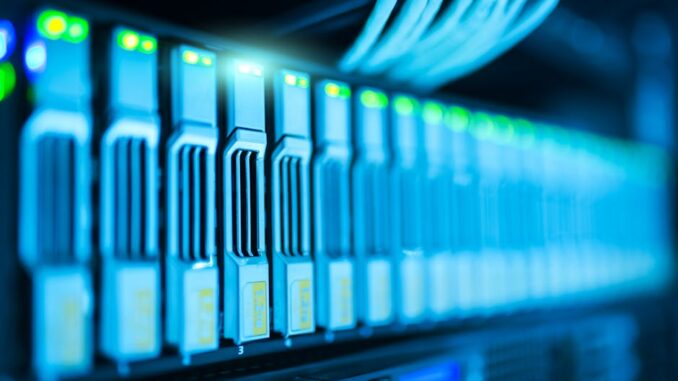

The Strategic Convergence: Cryptocurrency Mining Infrastructure Pivots Towards High-Performance AI Compute Hosting
Many thanks to our sponsor Panxora who helped us prepare this research report.
Abstract
The landscape of industrial-scale computation is undergoing a profound and rapid transformation, with a notable shift occurring within the cryptocurrency mining sector. Faced with inherent market volatilities, fluctuating profitability, and increasing operational complexities, numerous firms that once dominated the digital asset extraction space are now strategically repurposing their extensive, energy-intensive facilities to host high-performance Artificial Intelligence (AI) processing units. This strategic pivot is not merely an opportunistic diversification but a calculated response to the consistent, accelerating demand and premium pricing associated with AI compute power. Such a transition offers a potentially more stable, predictable, and economically robust business model compared to the often-unpredictable fluctuations characteristic of cryptocurrency mining. This comprehensive research report meticulously delves into the intricate technical requirements underpinning advanced AI infrastructure, elucidating the significant economic drivers and burgeoning market opportunities that arise from this profound convergence. Furthermore, it identifies and analyzes the major industry players actively leading this pivotal transition, and critically examines the long-term implications for the future trajectories of both the cryptocurrency and AI sectors, including environmental considerations and the broader technological ecosystem.
Many thanks to our sponsor Panxora who helped us prepare this research report.
1. Introduction
The cryptocurrency mining industry, for much of its existence, has been defined by its singular focus: the relentless deployment of specialized hardware to execute complex cryptographic computations. These computations are fundamental to securing transactions, validating blocks, and maintaining the integrity of various blockchain networks. The industry’s evolution has been marked by cycles of boom and bust, driven by the fluctuating market valuations of digital assets, technological advancements in mining hardware (from CPUs to GPUs, then ASICs), and an ever-increasing demand for energy. Historically, the pursuit of competitive advantage often centered on securing access to cheap electricity and deploying the most efficient hardware to maximize hash rate and block rewards.
However, recent global developments indicate a profound and strategic paradigm shift within this industry. A growing number of mining firms are now actively re-evaluating and repurposing their purpose-built, power-dense computational facilities to accommodate the demanding workloads of Artificial Intelligence. This evolution is far more than a fleeting trend; it represents a sophisticated strategic response to a confluence of challenges and unparalleled opportunities presented by the burgeoning AI sector. The rise of large language models (LLMs), generative AI, and increasingly complex machine learning applications has created an insatiable demand for high-performance computing (HPC) resources, particularly specialized Graphics Processing Units (GPUs), which are exquisitely suited for the parallel processing tasks inherent in AI computations.
This report posits that the convergence of cryptocurrency mining infrastructure with AI compute hosting is a natural, albeit technically challenging, progression. Mining facilities possess several intrinsic advantages: access to substantial power infrastructure, existing data center frameworks (even if basic), and a fundamental understanding of operating large-scale computational arrays. By leveraging these assets, mining companies aim to transition from a highly speculative, commodity-driven business model to one centered on providing critical infrastructure for the foundational technology of the 21st century. This strategic pivot promises not only more stable revenue streams but also a re-rating of market valuations, aligning these companies more closely with the highly valued data center and cloud infrastructure providers. The subsequent sections will meticulously examine the technical, economic, and strategic dimensions of this transformative convergence, exploring its implications for the future of digital infrastructure.
Many thanks to our sponsor Panxora who helped us prepare this research report.
2. Technical Requirements for AI Infrastructure
The transition from cryptocurrency mining to AI compute hosting is fundamentally a technical undertaking, necessitating significant upgrades and reconfigurations of existing facilities. While both activities involve intensive computation, the specific demands and architectural requirements differ substantially, particularly concerning hardware, thermal management, and networking.
2.1 Specialized Hardware
At the core of modern AI workloads, especially those involving deep learning, lies the imperative for specialized hardware capable of performing massive parallel computations with exceptional efficiency. Unlike the Application-Specific Integrated Circuits (ASICs) that dominate Bitcoin mining – designed for one specific cryptographic hash function (SHA-256) – AI predominantly relies on Graphics Processing Units (GPUs). GPUs, originally developed for rendering complex graphics, possess an architecture characterized by thousands of smaller, specialized cores capable of executing multiple computations simultaneously. This parallel processing capability makes them uniquely suited for the matrix multiplications and vector operations that are the bedrock of neural network training and inference.
Leading the charge in AI hardware is NVIDIA, with its data center GPUs such as the H100, GH200 Grace Hopper Superchip, and the upcoming GB200 Blackwell platform. These accelerators feature not only an immense number of CUDA cores but also dedicated Tensor Cores, specifically engineered to accelerate mixed-precision matrix operations crucial for AI. Furthermore, they are equipped with High-Bandwidth Memory (HBM), which offers significantly higher memory bandwidth compared to traditional GDDR memory found in consumer GPUs. This high bandwidth is critical for rapidly feeding vast datasets to the processing cores, preventing bottlenecks that would otherwise cripple performance in data-intensive AI tasks.
The demand for these high-end GPUs, particularly those utilizing HBM, has surged to unprecedented levels, creating severe supply chain constraints and driving up prices. Industry reports indicate that inventories for high-bandwidth memory (HBM), a critical component for top-tier AI GPUs, are sold out through 2025, with prices projected to increase by over 60% between 2024 and 2025 (blog.ju.com). This scarcity underscores the strategic importance of securing access to these components for any firm intending to pivot into AI hosting. The architectural differences between ASICs and GPUs are fundamental: ASICs are optimized for power efficiency in a single task, while GPUs offer versatility and raw computational throughput across a broad spectrum of parallelizable tasks, making them indispensable for the diverse and evolving landscape of AI.
2.2 Advanced Cooling Solutions
The integration of AI workloads into repurposed mining facilities mandates a radical overhaul of thermal management systems. AI computations are not only highly intensive but also profoundly energy-demanding, resulting in the generation of substantial quantities of heat. This excessive heat, if not effectively managed, can severely compromise hardware performance, reduce operational lifespan, and even lead to system failures. Traditional air-cooling methods, commonly employed in many cryptocurrency mining operations, are often woefully inadequate for the power densities observed in modern AI servers. A single NVIDIA H100 GPU, for instance, can have a Thermal Design Power (TDP) of 700 watts or more, and a server rack populated with multiple such GPUs can dissipate tens of kilowatts of heat.
To address this challenge, the adoption of advanced cooling solutions becomes paramount. Liquid-to-chip cooling systems represent a significant step forward. In this method, a closed-loop system circulates a dielectric coolant directly over or through cold plates attached to the hot components (like GPUs and CPUs). This approach efficiently transfers heat away from the silicon, allowing for significantly higher thermal loads per rack. Furthermore, direct-to-chip cooling can achieve much lower component temperatures than air cooling, enhancing performance and longevity. The coolant then carries the heat to a heat exchanger, where it is transferred to a facility-level cooling loop, often connected to external cooling towers or chillers.
Beyond direct-to-chip, more immersive liquid cooling techniques are gaining traction. Single-phase immersion cooling involves submerging entire server components or even full racks into a non-conductive dielectric fluid. This fluid, typically a mineral oil or synthetic coolant, directly absorbs heat from all surfaces, leading to highly efficient and uniform cooling. Two-phase immersion cooling takes this a step further by using a fluid with a low boiling point. As the fluid boils on the hot surfaces of the components, it vaporizes, carrying heat away. The vapor then condenses on a cooled condenser coil, returning to liquid form and completing the cycle. Immersion cooling offers benefits such as enhanced energy efficiency, reduced noise, and increased rack density, allowing more computational power to be packed into a smaller physical footprint. The Power Usage Effectiveness (PUE) metric, a key indicator of data center energy efficiency, significantly improves with these advanced cooling methods, as less energy is expended on cooling infrastructure relative to the IT load (cryptominerbros.com).
2.3 Networking Infrastructure
The efficacy of AI applications, especially in distributed training scenarios involving vast datasets and multiple accelerators, hinges critically on high-speed, low-latency networking infrastructure. The sheer volume of data exchanged between processing units, memory, and storage systems in modern AI clusters demands networks that far surpass the capabilities typically found in traditional cryptocurrency mining operations. Mining facilities often utilize standard Ethernet networks, primarily optimized for uploading relatively small amounts of data (hash values, block templates) and downloading blockchain updates. This architecture is entirely inadequate for AI workloads, which require rapid, synchronized communication between potentially hundreds or thousands of GPUs.
The gold standard for high-performance AI networking is InfiniBand. Developed specifically for HPC environments, InfiniBand offers extremely high bandwidth (e.g., 200 Gb/s, 400 Gb/s, 800 Gb/s per port) and exceptionally low latency (sub-microsecond), along with advanced features like Remote Direct Memory Access (RDMA). RDMA allows one computer to access another computer’s memory directly without involving the operating system’s CPU, drastically reducing overhead and accelerating data transfer. This capability is crucial for distributed AI model training, where large model parameters and gradients must be exchanged efficiently between GPUs across multiple nodes in a cluster. The implementation of InfiniBand requires specialized network interface cards (NICs), switches, and cabling, representing a significant investment for transitioning miners (cryptominerbros.com).
While InfiniBand remains dominant in the highest-performance AI superclusters, high-speed Ethernet (e.g., 200GbE, 400GbE) with converged lossless networking features is also advancing rapidly for cloud-scale AI deployments. Regardless of the protocol, the network topology must be robust and scalable, often employing Clos networks or fat-tree architectures to ensure non-blocking communication paths between all nodes. Furthermore, the storage infrastructure must keep pace with the network and compute. This typically involves high-performance, low-latency storage solutions like NVMe-over-Fabric (NVMe-oF) arrays and parallel file systems (e.g., Lustre, BeeGFS, GPFS) that can provide the massive input/output operations per second (IOPS) and throughput required for AI training datasets. Security of data in transit and at rest also becomes paramount, necessitating robust encryption and access control mechanisms within the network.
2.4 Power Infrastructure and Site Selection
Beyond the hardware, cooling, and networking, the foundational element for any large-scale computational facility is power. Cryptocurrency mining operations are inherently power-intensive, but AI infrastructure demands not only vast quantities of electricity but also higher power density per rack and often more stringent requirements for power quality and redundancy.
Existing mining sites often benefit from having access to substantial grid connections and, in many cases, direct substations. However, these connections may need significant upgrades to handle the even higher and more concentrated power draw of AI servers. A single rack of AI GPUs can consume 30-50 kW, compared to 10-20 kW for a typical crypto mining rack or general-purpose server rack. This increased density necessitates robust power distribution units (PDUs), thicker cabling, and potentially entirely new electrical infrastructure within the data hall. Redundancy is also critical; AI workloads, especially lengthy training jobs, cannot tolerate power interruptions. This implies the need for Uninterruptible Power Supplies (UPS) and backup generators with sufficient capacity to ensure continuous operation, even during grid disturbances.
Site selection, a key factor for crypto miners (often seeking cheap power in remote locations), takes on new dimensions for AI hosting. While cheap, reliable power remains crucial, proximity to fiber optic network backbones becomes more important for latency-sensitive AI applications that might integrate with broader cloud ecosystems. Furthermore, the availability of skilled labor – electricians, data center technicians, and IT specialists – becomes a more significant consideration. Regulatory environments, including zoning laws and energy policies, also play a crucial role. Many mining sites are in areas with abundant renewable energy sources (hydro, wind, solar), which can be a significant advantage for meeting sustainability goals and attracting environmentally conscious AI clients.
Many thanks to our sponsor Panxora who helped us prepare this research report.
3. Economic Drivers and Market Opportunities
The strategic pivot of cryptocurrency mining firms towards AI infrastructure is primarily an economic calculus, driven by a desire for more stable, predictable, and ultimately more profitable revenue streams. The volatile nature of crypto markets, coupled with the consistent and accelerating demand for AI compute, presents a compelling financial incentive for this transition.
3.1 Stable Revenue Streams
The economic viability of cryptocurrency mining is inherently tied to the highly volatile price movements of digital assets like Bitcoin and Ethereum, as well as the increasing network difficulty and periodic halving events that reduce block rewards. This volatility introduces significant unpredictability into revenue generation, making long-term financial planning challenging. Furthermore, energy costs, a major operational expenditure, can fluctuate significantly, further impacting profitability margins. Miners operate within a highly competitive landscape where margins can be squeezed by both market downturns and increasing hash rates from competitors.
In stark contrast, the provision of AI infrastructure offers access to more stable and predictable revenue streams. The demand for AI compute capacity is driven by institutional enterprises, research institutions, and large technology companies that are engaging in multi-year AI development projects. These customers typically seek long-term lease agreements for compute resources, often spanning several years, which provides the infrastructure providers with reliable, recurring income. For instance, Cipher Mining signed a substantial $3 billion, 10-year AI hosting deal with Fluidstack, an AI cloud provider. Similarly, CoreWeave’s acquisition of Core Scientific was partly motivated by securing dedicated, expandable AI-ready facilities to meet its long-term client commitments (ainvest.com).
These multi-year contracts provide a foundation of stability that cryptocurrency mining simply cannot offer. The business model shifts from speculative commodity production to a critical infrastructure utility, akin to traditional data center or cloud providers. This stability also opens doors to more favorable institutional financing, as lenders and investors perceive less risk in assets underpinned by long-term contracts with creditworthy clients. This allows for better capital planning, reduced borrowing costs, and more confident investment in future capacity expansion.
3.2 Capital Allocation Shifts
The reorientation of capital within the cryptocurrency mining sector towards AI infrastructure signifies a profound strategic shift. Historically, significant capital expenditures were directed towards acquiring the latest generation of ASICs or GPUs (for altcoin mining), expanding mining farm capacity, and securing energy contracts. Now, leading Bitcoin miners are actively reallocating substantial portions of their capital budgets towards developing and deploying AI compute infrastructure.
This shift is exemplified by companies like Marathon Digital, which has made strategic investments, including a joint venture with a hyperscale cloud provider, to retrofit existing facilities for AI compute leasing. This move is driven by the recognition of the immense and growing market opportunity in AI. Goldman Sachs analysts project U.S. data center demand to reach an astonishing 45 gigawatts (GW) by 2030, a nearly threefold increase from 2023 levels, with AI adoption identified as the primary catalyst (ainvest.com). This projection highlights the urgent need for new compute capacity, a need that repurposed mining facilities are uniquely positioned to help address, given their existing power infrastructure.
The strategic rationale behind this capital reallocation is multi-faceted. It represents a pivot from a high-risk, high-reward model to one that emphasizes long-term growth, asset diversification, and enhanced shareholder value through alignment with a rapidly expanding and strategically vital industry. For investors, this shift can be seen as a de-risking strategy, moving away from the purely speculative nature of crypto mining towards a more tangible and infrastructure-centric business model.
3.3 Market Valuation Re-Rating
Perhaps one of the most compelling economic drivers for the transition to AI infrastructure is the potential for a significant market valuation re-rating. Traditional cryptocurrency mining companies have historically traded at lower multiples, often in the range of 6–12x Enterprise Value to Earnings Before Interest, Taxes, Depreciation, and Amortization (EV/EBITDA). This lower valuation reflects the inherent volatility of their revenue streams, reliance on commodity prices, and the perceived cyclical nature of the crypto market.
In contrast, established data center operators and cloud infrastructure providers, particularly those focused on high-performance computing and AI, typically command significantly higher valuations, often trading at 20–25x EV/EBITDA or even higher. This premium valuation is attributed to several factors: the predictability of recurring revenue from long-term contracts, the mission-critical nature of the services they provide, the high barriers to entry (due to capital intensity and technical complexity), and the robust growth trajectory of the underlying AI market. Investors view these companies as stable infrastructure plays rather than speculative ventures.
For crypto mining firms successfully executing this pivot, a re-rating to these higher multiples can unlock substantial shareholder value. It fundamentally changes how investors perceive the company, shifting it from a ‘miner’ to an ‘AI infrastructure provider.’ This re-evaluation not only enhances market capitalization but also improves access to capital markets, allowing companies to raise funds more easily and at lower costs for further expansion into AI. The market’s eagerness to assign higher valuations reflects a clear preference for business models aligned with the sustained growth of the AI economy over the more speculative world of digital assets (cryptominerbros.com).
3.4 Strategic Partnerships and Acquisitions
Another significant economic facet of this transition involves the formation of strategic partnerships and outright acquisitions. The capital intensity and technical complexity of building and operating AI infrastructure often necessitate collaborations that leverage the strengths of different entities. Mining companies possess the physical sites, power infrastructure, and operational expertise in managing large-scale compute farms, while AI hyperscalers and specialized cloud providers bring the customer base, AI software stack knowledge, and experience in deploying cutting-edge AI hardware.
Acquisitions, such as CoreWeave’s purchase of Core Scientific, highlight a trend where AI demand outstrips readily available infrastructure. In this case, CoreWeave, an AI hyperscaler, recognized the immense value in Core Scientific’s existing power infrastructure and land suitable for expansion. By acquiring a former mining giant, CoreWeave gained immediate access to significant power capacity and facilities, accelerating its growth strategy to meet its own customer commitments. This vertical integration reduces lead times and mitigates the challenges of new data center construction, which can be lengthy and fraught with permitting and power access issues.
These partnerships can take various forms, from joint ventures for facility development and operation to long-term hosting agreements where the mining firm acts as a colocation provider for AI hardware owned by another entity. Such collaborations allow mining companies to de-risk their transition by partnering with established players in the AI ecosystem, gaining technical expertise, and securing initial customer commitments. Furthermore, the involvement of venture capital and private equity firms is increasingly common, providing the necessary financial backing for these capital-intensive transformations and signaling institutional confidence in the AI infrastructure market.
Many thanks to our sponsor Panxora who helped us prepare this research report.
4. Major Players Leading the Transition
The strategic pivot from cryptocurrency mining to AI infrastructure hosting is being led by several prominent companies, each adopting slightly different approaches to leverage their existing assets and capabilities. Their actions offer case studies in how traditional mining operations are evolving to meet the demands of the AI era.
4.1 Core Scientific
Core Scientific was once recognized as one of the largest publicly traded Bitcoin mining companies in North America. However, the severe crypto market downturns of 2022, coupled with escalating energy costs, pushed the company into Chapter 11 bankruptcy. Its emergence from bankruptcy in early 2024, however, marked a significant strategic reorientation, heavily influenced by the burgeoning demand for AI compute.
The most pivotal development in Core Scientific’s pivot was its acquisition by CoreWeave, an AI hyperscaler and infrastructure provider, in an all-stock deal valued at approximately $9 billion. This acquisition was a strategic move by CoreWeave to secure immediate and scalable power capacity, a critical bottleneck in the rapidly expanding AI sector. The deal brought CoreWeave approximately 1.21 GW of gross power capacity, primarily from Core Scientific’s substantial facilities, notably its Austin, Texas plant, with significant potential for further expansion by another 1 GW. CoreWeave had already been a major client of Core Scientific, utilizing its data centers to host NVIDIA H100 GPUs for AI workloads. The acquisition essentially allowed CoreWeave to vertically integrate, taking direct control of critical infrastructure to fuel its ambitious growth plans and meet existing customer demands, including a substantial contract with an unnamed large AI firm (tomshardware.com). This move positions the combined entity as a formidable player in the AI compute market, leveraging Core Scientific’s extensive power infrastructure and operational expertise for AI-specific deployments.
4.2 Bitfarms
Bitfarms, another significant player in Bitcoin mining, has declared an even more definitive strategic pivot: a complete exit from cryptocurrency mining by 2027 to become a dedicated AI infrastructure provider. This bold move underscores the company’s conviction in the long-term profitability and stability of AI compute hosting compared to the cyclical nature of crypto mining. The decision was notably influenced by financial pressures, including a reported $46 million loss in Q3 of the prior year, highlighting the challenges faced by pure-play miners (tomshardware.com).
Bitfarms currently operates 12 data centers with a robust total energy capacity of 341 megawatts (MW) across North and South America. The company’s strategy involves systematically repurposing these facilities. The plan is to outfit them with high-end AI servers, specifically targeting Nvidia GB200 NVL72 server racks, which are designed for extreme performance and density, housing 72 Blackwell GPUs each. This requires substantial investments in advanced cooling, power upgrades, and high-speed networking like InfiniBand. Bitfarms’ phased approach aims to transition its entire existing capacity, and potentially future expansions, solely towards AI compute, signaling a complete transformation of its business model. The company anticipates leveraging its existing energy assets and operational experience to become a significant provider of AI-ready infrastructure, catering to the growing needs of AI developers and enterprises.
4.3 Marathon Digital
Marathon Digital Holdings, one of the largest Bitcoin mining companies globally, has also embarked on a strategic diversification into AI infrastructure, though with a slightly different approach than a full pivot. Rather than acquiring or being acquired, Marathon has chosen to enter into a joint venture with a hyperscale cloud provider to retrofit some of its extensive Texas facilities for AI compute leasing. This strategy allows Marathon to leverage its existing large-scale energy infrastructure and operational expertise in managing vast arrays of computing hardware, while partnering with an entity that brings established client relationships and deeper expertise in the cloud and AI services market (datacenters.com).
Marathon’s approach emphasizes diversifying revenue streams and capitalizing on the growing demand for AI compute without entirely abandoning its core Bitcoin mining operations. The retrofitting process for their Texas sites involves significant upgrades to accommodate the higher power density, advanced cooling requirements (potentially liquid cooling), and specialized networking infrastructure necessary for modern AI GPUs. By collaborating with an experienced hyperscaler, Marathon aims to accelerate its entry into the AI market, mitigate risks associated with new market penetration, and secure long-term contracts. This move reflects a broader industry trend where miners seek to optimize their considerable energy assets by diversifying into higher-margin, more stable compute services.
4.4 Other Notable Players and Emerging Trends
The strategic pivot is not limited to these three companies, but represents a broader trend within the industry. Other publicly traded miners such as Hive Digital Technologies, Hut 8, and Riot Platforms have also announced or are exploring initiatives to leverage their data center infrastructure for high-performance computing (HPC) and AI workloads. For instance, Hive Digital Technologies has been active in liquid cooling deployments and has indicated a strategy to allocate compute resources to HPC clients.
Another emerging trend involves modular and containerized data center solutions. These pre-fabricated units, often deployed in remote locations with access to cheap power, can be rapidly converted or newly deployed with AI-specific hardware, cooling, and networking. This allows for quicker time-to-market and greater flexibility in scaling AI compute capacity. Many mining operations are already familiar with deploying modular solutions for their ASICs, making this a natural extension of their expertise. The overall movement indicates a maturation of the digital infrastructure sector, where assets and expertise once solely dedicated to securing blockchains are now being re-evaluated for their potential to power the next generation of artificial intelligence.
Many thanks to our sponsor Panxora who helped us prepare this research report.
5. Long-Term Implications for the Cryptocurrency and AI Sectors
The convergence of cryptocurrency mining and AI infrastructure carries profound and multifaceted implications for both sectors, influencing technological development, market dynamics, environmental sustainability, and geopolitical considerations.
5.1 Impact on Cryptocurrency Mining
The strategic shift of major players towards AI infrastructure will undoubtedly have significant, long-term implications for the cryptocurrency mining sector itself. As firms repurpose or sell off their mining hardware and reconfigure their facilities for AI, several key dynamics are likely to emerge:
-
Reduced Hash Rate and Decentralization: A substantial migration of computational resources away from cryptocurrency mining, particularly for Bitcoin, could lead to a decrease in the overall network hash rate. While Bitcoin’s difficulty adjustment mechanism ensures the network remains secure by automatically adjusting the computational effort required to mine a block, a sustained decline in hash rate could, in theory, impact transaction confirmation times temporarily or lead to a perception of reduced security, though this is less likely for robust networks. More critically, if a significant number of major miners consolidate into AI, it could lead to a decrease in the geographical and corporate diversity of mining operations, potentially centralizing hash power among fewer, remaining dedicated miners. This could raise concerns about network decentralization, a core tenet of blockchain technology.
-
Increased Competition and Difficulty for Remaining Miners: For the miners that remain dedicated to cryptocurrency extraction, the competitive landscape might intensify. While some capacity exits, leading to potentially less competition in the short term, the difficulty adjustment will inevitably find a new equilibrium. Those who continue mining will face ongoing pressures from rising energy costs, halving events (which periodically cut block rewards in half), and the continuous need to upgrade to more efficient hardware. The profitability calculus will become even more stringent, favoring only the most efficient operations with access to the cheapest power and latest-generation ASICs. This could lead to further consolidation or the exit of less competitive players.
-
Reduced Emphasis on Cryptocurrency Mining: The pivot suggests a broader institutional re-evaluation of the long-term economic prospects of cryptocurrency mining versus AI compute. For companies that successfully transition, cryptocurrency mining may become a legacy or secondary operation, if it continues at all. This reduced emphasis could also affect the broader perception of the crypto industry by traditional finance and institutional investors, who may view the migration as an admission of mining’s inherent instability compared to the growth potential of AI.
-
Hardware Market Dynamics: The selling off of older or even current-generation mining hardware by pivoting firms could temporarily flood the secondary market, driving down prices for certain ASICs and GPUs. This might offer opportunities for smaller, niche miners to acquire hardware at lower costs, but the overall trend points towards a reallocation of capital away from specialized mining hardware towards general-purpose, high-performance AI accelerators.
5.2 Impact on AI Development
The infusion of substantial computational resources from repurposed mining facilities into the AI ecosystem promises to significantly accelerate AI development and broaden its accessibility, but also brings important environmental considerations.
-
Acceleration of AI Development: The most direct impact will be a substantial increase in available computational capacity for AI workloads. This additional compute power is critical for training larger and more complex AI models, conducting extensive hyperparameter tuning, and performing inference at scale. More compute means faster iteration cycles for AI researchers and developers, leading to quicker advancements in model architecture, performance, and capability. It can accelerate breakthroughs in areas like natural language processing, computer vision, drug discovery, and materials science by removing a key bottleneck: access to powerful GPUs.
-
Democratization of AI Access: While hyperscale cloud providers dominate the AI compute market, the entry of former crypto miners as dedicated AI infrastructure providers can diversify the supply chain. This could potentially lead to more competitive pricing and offer smaller enterprises, startups, and academic institutions greater access to high-performance AI compute that might otherwise be prohibitively expensive or scarce. It can foster innovation by enabling a wider range of players to experiment with and deploy advanced AI models.
-
Focus on Specialized AI Infrastructure: The pivot also encourages the development of highly specialized AI data centers optimized specifically for the unique demands of AI. These facilities will feature state-of-the-art cooling, ultra-high-speed networking, and bespoke power distribution systems, pushing the boundaries of data center design and efficiency for AI workloads.
-
Environmental Impact and Mitigation: The increased demand for AI compute, whether from new builds or repurposed mining facilities, inherently means increased energy consumption. While cryptocurrency mining has faced significant scrutiny for its energy footprint, AI workloads, particularly during the training phase of large models, are also incredibly power-intensive. The International Monetary Fund (IMF) has highlighted the surging carbon emissions from both AI and crypto, suggesting that policy interventions, such as carbon taxes, could help mitigate these impacts (imf.org).
For former mining firms, the challenge and opportunity lie in transitioning their often energy-intensive operations to more sustainable models. Many mining facilities were initially located in areas with access to cheap, often renewable, energy sources (e.g., hydropower in the Pacific Northwest, geothermal in Iceland). Leveraging these existing renewable energy contracts for AI compute could significantly reduce the carbon footprint of AI development. Furthermore, advanced cooling technologies, discussed in Section 2.2, directly contribute to improved energy efficiency (lower PUE) of the AI infrastructure. The industry must prioritize investments in renewable energy integration, energy-efficient hardware, and innovative cooling solutions to ensure that the acceleration of AI development does not come at an unsustainable environmental cost. The concept of ‘green AI,’ which emphasizes both computational efficiency and environmentally conscious deployment, will become increasingly vital.
5.3 Geopolitical and Supply Chain Implications
The increasing global reliance on AI compute also introduces significant geopolitical and supply chain considerations.
-
Concentration of Manufacturing and Geopolitical Competition: The manufacturing of high-end AI GPUs and their critical components (like HBM) is highly concentrated, with a few key players like NVIDIA dominating the GPU market and TSMC being a primary fabrication partner. This concentration creates supply chain vulnerabilities and makes AI compute a strategic asset in geopolitical competition. Nations are increasingly vying for supremacy in AI, and access to the necessary hardware infrastructure is paramount. Repurposed mining facilities, particularly in countries like the U.S. and Canada, can contribute to national AI compute capacity, potentially reducing reliance on overseas providers or enhancing domestic technological sovereignty.
-
Supply Chain Resilience: The scarcity of components like HBM underscores the fragility of the current supply chain. As more infrastructure pivots to AI, the demand pressure on these components will only intensify, potentially leading to bottlenecks and higher costs. This necessitates strategic planning for supply chain resilience, including diversification of sourcing where possible and increased domestic manufacturing efforts.
-
National Security Implications: AI infrastructure is increasingly viewed as a critical national security asset. The ability to train advanced AI models for defense, intelligence, and critical infrastructure management requires secure and resilient computational resources. The shift of existing large-scale computing facilities towards AI contributes to this strategic imperative, ensuring that vital AI capabilities can be developed and maintained domestically, reducing potential foreign interference or dependencies.
Many thanks to our sponsor Panxora who helped us prepare this research report.
6. Conclusion
The convergence of cryptocurrency mining infrastructure with high-performance AI compute hosting represents a defining strategic evolution within the broader technology industry. This transition is not merely an opportunistic pivot but a calculated and necessary response to the volatile economics of cryptocurrency mining on one hand, and the insatiable, rapidly growing demand for AI compute power on the other. Mining firms are adeptly leveraging their existing core assets – access to abundant power infrastructure, large-scale operational expertise, and physical data center sites – to transition from a speculative, commodity-driven business model to one centered on providing mission-critical infrastructure for the burgeoning AI economy.
This strategic shift offers compelling economic opportunities, promising more stable and predictable revenue streams through long-term contracts, attracting institutional investment, and potentially leading to a significant re-rating of market valuations. Major players like Core Scientific, Bitfarms, and Marathon Digital are demonstrating diverse pathways for this transition, from outright acquisitions to complete strategic pivots and joint ventures, illustrating the adaptability of the sector.
However, the path is not without its challenges. The technical requirements for AI infrastructure are substantially more demanding than for cryptocurrency mining, necessitating significant capital investment in specialized hardware (GPUs with HBM), advanced cooling solutions (liquid-to-chip, immersion cooling), robust, low-latency networking (InfiniBand), and enhanced power distribution. Moreover, the long-term implications are far-reaching. While this convergence can accelerate AI development and democratize access to compute, it simultaneously intensifies concerns regarding energy consumption and carbon emissions. Addressing these environmental impacts through a concerted focus on renewable energy integration, maximal energy efficiency (e.g., via lower PUEs), and sustainable design principles will be paramount for the long-term viability and societal acceptance of this new class of AI infrastructure.
In conclusion, the strategic pivot of cryptocurrency mining facilities towards AI compute hosting is a testament to the dynamic nature of technological industries and the relentless pursuit of efficiency and value. The long-term success of this transformative convergence will hinge on the industry’s collective ability to effectively adapt to sophisticated new technological requirements, skillfully navigate rapidly evolving market dynamics, and conscientiously address the critical environmental and geopolitical concerns. This foundational shift is poised to profoundly reshape the landscape of digital infrastructure, fueling the next generation of artificial intelligence and fundamentally altering the economic and operational future of large-scale computation.
Many thanks to our sponsor Panxora who helped us prepare this research report.
References
- ainvest.com: Bitcoin Mining Stocks and the AI Infrastructure Revolution: A Strategic Convergence (Accessed September 12, 2024)
- blog.ju.com: AI Infrastructure and Crypto Mining: The Future of Compute (Accessed September 12, 2024)
- cryptominerbros.com: The AI-Crypto Convergence: How Bitcoin Miners are Transforming into Data Centers (Accessed September 12, 2024)
- datacenters.com: Bitcoin Miners Pivot to AI Data Centers: A Strategic Shift in 2025 (Accessed September 12, 2024)
- imf.org: Carbon Emissions from AI and Crypto Are Surging — And Tax Policy Can Help (Accessed September 12, 2024)
- tomshardware.com: AI hyperscaler buys its cryptomining partner for its AI GPUs and data center infrastructure: CoreWeave acquires Core Scientific in long-awaited move (Accessed September 12, 2024)
- tomshardware.com: Major Bitcoin mining firm pivoting to AI, plans to fully abandon crypto mining by 2027: Bitfarm to leverage 341-megawatt capacity for AI following USD$46 million Q3 loss (Accessed September 12, 2024)
Be the first to comment