
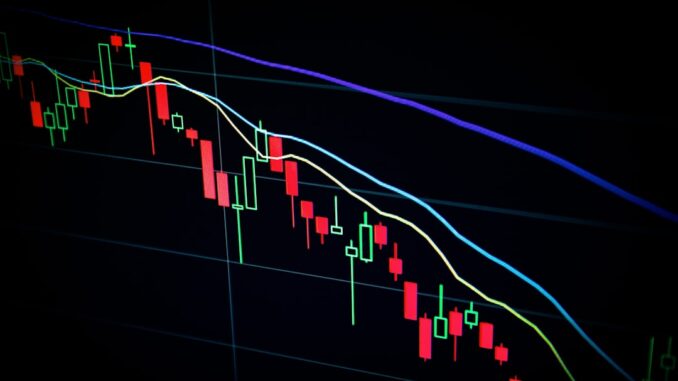

Navigating Crypto’s Wild Waves: Reinforcement Learning Pair Trading with Dynamic Scaling
Ever felt like you’re trying to nail jelly to a wall when navigating the cryptocurrency markets? The sheer, breathtaking volatility can make even seasoned traders feel like they’re riding a rollercoaster blindfolded. Prices can surge and plummet with alarming speed, often on the whisper of a rumor, or frankly, no discernible reason at all. It’s exhilarating, yes, but also incredibly challenging, demanding strategies that aren’t just robust, but genuinely adaptive. This is precisely where a sophisticated approach like pair trading, supercharged with Reinforcement Learning (RL) and dynamic scaling, truly shines, offering a pathway to not only survive but potentially thrive in this unpredictable arena.
Traditionally, pair trading, a form of statistical arbitrage, involves taking opposing positions in two historically correlated assets. The idea? When their price relationship strays beyond an established norm, you bet on it reverting. It’s clever, but in the breakneck speed of crypto, those fixed rules and static position sizes often struggle to keep up, leaving potential profits on the table or exposing you to unnecessary risk. That’s why combining pair trading with RL, allowing for dynamic adjustment of position sizes based on real-time market conditions, isn’t just an improvement; it’s a paradigm shift.
Investor Identification, Introduction, and negotiation.
Unpacking the Core Concepts: Pair Trading and Reinforcement Learning
Before we dive into the integration, let’s get cozy with the individual components. You’ll want a firm grasp of what each brings to the table.
The Dance of Correlation: Understanding Pair Trading
At its heart, pair trading capitalizes on the notion that some asset pairs move together. Not always perfectly, of course, but their relationship tends to revert to a mean. Think of it like two siblings who, despite their individual personalities, usually stay close; if one suddenly wanders too far, you expect them to eventually come back towards the other. In financial terms, we’re looking for ‘cointegrated’ assets. This isn’t just about simple correlation, which merely tells us if two assets move in the same direction generally. Cointegration suggests a long-term equilibrium relationship between two non-stationary price series. Even if their individual prices wander, their difference (or ratio) tends to be stationary, meaning it oscillates around a mean.
Why does this happen? Well, it could be fundamental reasons: perhaps one crypto is a governance token for a platform, and the other is its utility token. Or maybe it’s a stablecoin and its pegged asset. Sometimes, these relationships are more subtle, driven by market microstructure or investor sentiment towards a particular ecosystem. For instance, you might see Bitcoin (BTC) and Ethereum (ETH) often moving in tandem, or a specific DeFi token and its associated governance token. The moment their relative prices deviate significantly from this historical mean, an opportunity might emerge. You’d short the ‘overperforming’ asset and long the ‘underperforming’ one, betting on their convergence.
Traditional pair trading usually sets rigid thresholds—say, two standard deviations from the mean spread. When the spread crosses that line, a trade is initiated, and when it returns to the mean, it’s closed. Simple, right? But crypto doesn’t always play by simple rules. Market sentiment can shift on a dime, liquidity can dry up, and a ‘temporary’ deviation can become a new norm, leaving you holding the bag. I remember my friend Mark, he had a BTC-ETH pair trade going, based purely on a static Z-score. One day, Ethereum just kept pumping harder than Bitcoin, and his spread never reverted. He held on, convinced it had to come back, and well, it didn’t, not in time for him anyway. Those static rules, they’re like trying to predict the weather based on yesterday’s forecast without looking out the window today.
The Learning Machine: Demystifying Reinforcement Learning
Reinforcement Learning, a fascinating branch of machine learning, empowers agents to learn optimal behaviors purely through interaction with an environment. Imagine teaching a child to ride a bike: you don’t give them explicit instructions for every pedal stroke or turn of the handlebars. Instead, they try things, fall, learn what not to do, and eventually, through trial and error (and perhaps a few scraped knees!), they master it. That’s RL in a nutshell. An ‘agent’ performs ‘actions’ within an ‘environment’ (in our case, the crypto market), receives a ‘reward’ (or penalty) for those actions, and through this feedback loop, it gradually learns a ‘policy’ – a mapping from states to actions – that maximizes its cumulative reward over time.
What makes RL particularly potent for trading? Its adaptability. Unlike supervised learning, which needs vast amounts of labeled historical data to find patterns, RL doesn’t require pre-defined ‘correct’ answers. It discovers optimal strategies. The market is dynamic, and an RL agent, given the right training, can continuously adjust its strategy as market conditions evolve. It can learn to recognize subtle shifts, adapt its risk profile, and even develop counter-intuitive strategies that a human trader or a static algorithm might never conceive. We’re talking about an intelligent system that learns from its mistakes, striving for greater profits while keeping an eye on the bigger picture of sustained returns.
The Symphony of Integration: Bringing RL into Pair Trading
Combining these two powerful concepts isn’t just sticking them together; it’s about creating a unified system where each enhances the other. Here’s how that integration typically unfolds, step by crucial step.
Step 1: Astute Pair Selection – It’s More Than Just a Number
This initial phase is foundational. You can’t just pick any two assets and expect them to dance together. We’re looking for pairs with a statistically significant, stable long-term relationship. While Pearson’s correlation coefficient is a good starting point, providing a snapshot of how often two assets move in the same direction, it has its limits. It’s a linear measure and doesn’t tell us if that relationship is stable over time, or if one asset tends to ‘pull’ the other back. For a more robust approach, we lean on cointegration tests like the Engle-Granger two-step method or the Johansen test. These tests help confirm if the spread between two assets is indeed stationary, meaning it truly reverts to a mean. You want to select pairs that not only show high cointegration but also possess sufficient liquidity to execute trades without significant slippage, which is a silent killer of profitability. Also, consider the fundamental drivers: is there a logical reason these assets should move together? This ‘why’ helps in understanding the robustness of the relationship, which is super important.
Step 2: Precision Spread Calculation – The Strategy’s Pulse
Once you’ve identified your potential pairs, the next step is to accurately calculate their ‘spread.’ This isn’t always as simple as subtracting one price from another. Often, you’ll want to normalize the prices first, perhaps by taking a ratio of their prices or a logarithmic ratio. This helps to ensure the spread is scale-independent and represents their relative deviation. Imagine the spread as the heartbeat of your pair trade: a consistent oscillation around a central equilibrium point. A significant deviation from this mean spread is the signal, the potential trading opportunity. We often use Z-scores to quantify this deviation – how many standard deviations away from the historical mean the current spread is. A high Z-score suggests the spread is ‘stretched’ and likely to revert.
Step 3: RL Agent Training – Forging the Brain of the Operation
This is where the magic of machine learning really comes alive. We develop an RL agent that continuously observes the market environment, specifically the current spread, its Z-score, volatility, trading volume, and perhaps even broader market indicators. Based on these ‘state’ observations, the agent learns to make ‘actions’ – decisions like ‘go long the pair,’ ‘go short the pair,’ ‘close a position,’ or ‘do nothing.’ The critical part? It learns which actions yield the highest cumulative ‘reward,’ which in our context is typically profit and loss (P&L), often adjusted for transaction costs or risk metrics like maximum drawdown. This reward function is crucial; it shapes the agent’s behavior. If you reward aggressive entries, you’ll get an aggressive agent. If you penalize drawdowns heavily, it’ll be more risk-averse. Algorithms like Deep Q-Networks (DQN) for discrete actions (buy/sell/hold) or Proximal Policy Optimization (PPO) and Soft Actor-Critic (SAC) for continuous actions (like adjusting position size directly) are commonly employed here. We train these models using vast historical data in a simulated environment, allowing them to explore various strategies and learn from the outcomes.
Step 4: Dynamic Scaling – The Accelerator and the Brake
Here’s where the traditional, static pair trading strategy gets a serious upgrade. Instead of opening a fixed-size position every time the spread deviates, our RL agent dynamically adjusts the size of its positions. Think of it like a smart driver who knows when to press the accelerator and when to gently apply the brake. If the spread deviation is extreme, liquidity is high, and overall market volatility is low, the agent might decide to take a larger position, capitalizing more aggressively on what it perceives as a high-conviction opportunity. Conversely, if the market is choppy, the spread deviation is only moderate, or there’s an increase in overall market uncertainty, the agent might scale down its position, or even choose not to trade at all, mitigating potential losses. This continuous, learned adjustment of position size is a game-changer, moving beyond the ‘one-size-fits-all’ approach to something truly nuanced and responsive. It allows for a more capital-efficient strategy, too, which is always a bonus, wouldn’t you agree?
Why Dynamic Scaling is a Game-Changer in Crypto Trading
Traditional pair trading, with its fixed position sizes, often leaves money on the table or exposes you to undue risk in markets as wild as crypto. Dynamic scaling, however, turns these weaknesses into strengths.
-
Explosive Profitability: Imagine a truly golden opportunity flashing across your screen. With dynamic scaling, your RL agent can size up, allowing you to capture a significantly larger slice of the profit pie when conditions are most favorable. It’s about optimizing exposure precisely when your conviction, based on learned patterns, is highest. Instead of just entering the market, you’re entering optimally.
-
Fortified Risk Management: This is, arguably, the most critical advantage. During periods of high volatility or when the market structure feels shaky, the agent automatically dials back its exposure. It reduces position sizes, sometimes even avoiding trades entirely, acting as an internal, self-adjusting risk manager. This proactive approach helps in mitigating potential losses, preventing those ‘blow-up’ scenarios that can wipe out months of hard-won gains. It’s your automatic throttle, responding to the market’s pulse in real-time. My friend Mark, if he’d had dynamic scaling, maybe he wouldn’t have watched his capital shrink so rapidly when his fixed-size bet didn’t pay off.
-
Unparalleled Adaptability: Crypto markets are constantly evolving; what worked last month might not work today. The beauty of an RL agent is its continuous learning loop. As new data streams in, the agent refines its understanding of market dynamics, adjusting not only its entry/exit points but also its position sizing strategy. This means the strategy isn’t just set-and-forget; it’s alive, breathing, and adapting, always striving for optimal performance in the face of change. It’s like having a co-pilot who never stops studying the terrain, isn’t that something?
The Proof is in the Pudding: Empirical Evidence and Beyond
The theoretical advantages sound great, but what about real-world performance? Fortunately, recent research provides compelling evidence.
The Yang and Malik (2024) Breakthrough
A notable study by Yang and Malik (2024) specifically demonstrated the profound effectiveness of RL-based pair trading with dynamic scaling in the notoriously volatile cryptocurrency market. They applied their innovative approach to well-known pairs such as BTC-GBP and BTC-EUR, which are generally liquid and exhibit strong, albeit often volatile, correlation. The results were quite eye-opening. While traditional methods yielded annualized profits of around 8.33%, their RL-based dynamic scaling strategy achieved significantly higher returns, ranging from a respectable 9.94% up to an impressive 31.53%. This isn’t just a marginal improvement; it represents a substantial leap in performance, underscoring the power of adaptability and intelligent sizing in such a challenging environment. It shows that by empowering the trading agent to intelligently determine how much to invest in a given opportunity, you can unlock far greater profitability than with rigid, predetermined rules.
A Broader Trend: RL in Quantitative Trading
The Yang and Malik paper isn’t an isolated incident. The broader academic and quantitative finance communities are increasingly turning to Reinforcement Learning to tackle the complexities of modern markets, especially those as fast-paced as crypto. For instance, research like Han et al. (2023) explores ‘Hierarchical Reinforcement Learning’ to unify pair selection and trading decisions, essentially teaching an agent to not only how to trade, but also which pairs to focus on, streamlining the entire process. Paykan (2025) delves into advanced RL algorithms like Soft Actor-Critic (SAC) and Deep Deterministic Policy Gradient (DDPG) for cryptocurrency portfolio management, showcasing RL’s utility beyond single-pair strategies to managing a diverse basket of assets. And Qin et al. (2023) investigate ‘Efficient Hierarchical Reinforcement Learning for High-Frequency Trading,’ demonstrating that RL can even operate effectively in the ultra-fast world of HFT, where every millisecond counts. These studies collectively paint a picture of RL as a transformative technology for trading, offering intelligent, adaptive solutions to problems that traditional quantitative methods often find difficult to tame.
Architecting Your Own RL-Based Pair Trading System: A Practical Roadmap
Building such a sophisticated system isn’t trivial, but it’s absolutely achievable with a structured approach. Here’s a practical roadmap you can follow.
Step 1: Data Collection – The Lifeblood of Your System
Your model is only as good as the data you feed it. For cryptocurrency pair trading, you need high-quality, high-frequency historical price data for a wide range of pairs. Think granular – tick data, or at least 1-minute OHLCV (Open, High, Low, Close, Volume) data. You’ll gather this from reputable exchange APIs (Binance, Coinbase Pro, Kraken, etc.) or specialized data providers. Crucially, this isn’t just about pulling numbers; it involves meticulous data cleaning. Expect missing values, erroneous spikes, and inconsistent timestamps. You’ll need robust processes to handle these, interpolating missing data, smoothing outliers, and ensuring all time series are perfectly synchronized. Remember, ‘garbage in, garbage out’ is especially true here. A small data anomaly can throw your entire training process off course.
Step 2: Feature Engineering – Giving Your Agent Context
The raw price spread alone isn’t enough. To make intelligent decisions, your RL agent needs rich context. This means creating relevant ‘features’ from your raw data. Beyond the simple spread and its Z-score, consider:
- Volatility of the spread: Is the spread stable or wildly oscillating?
- Rolling mean and standard deviation of the spread: How is the historical context evolving?
- Volume profiles: Are there significant trades happening around the deviation points?
- Order book imbalances: Are buyers or sellers dominating the order book for either asset in the pair?
- Lagged features: What were the spread, volatility, and volume like a few minutes or hours ago?
- Time-based features: Hour of day, day of week can sometimes capture cyclical patterns.
Each of these features gives your agent another ‘eye’ or ‘ear’ into the market, allowing it to build a more nuanced understanding of the current ‘state’ and make better decisions.
Step 3: Model Development – Choosing the Right Brain for the Job
Now, you design the actual RL model. As mentioned, Deep Q-Networks (DQN) are good for discrete actions (e.g., ‘buy large,’ ‘buy medium,’ ‘sell large,’ ‘sell medium,’ ‘hold’). If you want your agent to directly output the size of the position as a continuous value, then policy-based methods like Proximal Policy Optimization (PPO) or Soft Actor-Critic (SAC) are generally more suitable. You’ll use deep learning frameworks like TensorFlow or PyTorch to construct the neural network that serves as the agent’s ‘brain.’ This network will take your engineered features as input and output either Q-values for actions (DQN) or a probability distribution over actions (PPO/SAC). For time-series data like market prices, you might even consider architectures like Long Short-Term Memory (LSTM) networks, which are particularly adept at capturing sequential dependencies.
Step 4: Training – The Agent’s Learning Journey
This is where the agent interacts with your historical data within a carefully constructed simulation environment. You’ll split your data into training, validation, and testing sets to prevent data leakage and ensure your model generalizes well. The agent will run through countless ‘episodes,’ making trades, receiving rewards, and adjusting its internal parameters (the weights of its neural network) to maximize cumulative returns. This phase is computationally intensive and requires careful hyperparameter tuning – adjusting things like the learning rate, discount factor, and exploration rate (how much the agent tries new things versus sticking to what it knows). Visualizing training progress, such as reward curves and episode lengths, helps you understand if your agent is truly learning or just flailing around. Expect this to take time and require powerful GPUs.
Step 5: Rigorous Evaluation – Proving Its Mettle
Once trained, you must rigorously evaluate your model’s performance on unseen, out-of-sample data. This is your backtesting phase. Don’t just look at total profit! Dive deep into metrics like:
- Sharpe Ratio: Risk-adjusted return.
- Sortino Ratio: Focuses on downside deviation.
- Maximum Drawdown: The largest peak-to-trough decline.
- Calmar Ratio: Measures return relative to maximum drawdown.
- Profit Factor: Total gross profits divided by total gross losses.
Crucially, consider walk-forward optimization, where you periodically re-train or re-evaluate the model on new data, mimicking how it would perform in a live environment. Stress test it under various market conditions – bull, bear, sideways. How does it fare during flash crashes or sudden pumps? Robust evaluation prevents you from deploying a model that simply memorized past patterns, rather than truly understanding the market dynamics.
Step 6: Deployment and Continuous Monitoring – From Lab to Live
Finally, you integrate your trained model into a live trading environment. This involves building robust API connections to your chosen cryptocurrency exchanges, implementing meticulous error handling, comprehensive logging, and real-time performance monitoring. Start small! Deploy with a very small amount of capital or in a paper trading environment first to iron out any unforeseen issues. The market is constantly changing, so you’ll want to implement mechanisms for continuous learning or periodic re-training of your agent. This helps combat ‘model drift,’ where your agent’s performance degrades as market conditions diverge from its training data. And, of course, security is paramount – protect your API keys and ensure your infrastructure is secure.
Navigating the Minefield: Challenges and Considerations
While RL-based pair trading with dynamic scaling offers incredible promise, it’s not a silver bullet. There are significant challenges and considerations you’ll need to navigate.
The Quality and Cost of Data
High-quality, high-frequency data isn’t just desirable; it’s absolutely essential for training effective RL models. Latency issues, inconsistent data feeds, and outright errors in historical data can derail your entire project. Furthermore, truly granular data, especially historical order book data, can be expensive to acquire and store. You’ll need to factor in the time and resources required for meticulous data cleaning and validation. It’s often the most tedious, but also the most critical, part of the process.
Computational Demands
Training deep RL models, particularly those using complex neural networks and large datasets, requires substantial computational power. We’re talking about GPUs, often cloud-based, and significant processing time. Running extensive backtests and simulations for robust evaluation also adds to these demands. This isn’t something you can easily do on an old laptop during your lunch break; it requires dedicated resources and a commitment to processing power.
The Peril of Overfitting
This is perhaps the greatest fear in quantitative trading. An RL model, like any machine learning model, can easily ‘overfit’ to historical data. It becomes so good at predicting past outcomes that it fails miserably when faced with new, unseen market conditions. It’s like teaching a student to memorize answers for a test instead of truly understanding the subject; they’ll ace the practice, but fail the real exam. Mitigation strategies include robust cross-validation techniques, walk-forward optimization, regularization methods, and even exploring simpler model architectures if they achieve comparable performance. You’re always balancing complexity with generalization ability, which isn’t easy.
Transaction Costs, Slippage, and Liquidity
Frequent trading, which RL agents can sometimes favor, incurs substantial transaction costs in the form of trading fees. More insidiously, ‘slippage’ – the difference between your expected trade price and the actual execution price – can eat into profits, especially for larger positions or less liquid pairs. Your model needs to explicitly account for these real-world costs within its reward function. Also, consider the available liquidity for your chosen pairs. Attempting to execute large trades in shallow markets will inevitably lead to significant slippage, effectively undermining your dynamic scaling advantage.
Market Regime Shifts
Cryptocurrency markets are notorious for their abrupt ‘regime shifts.’ What worked beautifully in a bull market might utterly fail in a bear market or during a prolonged sideways consolidation. An RL model trained solely on one regime might struggle dramatically when the market structure changes. Strategies to combat this include continuous re-training with more recent data, developing ensemble models that can adapt to different regimes, or even building a higher-level ‘regime detection’ system that switches between different RL agents optimized for specific market conditions. It’s a tough nut to crack, for sure.
Hyperparameter Sensitivity and Interpretability
RL models often have a multitude of hyperparameters, and small changes can lead to vastly different performance outcomes. Tuning these effectively is a painstaking process. Furthermore, deep learning models are often ‘black boxes,’ meaning it can be challenging to understand why the agent made a particular decision. This lack of interpretability can make debugging difficult and erode confidence, especially when things go wrong. While explainable AI (XAI) is an active research area, it’s still a significant hurdle for complex RL systems in live trading.
Conclusion: Charting a Smarter Course
Integrating Reinforcement Learning with pair trading strategies, particularly through the lens of dynamic scaling, isn’t just an incremental improvement; it’s a significant leap forward in navigating the often-treacherous waters of cryptocurrency markets. By empowering trading agents to continuously learn, adapt, and intelligently size their positions, we move beyond the limitations of rigid, traditional methods. This adaptive capability not only promises enhanced profitability but also instills a more robust form of risk management, which is absolutely critical in an asset class known for its wild swings.
Sure, the journey of implementation comes with its own set of challenges—data quality, computational demands, the ever-present threat of overfitting. But the potential rewards, as demonstrated by emerging empirical evidence, are too compelling to ignore. Are you ready to truly leverage the power of intelligent automation in your trading toolkit? I certainly think the future of sophisticated crypto trading lies in these dynamic, learning systems. It’s about working smarter, not just harder, in a market that demands nothing less.
References
- Han, W., Zhang, B., Xie, Q., Peng, M., Lai, Y., & Huang, J. (2023). Select and Trade: Towards Unified Pair Trading with Hierarchical Reinforcement Learning. arXiv preprint. (arxiv.org)
- Paykan, K. (2025). Cryptocurrency Portfolio Management with Reinforcement Learning: Soft Actor–Critic and Deep Deterministic Policy Gradient Algorithms. arXiv preprint. (arxiv.org)
- Qin, M., Sun, S., Zhang, W., Xia, H., Wang, X., & An, B. (2023). EarnHFT: Efficient Hierarchical Reinforcement Learning for High Frequency Trading. arXiv preprint. (arxiv.org)
- Yang, H., & Malik, A. (2024). Reinforcement Learning Pair Trading: A Dynamic Scaling approach. Journal of Risk and Financial Management, 17(12), 555. (mdpi.com)
- Yang, H., & Malik, A. (2024). Reinforcement Learning Pair Trading: A Dynamic Scaling approach. arXiv preprint. (arxiv.org)
Be the first to comment