
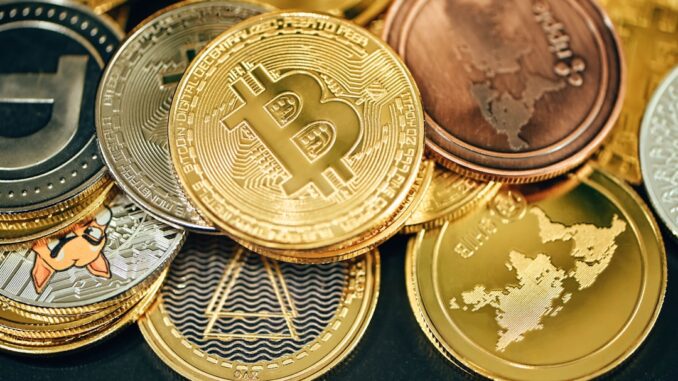

Navigating the Crypto Frontier: A Detailed Guide for Aspiring Investors
Venturing into the world of cryptocurrency investment feels a bit like stepping onto a wild, untamed frontier. There’s so much excitement, a powerful allure of incredible gains, but also a palpable sense of danger lurking around every corner. It’s truly a thrilling space, but for us, especially those just getting their feet wet, it’s absolutely vital to approach this incredibly volatile market with a clear head, a good dose of caution, and a rock-solid, informed strategy. We’re talking about managing significant risk here, so let’s break down the critical considerations you’ll need to navigate this journey successfully. I’ve been around the block a few times, and believe me, these insights come from experience, good and bad!
1. Unpacking Your Risk Tolerance and Crystallizing Investment Goals
Now, let’s get real about risk. Cryptocurrencies, as you’ve probably heard, are notorious for their price swings. We’re not talking about your grandma’s mutual fund here. Bitcoin, for instance, has seen its price surge to dizzying heights, then plummet just as dramatically, all within surprisingly short windows. It’s a rollercoaster, often with loops and corkscrews you didn’t anticipate. Think about the late 2017 bull run, a period of pure euphoria, followed by the long, grinding crypto winter of 2018. Or recall the explosive growth in early 2021, and then the rather sharp corrections that followed. These aren’t just numbers on a screen; they represent real money, real emotions, and for some, real heartache.
Investor Identification, Introduction, and negotiation.
So, before you even think about putting a single dollar into this space, you’ve got to ask yourself some brutally honest questions:
-
What’s my true comfort level with risk? Are you the type who can watch your portfolio drop by 30%, 50%, or even more, and still sleep soundly? Or will every red candle send you into a spiral of anxiety? Understanding this isn’t just an intellectual exercise; it’s about knowing your psychological limits. I remember a colleague, let’s call him Alex, who swore he had a high-risk tolerance. He invested heavily in a promising altcoin, but when it dipped 40% in a week, he panicked and sold everything at a loss. He realized, a little too late, his stomach wasn’t quite as strong as his initial bravado suggested.
-
What exactly are my investment goals? Are you chasing those exhilarating short-term gains, hoping to ‘get rich quick’? Or are you playing the long game, aiming for substantial growth over five, ten, even fifteen years, maybe as a hedge against inflation or a slice of your retirement pie? Perhaps you’re simply looking to diversify an existing portfolio, dipping a toe in the water without expecting to become a crypto millionaire overnight. Each goal demands a vastly different approach and a different basket of assets.
-
How much money can I genuinely afford to lose? This is the golden rule, perhaps the most critical piece of advice anyone can offer. I can’t stress this enough: only invest money that, if it vanished tomorrow, wouldn’t impact your ability to pay rent, buy groceries, or cover an unexpected medical bill. This isn’t your emergency fund. It’s not your child’s college savings. It’s discretionary capital, money you can treat as an experiment. If you’re investing funds you can’t afford to lose, you’re not investing; you’re gambling. And the house always wins in the long run if you’re playing with desperation.
Once you nail down your personal risk appetite and set truly clear, attainable objectives, you’ve laid the essential groundwork. This clarity becomes your compass, guiding your choices, helping you tailor an investment strategy that won’t just perform well but will also let you sleep at night. Without it, you’re effectively sailing without a map in a storm, a precarious position for anyone, let alone a beginner.
2. The Indispensable Art of Thorough Research
Stepping into the crypto market without rigorous research is like wandering into a dense jungle blindfolded. There are thousands upon thousands of coins and tokens out there, each with its own story, its own purported innovations, and, crucially, its own unique set of risks. Making informed decisions here isn’t just recommended, it’s a non-negotiable requirement for survival. You really need to roll up your sleeves and dig deep; it’s the only way.
Here’s how to conduct your due diligence, and trust me, it’s an ongoing process:
-
Market Capitalization is a Starting Point: You’ll often hear about Bitcoin and Ethereum being ‘safer’ bets. Why? A major factor is their market capitalization – the total value of all their circulating coins. Larger market cap coins generally boast greater liquidity, meaning you can buy and sell them more easily without significantly impacting their price. They also often benefit from stronger network effects, more institutional interest, and a more established infrastructure. Conversely, smaller ‘micro-cap’ coins are incredibly volatile. They can offer exponential returns, yes, but also carry an exponentially higher risk of collapse or becoming illiquid. It’s like comparing a blue-chip stock to a penny stock; the risk-reward profiles are just worlds apart.
-
Unearth the Real-World Use Case and Underlying Technology: This is where you separate the genuine innovation from the hype. What problem does this cryptocurrency aim to solve? Is it a faster payment system, a decentralized finance (DeFi) protocol, a platform for NFTs, a gaming token, or something entirely new? Dive into their whitepaper – it’s often dense, but it’s the project’s foundational document, outlining its vision, technology, and roadmap. Ask yourself: Is this genuinely innovative, or is it merely a rehash of something else? Does it have a sustainable business model? Think about Layer 1 blockchains like Solana or Avalanche, which aim to be foundational networks, versus Layer 2 solutions like Polygon, which enhance existing networks like Ethereum. Each has a distinct purpose.
-
Investigate the Team and Development Activity: Who’s behind this project? Do they have a strong track record in blockchain, tech, or finance? Are they ‘doxxed’ (publicly identifiable) or anonymous? While some legitimate projects have anonymous teams, it inherently adds another layer of risk. Look for transparency in their communication, regular development updates, and a clear roadmap. Platforms like GitHub can offer insights into how active their developer community is. A project with a constantly updated codebase and a responsive team is usually a much better sign than one that goes silent for months on end. Imagine investing in a startup where you don’t know who the founders are or if they’ve ever built anything before; it’s a similar principle.
-
Gauge Community Engagement and Adoption: A vibrant, engaged community can be a powerful indicator of a project’s long-term potential. Are people discussing it intelligently on platforms like Reddit, Discord, and Telegram? But be wary! A strong community can also be a breeding ground for ‘moon boy’ hype and pump-and-dump schemes. Look for genuine discussions about technology, use cases, and adoption, not just price speculation. Furthermore, investigate real-world partnerships and integrations. Is the project gaining traction with businesses or other blockchain protocols? Actual adoption, where the technology is being used for its intended purpose, is far more valuable than simply a large number of social media followers.
As you embark on this research, watch out for glaring red flags. Exorbitant promises of guaranteed returns are always a scam. Vague whitepapers, anonymous teams with no history, and projects heavily promoted by obscure influencers without substantial backing should raise immediate suspicion. Remember, the market moves at warp speed, so your research isn’t a one-time event. It’s an ongoing commitment to staying informed and constantly re-evaluating your positions. It truly is a continuous learning curve, always changing and evolving.
3. The Power of Portfolio Diversification
Placing all your hard-earned funds into a single cryptocurrency is a classic rookie mistake, one I’ve seen play out with unfortunate frequency. It’s akin to the old adage of ‘putting all your eggs in one basket,’ and we all know how that story usually ends, right? Diversification isn’t just some fancy financial term; it’s a fundamental risk management strategy that smooths out the inevitably bumpy ride in crypto, balancing potential losses across different assets and even different sectors. It means that if one of your investments takes a nosedive, it won’t necessarily tank your entire portfolio.
Let’s unpack how to effectively diversify within the crypto space:
-
Diversify Across Different Cryptocurrencies: Don’t just buy Bitcoin and call it a day, although Bitcoin certainly deserves a foundational place in most portfolios. Consider a mix: a significant portion in established, larger-cap assets like Bitcoin (often considered ‘digital gold’) and Ethereum (the backbone of decentralized applications). Then, allocate smaller percentages to mid-cap altcoins with strong fundamentals and innovative use cases. These might be projects in the DeFi space, privacy coins, or promising Layer 1 competitors. A very small, speculative portion could even go into smaller-cap coins, understanding the heightened risk but also the potential for outsized gains. The trick here is balance.
-
Diversify Across Crypto Sectors: The crypto ecosystem is vast and constantly expanding. Just like traditional finance has different industries (tech, healthcare, energy), crypto has distinct sectors. Consider spreading your investments across:
- Decentralized Finance (DeFi): Protocols enabling lending, borrowing, trading, and insurance without traditional intermediaries (e.g., Aave, MakerDAO). This sector aims to rebuild financial services on blockchain.
- Non-Fungible Tokens (NFTs): Digital assets representing ownership of unique items, from art to collectibles to gaming assets (e.g., projects built on Ethereum, Solana).
- Blockchain Gaming (GameFi): Play-to-earn models where players can earn crypto or NFTs by playing games (e.g., Axie Infinity, Sandbox).
- Infrastructure & Scaling Solutions: Projects focused on improving the underlying technology, making blockchains faster, cheaper, or more interoperable (e.g., Polkadot, Polygon).
- Privacy Coins: Cryptocurrencies designed for anonymous transactions (e.g., Monero, Zcash).
- Oracles: Projects that feed real-world data into smart contracts (e.g., Chainlink).
By investing across these diverse areas, you’re not betting on just one trend or technological solution. If DeFi takes a hit, your gaming or infrastructure holdings might still be performing well, cushioning the impact on your overall portfolio.
-
Consider Stablecoins for Stability: Including a portion of stablecoins (cryptocurrencies pegged to a fiat currency like the US dollar, e.g., USDT, USDC, DAI) can act as a safe harbor during volatile periods. They don’t offer growth potential, but they preserve capital and allow you to quickly seize opportunities during market dips without needing to off-ramp to fiat. They’re a useful tool for managing risk and maintaining liquidity.
-
Don’t Forget Traditional Asset Classes (Overall Portfolio Context): While this guide focuses on crypto, remember your entire financial picture. For true overall diversification, your crypto holdings should ideally be just one component of a broader portfolio that includes traditional assets like stocks, bonds, and perhaps real estate. This helps ensure that even if the crypto market faces a prolonged downturn, your entire financial future isn’t jeopardized. It’s about building a robust financial fortress, not just a crypto castle.
Now, while diversification is key, beware of over-diversification. Spreading yourself too thin across dozens of projects can make it incredibly difficult to monitor each one effectively, and the impact of any single winner might be diluted. Find a healthy balance, one that aligns with your risk tolerance and allows you to stay on top of your investments without feeling overwhelmed. And remember, periodically rebalance your portfolio to maintain your desired asset allocation as market conditions shift. It’s a dynamic process, not a static one.
4. Selecting a Reliable Exchange and Fortifying Your Assets
Alright, you’ve assessed your risk, done your homework, and planned your diversification. Now comes the practical step: actually buying, selling, and securing your cryptocurrencies. Choosing a trustworthy platform and implementing robust security measures is absolutely paramount. In this nascent industry, security breaches and scams are unfortunately not uncommon, so diligence here can literally save your financial bacon. Believe me, I’ve seen too many stories of people losing their entire holdings because they cut corners on security; it’s just heartbreaking.
Here’s what to look for and how to protect yourself:
Choosing a Reputable Exchange
Your chosen crypto exchange is your gateway to the market. Treat this decision with the seriousness it deserves. Don’t just jump on the first one you see or the one with the lowest fees; reputation and security far outweigh a few basis points on trading costs.
-
Reputation and Regulatory Compliance: Opt for exchanges with a solid, long-standing reputation. Look into their history: Have they ever been hacked? How did they respond? Are they regulated in your jurisdiction? For example, major exchanges in the US often comply with strict KYC (Know Your Customer) and AML (Anti-Money Laundering) regulations, which, while sometimes inconvenient, offer a layer of protection. Research online reviews, news articles, and professional analyses. A consistent history of reliability and transparency is a huge green flag.
-
Robust Security Measures: This is non-negotiable. Ensure the platform implements industry-leading security protocols. We’re talking about:
- Two-Factor Authentication (2FA): This should be mandatory for login and withdrawals. Use an authenticator app (like Google Authenticator or Authy) rather than SMS-based 2FA, as SIM-swap attacks are a real threat. It’s an extra step, yes, but it dramatically boosts your protection.
- Cold Storage: A significant portion of an exchange’s customer funds should ideally be held in ‘cold storage’ – offline wallets not connected to the internet. This makes them much harder for hackers to access. While you can’t verify this directly, reputable exchanges are transparent about their security practices.
- Insurance Funds: Some exchanges maintain insurance funds (like Binance’s SAFU fund) to cover customer losses in the event of a hack. This isn’t a guarantee, but it shows a commitment to client protection.
- Address Whitelisting: The ability to whitelist specific withdrawal addresses so funds can only be sent to pre-approved destinations. This prevents hackers from immediately draining your account even if they gain access.
-
Fees and User Experience: While secondary to security, these are still important. Compare trading fees, deposit fees, and especially withdrawal fees. Some exchanges can have surprisingly high withdrawal costs for certain cryptocurrencies. Also, consider the user interface. For beginners, an intuitive, easy-to-navigate platform is crucial. You don’t want to be fumbling around when trying to make a time-sensitive trade.
-
Customer Support: If something goes wrong, can you get help? Check the availability and responsiveness of their customer support channels. Read reviews about their support quality; it makes a massive difference when you’re in a pinch.
Securing Your Assets: ‘Not Your Keys, Not Your Coins’
Once you’ve bought your crypto, the next critical step is securing it. Leaving substantial amounts of crypto on an exchange for long periods, while convenient, carries inherent risks. Exchanges are centralized targets for hackers. Hence the common crypto mantra: ‘Not your keys, not your coins.’ This refers to holding your own private keys, which give you ultimate control over your funds.
-
Hot Wallets (Software Wallets): These are connected to the internet and include exchange wallets, mobile apps, and desktop applications. They offer convenience for active trading or small amounts. However, because they are online, they are more susceptible to hacking. If you keep funds on an exchange, ensure you activate every possible security feature they offer.
-
Cold Wallets (Hardware Wallets): For long-term holdings or significant amounts of crypto, hardware wallets are the gold standard for security. Devices like Ledger and Trezor store your private keys offline, completely isolated from internet-connected devices. When you want to make a transaction, you connect the wallet, approve the transaction physically on the device itself, and then disconnect it. This process makes it virtually impossible for online hackers to steal your funds. Your ‘seed phrase’ (a 12- or 24-word recovery phrase) is the ultimate backup for your hardware wallet; never share it with anyone, and store it securely offline, perhaps in a fireproof safe, split into multiple locations, or even etched onto metal.
-
Paper Wallets: These involve printing your public and private keys on a piece of paper. While theoretically ‘cold,’ they’re generally not recommended for beginners due to the complexities of secure generation and use. If not created and handled carefully, they can introduce their own set of risks.
Best Practices for Personal Security: Always use strong, unique passwords for every crypto-related account. Enable 2FA everywhere. Be incredibly wary of phishing attempts (emails or messages trying to trick you into revealing your information). Double-check every address before sending crypto, as a single wrong character can mean irreversible loss. And again, never, ever share your seed phrase or private keys with anyone, for any reason. Nobody legitimate will ever ask you for them. This level of vigilance really does become second nature after a while, protecting your hard-earned digital assets.
5. Crafting a Resilient Investment Strategy and Staying Sharply Informed
Simply buying some crypto isn’t enough; you need a well-defined strategy, a playbook for how you’ll navigate the market’s unpredictable twists and turns. Without one, you’ll find yourself making impulsive, emotional decisions, which are rarely profitable. Your strategy acts as your anchor, keeping you steady when the waves get rough. And alongside that strategy, a commitment to staying informed is non-negotiable. The crypto landscape shifts at an exhilarating pace, and what was true yesterday might not be true tomorrow.
Building Your Investment Strategy
-
Dollar-Cost Averaging (DCA): This is one of the most powerful, yet beautifully simple, strategies for beginners, and frankly, for experienced investors too. DCA means investing a fixed amount of money at regular intervals, regardless of the asset’s price. For example, you might decide to invest $100 into Bitcoin every two weeks. When the price is high, your $100 buys fewer coins; when the price is low, it buys more. Over time, this strategy averages out your purchase price, significantly mitigating the impact of volatility and removing the emotional burden of ‘timing the market’ – a feat even seasoned pros rarely achieve consistently. It’s consistent, removes FOMO, and helps you accumulate assets systematically. I’ve personally seen DCA turn what looked like a bad entry point into a perfectly respectable long-term hold.
-
Setting Clear Entry and Exit Points: Even for long-term investors, having a rough idea of when you might take some profits or cut losses is crucial. This doesn’t mean day trading. It means establishing profit targets (e.g., ‘I’ll sell 20% if this coin hits 5x gains’) and stop-losses (e.g., ‘If it drops 30% from my purchase price, I’ll reconsider my position or sell’). These aren’t rigid rules but guidelines that help you detach emotion from your decisions. It’s about having a plan for different scenarios, because things rarely go exactly as you expect.
-
Understanding Your Investment Horizon: Are you a short-term speculator, a medium-term holder, or a long-term believer? Your time horizon dictates the types of assets you might consider and the level of volatility you’re prepared to endure. Most beginners are best served by a long-term approach, allowing ample time for projects to mature and market cycles to play out.
The Lifelong Commitment to Staying Informed
The crypto space doesn’t stand still. New technologies emerge, regulations change, and global economic factors constantly influence market sentiment. To make sound decisions and adapt your strategy, you absolutely must stay informed.
-
Reliable News Sources: Subscribe to reputable crypto news outlets like CoinDesk, CoinTelegraph, or The Block. Read whitepapers and official project announcements. Balance these with broader financial news that covers cryptocurrency, giving you a wider economic perspective. Be cautious of sources that seem overly biased, sensational, or that only focus on price speculation.
-
Follow Key Developers and Projects (with discernment): Many projects maintain active presences on platforms like Twitter, Discord, and Telegram. Following official channels can give you direct insights into development updates, partnerships, and community sentiment. However, remember to filter out noise, hype, and potential scams that often proliferate on these platforms. Always cross-reference information.
-
Monitor the Regulatory Landscape: Governments worldwide are grappling with how to regulate crypto. Changes in legislation regarding taxation, stablecoins, exchanges, or CBDCs (Central Bank Digital Currencies) can have significant impacts on the market. Staying abreast of these developments, both locally and globally, is essential. For instance, a clear regulatory framework can bring institutional adoption, while heavy restrictions can stifle innovation.
-
Keep an Eye on Technological Advancements: The underlying technology is constantly evolving. Ethereum’s shift to Proof-of-Stake (the ‘Merge’), the development of new Layer 1 blockchains, scaling solutions, and advancements in zero-knowledge proofs are all examples of changes that can alter the competitive landscape. Understanding these innovations helps you identify projects with genuine long-term potential.
-
Macroeconomic Influences: Don’t treat crypto in a vacuum. Global interest rates, inflation, geopolitical events, and the overall health of traditional markets often spill over into crypto. For example, during periods of high inflation, some view Bitcoin as a hedge, while rising interest rates can make riskier assets less appealing. Understanding these broader forces helps you interpret market movements more accurately.
Emotional Discipline is Your Superpower: This is often the hardest part. Sticking to your pre-defined strategy when the market is plummeting, resisting the urge to ‘buy the top’ during a euphoric rally, and avoiding panicked sales are all crucial. Your strategy is your guardrail against emotional trading. Review your strategy periodically, perhaps every quarter, and adjust it if your goals or market conditions have fundamentally changed, but avoid impulsive, day-to-day tinkering.
By diligently considering each of these factors, you’re not just throwing darts in the dark; you’re building a structured, resilient approach to cryptocurrency investment. Remember, while the potential rewards in this space can be incredibly enticing, the risks are equally significant. So, always approach your investments with a cautious yet informed mindset, conduct your thorough research, and most importantly, invest responsibly. It’s a marathon, not a sprint, and preparation is everything.
Be the first to comment