
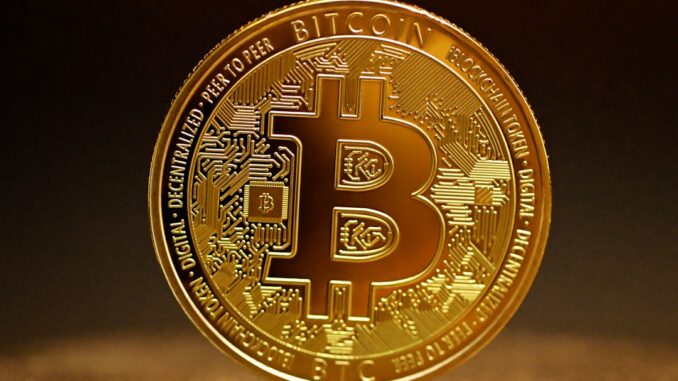

Trump’s Digital Gambit: Unpacking the U.S. Strategic Crypto Reserve
It’s a move that’s sent ripples, no, let’s call them tidal waves, through global finance and the burgeoning digital asset space. President Donald Trump, never one to shy from a bold declaration, has unveiled plans for a U.S. Strategic Crypto Reserve. This isn’t just about dipping a toe in the crypto waters; it’s a full-on dive into the deep end, signaling a monumental pivot in how the United States views, values, and intends to wield digital assets. You see, we’re not just talking about Bitcoin anymore, are we? The proposed reserve encompasses five major cryptocurrencies: Bitcoin (BTC), Ethereum (ETH), XRP, Solana (SOL), and Cardano (ADA). It’s a diversified portfolio, certainly, reflecting a sophisticated, if not audacious, strategy to deeply integrate digital currencies into the very fabric of the U.S. financial system.
This isn’t some fleeting thought, a late-night tweet that dissipates with the dawn. Oh no. This feels like the culmination of months, maybe even years, of behind-the-scenes machinations and evolving policy discussions. The implications? They’re vast, complex, and frankly, a bit thrilling.
Investor Identification, Introduction, and negotiation.
The Architect of the Digital Vault: President Trump’s Evolving Vision
President Trump, via his preferred platform, Truth Social, made the announcement on March 2, 2025. This wasn’t a bolt from the blue, however. It was the direct progeny of an executive order he signed just two months prior, in January 2025, titled ‘Strengthening American Leadership in Digital Financial Technology.’ That order, a lesser-noticed but profoundly impactful directive at the time, laid the groundwork, tasking the newly formed Presidential Working Group on Digital Asset Markets with a clear mandate: explore the feasibility and mechanics of establishing a national digital asset stockpile. You might remember the initial buzz then, largely centered on Bitcoin as the sole contender, the obvious choice. But what’s fascinating now, isn’t it, is the expansion, the inclusion of other significant players.
It makes you wonder about the evolution of his thinking, doesn’t it? From initial skepticism, even outright derision for cryptocurrencies in some past remarks, to now spearheading a national reserve, it’s a remarkable shift. Was it a political calculation, a shrewd play to court the burgeoning crypto voter base, particularly younger, tech-savvy demographics? Or did the inherent innovation, the promise of a decentralized future, genuinely capture his attention and that of his economic advisors? Perhaps it’s a bit of both. After all, the geopolitical landscape is shifting, and the concept of national digital sovereignty is quickly becoming as critical as physical borders. The working group, surely comprised of some sharp minds from Treasury, the Federal Reserve, and perhaps even some hand-picked crypto veterans, must’ve presented compelling arguments. They weren’t just kicking tires; they were engineering a new economic paradigm.
Their initial findings, I hear through the grapevine, highlighted not just the store-of-value aspect that Bitcoin brings, but the broader utility and technological prowess offered by other networks. They recognized that while Bitcoin might be digital gold, Ethereum is digital oil, powering an entire ecosystem. And that’s a crucial distinction, if you ask me.
A New Bretton Woods?: Unpacking the Strategic Crypto Reserve Concept
When we talk about a ‘strategic reserve,’ what immediately comes to mind for most folks is the Strategic Petroleum Reserve, right? Or perhaps the vaults of Fort Knox, brimming with physical gold. These reserves serve critical functions: stabilizing markets, providing national security in times of crisis, and underpinning economic strength. Applying this concept to volatile, decentralized digital assets, well, that’s where things get really interesting. You’ve got to ask yourself: what are the goals here, really? Is it purely economic stability, a hedge against dollar inflation, or perhaps a new tool for monetary policy? Could it be a national security play, positioning the U.S. to influence global digital trade and mitigate risks from hostile state actors using crypto?
The management of such a reserve, let me tell you, will be a herculean task. We’re not talking about simply buying a few million dollars’ worth and forgetting about it. This will demand state-of-the-art custody solutions, likely a combination of cold storage (offline, highly secured facilities, perhaps deep underground) and multi-signature wallets requiring authorization from multiple, geographically dispersed entities to move funds. Imagine the security protocols; you can’t just lose the private keys to billions in national assets, can you? It’s a digital Fort Knox, alright, but with far more complex locks and keys.
Then there’s the ongoing acquisition strategy. Is this a one-time splash, or will there be regular, systematic purchases to accumulate more? What mechanism will they use to minimize market impact during these buys? It’s a delicate dance, as large state-backed purchases could easily create a self-fulfilling prophecy of rising prices, impacting the very stability they aim to achieve. Transparency will be key here, yet too much transparency could invite front-running and manipulation. It’s a tightrope walk for sure, and I wouldn’t want to be the one responsible for setting those policies.
The Chosen Five: A Deeper Dive into the Portfolio’s Potential
By incorporating this diversified array of digital assets, the U.S. clearly aims to diversify its digital holdings and mitigate risks associated with reliance on a single cryptocurrency. It’s a smart play, truly, recognizing that each of these networks brings something unique to the table. Let’s dig into why these particular five likely made the cut.
Bitcoin (BTC): The Digital Bedrock
Bitcoin, often dubbed ‘digital gold,’ needs little introduction. It’s the original, the pioneer, and remains the most recognized and liquid cryptocurrency. Its inclusion is foundational, almost a given. But beyond its store-of-value narrative, think about its potential. In an increasingly fragmented global economy, Bitcoin offers a censorship-resistant, permissionless network for value transfer. Governments, including the U.S., are looking at ways to maintain economic sovereignty. A strategic holding of BTC could serve as a hedge against inflation, a last-resort reserve during geopolitical instability, or even a tool for international remittances that bypass traditional, sometimes cumbersome, banking rails. It’s not just a digital asset; it’s a statement of financial resilience, a nod to an asset that transcends national borders.
Ethereum (ETH): The World’s Computer
Ethereum is where the real innovation often happens. It’s the backbone of decentralized finance (DeFi), non-fungible tokens (NFTs), and a vast array of Web3 applications. Its smart contract functionality is, quite frankly, revolutionary. By holding ETH, the U.S. isn’t just buying into a currency; it’s buying into a global, programmable settlement layer. Imagine the possibilities: leveraging Ethereum for secure, transparent supply chain management, perhaps even for government contracting, or for identity verification systems. It’s not just a store of value, it’s the infrastructure for a decentralized future, a sort of digital operating system. Its continuous evolution, particularly with upgrades like the Merge and forthcoming sharding, speaks to its long-term viability and potential for massive scale. If you’re serious about digital leadership, you simply can’t ignore Ethereum.
XRP: The Cross-Border Catalyst
XRP, developed by Ripple, has always positioned itself as a solution for faster, cheaper global transactions. It’s designed as a bridge currency, facilitating cross-border payments by effectively sidestepping the inefficiencies of traditional correspondent banking. For a global superpower like the U.S., with vast international trade and aid commitments, the ability to settle transactions almost instantaneously, at a fraction of the cost, is incredibly attractive. Its journey, particularly its long-standing regulatory battle with the SEC, has been tumultuous, yet it demonstrates resilience and a clear enterprise focus. Holding XRP could signal a strategic intent to influence international payment rails, potentially even in conversations around Central Bank Digital Currencies (CBDCs), offering a ready-made, albeit permissioned, alternative to legacy systems.
Solana (SOL): The Speed Demon
Solana burst onto the scene with a promise: high throughput and low latency. It’s built for speed, capable of processing tens of thousands of transactions per second, making it incredibly attractive for decentralized applications that demand real-time performance, like high-frequency trading or gaming. Its inclusion suggests a focus on cutting-edge blockchain technology and the desire to support networks capable of enterprise-grade adoption. While it has faced challenges, notably network outages, its underlying technology and vibrant developer ecosystem remain compelling. For the U.S., having a stake in Solana could be about investing in the future of scalable digital infrastructure, perhaps even exploring its utility for critical national databases or real-time data feeds. You can’t deny its raw power.
Cardano (ADA): The Scholarly Blockchain
Cardano, often lauded for its academic, peer-reviewed approach to blockchain development, aims to provide a more secure, sustainable, and scalable platform for decentralized applications. Unlike some of its peers, Cardano has taken a methodical, research-first path, focusing on formal verification and robust engineering. Its Ouroboros proof-of-stake consensus mechanism is designed with energy efficiency and security in mind. This choice signals an appreciation for deliberate, well-researched technological foundations. For the U.S., Cardano’s focus on identity, governance, and its potential in developing nations for verifiable credentials or land registries, could be particularly interesting. It’s an investment in a meticulously engineered future, one that prioritizes long-term stability over rapid deployment.
Seismic Shifts: Market Mania and Investor Psychology
The news hit the crypto market like an earthquake, truly. Screens across the globe, from the bustling trading floors of London to the late-night home offices in Singapore, flashed an almost uniform emerald green. Bitcoin’s price didn’t just inch up; it surged by over 20%, catapulting past the $90,000 mark and reaching approximately $94,154 in what felt like moments. Imagine the euphoria, the frantic keyboard tapping, the analysts scrambling to update their models. I heard tales of traders who’d fallen asleep only to wake up to life-altering gains, wondering if they’d dreamt it all.
But it wasn’t just Bitcoin having its moment. The ripple effect, ironically enough, was profound across the entire selected portfolio. XRP, a perennial underperformer for some, saw its value jump from a respectable $2.23 to nearly $3, settling around $2.99. Solana, ever the darling of the speed enthusiasts, shot up from $140 to $168, demonstrating its loyal following and robust utility. And Cardano’s ADA? It practically doubled, soaring from $0.68 to just under $1, proving that patience sometimes does pay off. These weren’t just modest gains; these were seismic shifts, underscoring a newfound, or perhaps dramatically amplified, investor confidence in the administration’s decidedly pro-crypto stance. It legitimizes the space in a way that years of institutional adoption hadn’t quite managed.
What about the coins that didn’t make the cut, you ask? Well, they generally saw a slight dip or stagnated, as capital, sensing the official endorsement, naturally flowed into the ‘chosen five.’ It created a sort of tiered market, at least temporarily, highlighting the immense power of government endorsement in a still-nascent asset class. This institutional embrace, by the world’s largest economy no less, signals a profound validation for retail investors and traditional finance players who might’ve been on the fence. It’s a psychological turning point, almost certainly.
Navigating the Treacherous Waters: Challenges and Regulatory Minefields
While the initiative has been largely lauded for its audacious, forward-thinking approach, it certainly isn’t without its complexities. In fact, it raises a myriad of questions, some philosophical, others intensely practical. For instance, you’ve got to consider the massive logistical and strategic challenges ahead. What happens when the government, arguably the world’s largest potential whale, starts dabbling in highly volatile assets?
First up, Valuation and Volatility. How exactly will the U.S. government manage a portfolio subject to such dramatic price swings? Mark-to-market accounting for traditional assets is one thing, but for something like Bitcoin, which can swing 10-20% in a single day, it’s an entirely different beast. What happens during a prolonged crypto winter? The headlines write themselves, don’t they? ‘Taxpayer money vanishes as Bitcoin tanks!’ Careful management and transparent reporting will be paramount, yet even then, the optics will be tough.
Then there’s the Security and Custody conundrum. This isn’t just a matter of having a strong password. We’re talking about billions, potentially trillions, of dollars. The risk of state-sponsored hacks, sophisticated phishing attacks, or even insider threats becomes exponentially higher. Cold storage, geographically distributed multi-signature schemes, quantum-resistant encryption, and redundant backup systems aren’t just good ideas; they’re absolute necessities. Who holds the keys, both literally and figuratively? The Treasury? The Fed? A specially appointed agency? It’s a logistical and technological nightmare that demands unparalleled expertise.
And let’s not forget the Regulatory Framework. The U.S. crypto regulatory landscape has been, to put it mildly, a bit of a patchwork quilt, often leaving innovators and investors scratching their heads. The existence of a national crypto reserve must force the issue, compelling swift and comprehensive regulatory clarity from bodies like the SEC, CFTC, and Treasury. Will the reserve operate under its own set of rules, or will it adhere to existing, often ill-fitting, statutes? This move could, paradoxically, be the catalyst for the very clear regulations the industry has craved for years. It’s almost as if they’re saying, ‘we’re in, so now we have to figure this out.’
Finally, the specter of Market Manipulation Concerns looms. A government entity, with potentially limitless resources, buying or selling vast quantities of these assets could undeniably sway the market. What safeguards will be in place to prevent the perception, or even the reality, of the U.S. acting as a super-whale, moving prices at will? Transparency, again, is key, but balance is needed to prevent predatory behavior from other market participants. Furthermore, what are the Political Risks? If a future administration, say one less keen on digital assets, takes office, could they simply liquidate the reserve? The long-term political implications are immense, creating a fascinating new arena for partisan debate.
Geopolitical Ripples: A Global Game Changer?
Internationally, the establishment of the U.S. Strategic Crypto Reserve has not just garnered attention; it’s sparked a full-blown geopolitical discussion. Some nations view it as an unequivocal positive, a legitimizing stamp from the world’s leading economy that could accelerate global cryptocurrency adoption. It’s hard to ignore, isn’t it, when the U.S. puts its official weight behind something like this.
On the other hand, there are definite concerns, especially among those who fear potential market manipulation by a state actor, or who worry about the implications for global financial stability. The U.S. dollar has long been the world’s reserve currency, and any move that introduces a new class of reserves could be seen as either strengthening that position in a digital age or, conversely, beginning its slow dethronement. That’s a debate that’s been simmering for years, and this just poured fuel on the fire.
Think about the ripple effect on Allies. Will European nations, the UK, or Canada feel compelled to establish their own crypto reserves? Could we see a coordinated strategy emerge among Western economies, solidifying their digital asset positions? Or will they take a wait-and-see approach, analyzing the U.S. experiment before committing?
And then there are the Adversaries. How might China and Russia react? Both nations have been actively exploring their own digital currency initiatives, often with an eye towards reducing reliance on the U.S. dollar. This move could accelerate their efforts, fostering a sort of ‘digital arms race’ where nations compete not just for technological supremacy but for digital financial dominance. It’s a chess game, played on a global scale, with cryptocurrencies as the new pawns, knights, and queens.
What about Developing Nations? Many of these countries are already leapfrogging traditional banking infrastructure, embracing mobile money and, increasingly, cryptocurrencies. A U.S. reserve could accelerate this trend, providing a blueprint or even direct financial support in digital assets, offering alternatives to often volatile fiat currencies or expensive remittance services. This could fundamentally alter global aid and trade dynamics.
Even international bodies like the IMF and the BIS, already grappling with the implications of digital currencies, will be forced to adapt their frameworks and recommendations. The global community watches closely, anticipating how this unilateral move will influence international policies, cross-border regulations, and the broader adoption of digital currencies. It’s not just a U.S. story; it’s a world story.
The Road Ahead: Evolution of a Digital Colossus
President Trump’s establishment of the U.S. Strategic Crypto Reserve marks a truly pivotal moment in the integration of digital assets into national financial strategies. By embracing such a diversified portfolio of cryptocurrencies, the U.S. isn’t just playing catch-up; it’s positioning itself at the very forefront of the digital economy, potentially setting a powerful precedent for other nations to follow, whether they want to or not. It’s a bold declaration of intent, a recognition that the future of finance is inextricably linked to digital assets.
But what does success look like for such an endeavor? Is it purely about capital appreciation? Or is it about gaining influence, fostering innovation within its borders, or securing its financial sovereignty in an increasingly complex world? The metrics will need careful definition, and the strategy will undoubtedly evolve.
We might see the reserve expand to include other innovative assets, perhaps even tokenized real-world assets in the future. Could it be used for specific national purposes, like targeted foreign aid that bypasses corrupt traditional channels, or for settling international trade agreements more efficiently? The possibilities are immense, almost dizzying. As this strategic reserve evolves, it will be absolutely crucial to monitor its impact on market dynamics, the development of robust regulatory frameworks, and, most importantly, its long-term influence on the broader financial landscape, both domestically and internationally. We’re in uncharted territory, my friends, and it’s going to be one heck of a ride.
Be the first to comment