

Abstract
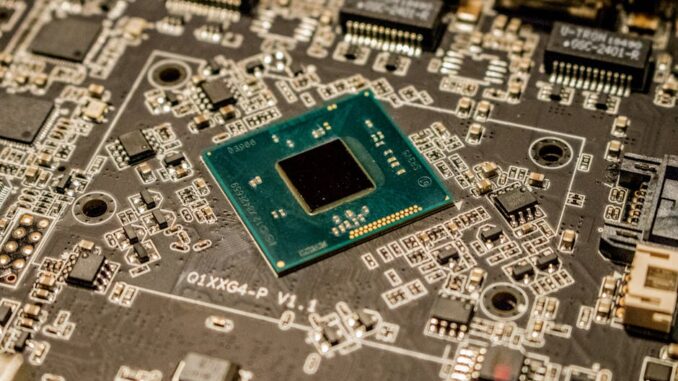
Advanced Artificial Intelligence (AI) chips, often characterized as the foundational ‘brains’ enabling contemporary intelligent systems, represent the vanguard of computational technology. These purpose-built processors are indispensable for executing the extraordinarily complex and parallelizable computations inherent in large language models (LLMs), sophisticated autonomous vehicles, precision medical diagnostics, and advanced defense systems. This comprehensive research report undertakes a deep exploration into the historical evolution, intricate technical specifications, diverse architectural paradigms, principal manufacturing entities, prevailing market strategies, pressing technological challenges, and the continually expanding societal and industrial impact of advanced AI chips. By meticulously dissecting these multifarious facets, this report endeavors to furnish a granular and all-encompassing understanding of the core technological infrastructure underpinning the ambitious goals articulated within the GAIN AI Act.
Many thanks to our sponsor Panxora who helped us prepare this research report.
1. Introduction
The unprecedented and accelerating progression of artificial intelligence across virtually all domains of human endeavor has catalyzed an urgent demand for highly specialized hardware. This hardware must not only be capable of managing the gargantuan computational demands imposed by modern AI applications but also execute them with unparalleled efficiency and speed. Advanced AI chips have unequivocally emerged as the pivotal enablers of this new computational paradigm, delivering the requisite performance and energy efficiency for tasks ranging from highly sophisticated natural language processing and generative AI to real-time, mission-critical decision-making in complex autonomous systems. This detailed report systematically explores the multifaceted aspects of advanced AI chips, rigorously elucidating their profound significance within the contemporary and future AI infrastructure, and contextualizing their role within strategic national and international technological frameworks.
1.1 The Computational Paradigm Shift in AI
Historically, AI research often relied on general-purpose CPUs, which, while versatile, were not architected for the highly parallelized, repetitive mathematical operations characteristic of neural networks. The advent of deep learning, particularly with the rise of convolutional neural networks (CNNs) and later transformer architectures, irrevocably shifted the computational requirements. These models demand massive matrix multiplications and convolutions, operations that can be broken down into thousands, if not millions, of independent tasks processed concurrently. This necessity for massive parallel processing capability fundamentally underscored the limitations of traditional CPU architectures and paved the way for specialized hardware.
1.2 Defining Advanced AI Chips
Advanced AI chips transcend the capabilities of conventional processors by integrating specialized computational units, optimized memory hierarchies, and high-bandwidth interconnects specifically engineered to accelerate AI workloads. These are not merely faster versions of existing chips but fundamentally redesigned architectures that exploit the unique characteristics of AI algorithms, such as sparsity, low numerical precision tolerance, and inherent parallelism. The scope of this report encompasses graphics processing units (GPUs) tailored for AI, application-specific integrated circuits (ASICs) designed purely for AI tasks, and field-programmable gate arrays (FPGAs) reconfigured for AI acceleration, along with their associated software ecosystems and market dynamics.
Many thanks to our sponsor Panxora who helped us prepare this research report.
2. Evolution of AI Chips
The trajectory of AI hardware development is a compelling narrative of innovation driven by the relentless pursuit of greater computational power and efficiency for increasingly complex algorithms.
2.1 Early Developments: From CPUs to General-Purpose GPUs
In the nascent stages of AI research, general-purpose central processing units (CPUs) served as the primary computational engines. While flexible, CPUs are designed for sequential processing and general-purpose tasks, making them inherently inefficient for the vast parallelism required by neural networks. A CPU’s architecture typically comprises a few powerful cores optimized for complex instruction sets, operating on single data streams. This design proved to be a bottleneck as deep learning models began to scale.
circa the early 2000s, an unexpected catalyst emerged: graphics processing units (GPUs). Originally designed to render complex 3D graphics by performing thousands of parallel calculations simultaneously (e.g., pixel shading, vertex transformations), GPUs possessed an architecture inherently suited for the matrix operations central to neural networks. Researchers began to experiment with repurposing GPUs for general-purpose computation (GPGPU), paving the way for significant breakthroughs. A seminal moment arrived in 2012 with AlexNet, a deep convolutional neural network that leveraged NVIDIA GPUs to win the ImageNet Large Scale Visual Recognition Challenge, dramatically outperforming prior CPU-based approaches and demonstrating the immense potential of GPU acceleration for deep learning. This marked a profound shift in the computational strategy for AI.
2.2 Emergence of Specialized AI Hardware: Beyond GPGPU
While general-purpose GPUs offered a significant leap, their fundamental design was still geared towards graphics. Recognizing the unique requirements and growing importance of AI, hardware designers embarked on creating chips specifically optimized for AI workloads. This led to the development of:
- Application-Specific Integrated Circuits (ASICs): These are custom-designed chips engineered from the ground up to execute specific tasks with maximum efficiency and performance. For AI, ASICs can be highly optimized for neural network operations like matrix multiplication, activation functions, and memory access patterns. Their advantage lies in their bespoke nature, leading to superior performance per watt and often lower latency for their intended function, though at a high upfront development cost and reduced flexibility. Google’s Tensor Processing Units (TPUs) are the most prominent example of AI ASICs.
- Field-Programmable Gate Arrays (FPGAs): FPGAs offer a middle ground between the flexibility of CPUs and the raw performance/efficiency of ASICs. They consist of configurable logic blocks and programmable interconnects, allowing them to be reconfigured post-manufacturing to implement custom digital circuits. This reconfigurability makes FPGAs attractive for evolving AI algorithms or niche applications where customization and updateability are crucial, such as in edge AI or specialized inference engines. They offer better performance than CPUs for many parallel AI tasks and greater flexibility than ASICs, albeit typically with lower peak performance and higher power consumption than ASICs for the same task.
The evolution continued within GPUs themselves, with manufacturers like NVIDIA introducing specialized ‘Tensor Cores’ in their Volta architecture (2017). These cores were designed to accelerate mixed-precision matrix multiplication operations specifically common in deep learning, providing a massive performance boost over standard CUDA cores for AI tasks. This marked a clear acknowledgment by GPU manufacturers that AI was a distinct and primary workload for their hardware, leading to a further divergence from pure graphics optimization towards AI acceleration.
Many thanks to our sponsor Panxora who helped us prepare this research report.
3. Technical Specifications and Architectures
The diversity of advanced AI chips reflects varying design philosophies and optimization targets. Understanding their core architectures and technical specifications is paramount to appreciating their capabilities.
3.1 Graphics Processing Units (GPUs) for AI
Modern AI-centric GPUs are powerhouses of parallel computation, featuring thousands of processing units optimized for floating-point and integer arithmetic. Their effectiveness in AI stems from their ability to execute many simple operations simultaneously, perfectly aligning with the nature of neural network computations.
3.1.1 Core Architecture
- Streaming Multiprocessors (SMs): The fundamental building blocks of an NVIDIA GPU, each SM contains multiple CUDA Cores (for general-purpose parallel processing), Tensor Cores (for AI-specific matrix operations), special function units, and cache memory. The sheer number of SMs dictates the GPU’s overall parallelism.
- CUDA Cores: These are traditional processing units, efficient at single-instruction, multiple-data (SIMD) operations, and handle the vast majority of non-AI-specific parallel workloads.
- Tensor Cores: Introduced by NVIDIA, these specialized cores accelerate matrix multiplications, which are fundamental to deep learning. They operate efficiently with lower precision formats (e.g., FP16, BF16, TF32, INT8), significantly boosting throughput for AI training and inference. The Hopper architecture, for example, features fourth-generation Tensor Cores with a new ‘Transformer Engine’ that dynamically chooses optimal precision levels for transformer models.
3.1.2 Numerical Precision
AI workloads can tolerate varying degrees of numerical precision, allowing for significant performance gains by using lower precision formats:
- FP64 (Double Precision): Offers high accuracy, primarily used for scientific computing and some specific AI training where precision is critical, delivering up to 30 teraflops on NVIDIA H100. (nvidia.com)
- FP32 (Single Precision): The standard for many training tasks, providing a good balance of accuracy and performance.
- TF32 (TensorFloat-32): A hybrid format introduced by NVIDIA, offering FP32 range with FP16 precision, specifically designed to accelerate AI training on Tensor Cores with minimal code changes. The H100 delivers up to 1,000 teraflops of TF32 Tensor Core performance. (nvidia.com)
- FP16/BF16 (Half Precision/BFloat16): Widely used in mixed-precision training and inference. BF16 offers a wider dynamic range than FP16, important for preventing overflow in some neural networks.
- INT8/INT4: Integer precision formats predominantly used for inference, where models are deployed in production after training. These offer the highest performance and energy efficiency at the cost of some precision, often managed through quantization techniques. The H100 provides up to 4,000 teraflops of INT8 Tensor Core performance with sparsity.
3.1.3 Memory Subsystem
High-bandwidth memory (HBM) is critical for AI GPUs. HBM stacks multiple memory dies vertically, connecting them to the GPU via an interposer, dramatically increasing memory bandwidth compared to traditional GDDR or DDR memory. The NVIDIA H100, for instance, utilizes HBM3, offering up to 3.35 TB/s of memory bandwidth, crucial for feeding vast AI models with data efficiently and preventing memory bottlenecks.
3.1.4 Interconnects
- NVLink: NVIDIA’s proprietary high-speed, chip-to-chip interconnect, allowing multiple GPUs to communicate at significantly higher speeds than PCIe. NVLink is essential for scaling AI training across multiple GPUs within a single server or across multiple nodes in a supercomputer, enabling pooled memory and coherent cache access.
- PCIe Gen5: The latest generation of the Peripheral Component Interconnect Express interface, offering higher bandwidth for communication between the GPU and the host CPU, as well as between GPUs in systems not utilizing NVLink for all connections.
3.1.5 Example: NVIDIA H100 (Hopper Architecture)
The H100 GPU epitomizes advanced AI chip design. Based on the Hopper architecture, it integrates several innovations:
- Transformer Engine: This feature intelligently adapts numerical precision (between FP8 and FP16) on a layer-by-layer basis within transformer models, maximizing throughput while maintaining accuracy. This is particularly relevant for LLMs.
- DPX Instructions: Specialized instructions for dynamic programming algorithms, accelerating various computations beyond neural networks.
- NVIDIA Confidential Computing: Enables secure execution of AI workloads, protecting data in use.
- HBM3 Memory: Provides superior bandwidth and capacity to previous generations.
- Fourth-Gen NVLink: Delivers 900 GB/s of bidirectional bandwidth between GPUs, scaling up to thousands of GPUs in interconnected systems like NVIDIA DGX SuperPODs.
3.2 Application-Specific Integrated Circuits (ASICs)
ASICs represent the pinnacle of specialization, custom-built for particular AI workloads to achieve unparalleled performance and energy efficiency.
3.2.1 Google Tensor Processing Units (TPUs)
Google’s TPUs are perhaps the most famous AI ASICs, designed to accelerate TensorFlow (and later JAX) workloads. Key characteristics include:
- Systolic Arrays: The core of a TPU is a systolic array, a grid of interconnected arithmetic logic units (ALUs) that efficiently perform matrix multiplications. Data flows through the array in a synchronized, rhythmic fashion, minimizing data movement and maximizing utilization. This architecture is highly effective for the dense matrix operations common in neural networks.
- Optimized for Machine Learning Frameworks: TPUs are tightly integrated with Google’s machine learning software stack, ensuring optimal performance for TensorFlow and JAX models.
- High Memory Bandwidth: TPUs feature high-bandwidth on-chip memory and dedicated interfaces to external HBM, ensuring that the systolic array is constantly fed with data.
- Cloud-First Design: TPUs are primarily offered as a cloud service (Google Cloud TPU), making them accessible to a broad range of developers without the need for on-premises hardware investment. Each TPU ‘pod’ can scale to thousands of chips, interconnected with high-speed links.
3.2.2 Other Notable AI ASICs
- Cerebras Wafer-Scale Engine (WSE): This revolutionary chip is designed on an entire silicon wafer, eliminating the need for traditional chip packaging and inter-chip communication. The WSE-2 features 2.6 trillion transistors, 850,000 AI-optimized cores, and 40 GB of on-chip memory, capable of processing neural networks with billions of parameters on a single chip. Its massive scale targets the largest training workloads by minimizing latency from off-chip communication.
- Graphcore Intelligence Processing Unit (IPU): Graphcore’s IPUs are designed around a ‘graph-of-processors’ architecture, aiming to better match the sparsity and dynamic nature of neural network graphs. IPUs feature a large amount of on-chip memory close to the compute units, reducing reliance on off-chip DRAM and improving efficiency for certain types of AI models.
- SambaNova Systems Dataflow-as-a-Service (DaaS) Platform: SambaNova uses a reconfigurable dataflow architecture, allowing their ASICs to adapt dynamically to the structure of different AI models. Their approach aims to maximize data reuse and minimize memory access latency for both training and inference workloads, often packaged as a full-stack solution.
- Groq LPU (Language Processing Unit): Groq focuses on minimizing latency for inference workloads, particularly for large language models. Their deterministic execution architecture eliminates traditional GPU scheduling overheads, leading to extremely low and predictable inference times, which is critical for real-time interactive AI applications.
3.3 Field-Programmable Gate Arrays (FPGAs) for AI
FPGAs offer a unique blend of flexibility and performance, making them suitable for specific AI applications.
3.3.1 Reconfigurable Architecture
FPGAs comprise a sea of programmable logic blocks (LUTs, flip-flops) and configurable interconnects. This allows designers to implement custom hardware accelerators for specific AI algorithms, such as convolutional layers, recurrent neural network cells, or custom activation functions. The flexibility means that the hardware itself can be optimized for a particular model or application, which is a significant advantage over fixed-function ASICs.
3.3.2 Use Cases in AI
- Edge AI: FPGAs are well-suited for edge devices where power consumption is constrained, and customization for specific on-device AI models is required. Their ability to be reprogrammed allows for updates to AI models or algorithms in deployed systems.
- Custom Accelerators: In data centers, FPGAs can offload specific, highly repetitive AI tasks from CPUs, acting as specialized accelerators. Microsoft, for instance, has utilized FPGAs in its Azure cloud for network acceleration and AI inference tasks.
- Prototyping and Research: FPGAs provide a platform for prototyping new AI architectures and evaluating custom instruction sets before committing to the high cost and long development cycles of ASICs.
3.3.3 Challenges
Developing for FPGAs requires specialized hardware description languages (HDLs) and a deep understanding of hardware design, posing a steeper learning curve than programming GPUs. While high-level synthesis (HLS) tools are improving, they still present challenges in achieving optimal performance.
Many thanks to our sponsor Panxora who helped us prepare this research report.
4. Leading Manufacturers and Market Strategies
The AI chip market is characterized by intense competition, rapid innovation, and strategic ecosystem development among key players.
4.1 NVIDIA: The Dominant Ecosystem Provider
NVIDIA’s dominance in the AI chip market, particularly for training large models, is largely attributable to its comprehensive ecosystem built around its powerful GPUs. Its strategy is multi-pronged:
- Hardware Innovation: Continuous innovation in GPU architectures (e.g., Volta, Ampere, Hopper, Blackwell) with specialized Tensor Cores and high-bandwidth memory (HBM3/HBM3e). The H100 GPU, based on the Hopper architecture, set new benchmarks for large-scale AI and high-performance computing (HPC) applications. NVIDIA’s commitment to a ‘one-year rhythm’ for major AI chip releases, with successors like the H200 and Blackwell platform, underscores its aggressive pace. (crn.com)
- Software Ecosystem (CUDA): The CUDA platform is NVIDIA’s most significant strategic asset. It provides a comprehensive set of libraries, tools, and APIs (e.g., cuDNN, TensorRT, NCCL) that enable developers to efficiently program GPUs for AI and HPC. This extensive software stack has created a strong vendor lock-in, as migrating to other platforms often entails significant refactoring of code and developer retraining. The ubiquity of CUDA has established it as the de facto standard for deep learning development.
- Integrated Systems (DGX): NVIDIA offers integrated systems like the DGX line (e.g., DGX H100), which bundle multiple GPUs, high-speed NVLink interconnects, and optimized software into turnkey AI supercomputers. These systems cater to enterprise and research institutions requiring scalable, high-performance AI infrastructure.
- Cloud Partnerships: NVIDIA GPUs are the backbone of most major cloud providers’ AI offerings (AWS, Azure, Google Cloud), ensuring broad accessibility and market penetration.
- Full-Stack Approach: Beyond chips, NVIDIA invests in networking (Infiniband via Mellanox acquisition), storage, and AI software frameworks, aiming to provide a complete end-to-end solution for AI development and deployment.
4.2 AMD: The Open Alternative
AMD has intensified its efforts to challenge NVIDIA’s dominance, particularly with its Radeon Instinct series of GPUs (e.g., MI250X, MI300X). AMD’s strategy centers on:
- High Performance and Memory Capacity: AMD’s Instinct GPUs, powered by their CDNA architecture, offer competitive computational performance and often boast significantly higher memory capacities (e.g., MI300X with 192GB HBM3), which is crucial for very large language models.
- Open-Source Software (ROCm): AMD champions an open-source software ecosystem through its Radeon Open Compute (ROCm) platform. ROCm provides an alternative to CUDA, with libraries and tools that are increasingly compatible with popular AI frameworks like PyTorch and TensorFlow. This open approach aims to attract developers seeking more flexible and potentially cost-effective solutions, reducing reliance on a single vendor.
- CPU-GPU Synergy: As a leading provider of both CPUs (EPYC) and GPUs, AMD can offer integrated solutions that optimize communication and performance between processors, leveraging its strengths in server platforms.
- Strategic Partnerships: Collaborations with cloud providers and HPC institutions are vital for AMD to gain traction and expand its market footprint.
4.3 Intel: A Holistic AI Strategy
Intel, a long-standing titan in the CPU market, is pursuing a diversified AI hardware strategy, leveraging its extensive manufacturing capabilities and established customer base:
- CPU-Integrated AI (Xeon with AMX): Intel’s Xeon processors now include specialized AI acceleration features like Advanced Matrix Extensions (AMX), designed to accelerate deep learning inference and some training directly on the CPU, making AI more accessible for general-purpose server workloads.
- Specialized Accelerators (Habana Labs Gaudi): Intel acquired Habana Labs to enter the dedicated AI accelerator market. The Gaudi and Gaudi2 accelerators are ASICs specifically designed for AI training and inference, offering competitive performance per watt and direct Ethernet connectivity to scale out systems, providing an alternative to GPU-based solutions.
- FPGAs (Intel Agilex, Stratix): Through its acquisition of Altera, Intel offers FPGAs that are reconfigurable for a variety of AI inference tasks, particularly at the edge or in custom data center deployments where flexibility is key.
- Future Vision (Falcon Shores): Intel is developing a converged architecture called Falcon Shores, aiming to combine x86 CPUs, Xe-cores (GPU IP), and HBM into a single formidable package, targeting both HPC and AI workloads.
4.4 Google: Internal Innovation and Cloud Service
Google’s development of Tensor Processing Units (TPUs) is a testament to its commitment to AI hardware innovation, driven by its massive internal AI research and deployment needs:
- Optimized for Google’s Stack: TPUs are tightly integrated with Google’s proprietary AI frameworks (TensorFlow, JAX) and its cloud infrastructure, providing unparalleled performance for Google’s own AI services and cloud customers.
- Scalability: TPU Pods can scale to thousands of accelerators, offering immense computational power for training the largest foundation models.
- Cloud-Native: TPUs are primarily consumed as a service through Google Cloud, reducing the barrier to entry for AI developers and providing access to state-of-the-art hardware without capital expenditure.
4.5 Emerging Players and Niche Strategies
The AI chip landscape also features innovative startups and established firms focusing on niche areas or alternative architectures:
- Cerebras Systems: Known for its wafer-scale engine (WSE), targeting the largest AI training problems by minimizing inter-chip communication latency.
- Graphcore: Develops Intelligence Processing Units (IPUs) with a unique graph-of-processors architecture, aiming for efficient processing of sparse and dynamic neural networks.
- Groq: Focuses on extremely low-latency inference for LLMs with its Language Processing Unit (LPU) architecture.
- Tenstorrent: Led by industry veteran Jim Keller, developing RISC-V based AI processors, emphasizing scalability and efficiency for various AI workloads.
- SiFive: Primarily focused on RISC-V CPU IP, increasingly integrating AI acceleration capabilities into their cores for edge and embedded AI.
Many thanks to our sponsor Panxora who helped us prepare this research report.
5. Technological Challenges in AI Chip Production and Deployment
The relentless pursuit of more powerful and efficient AI chips is fraught with significant technical and logistical hurdles.
5.1 Performance Scaling and Architectural Innovation
As AI models grow exponentially in size and complexity (e.g., LLMs with trillions of parameters), the demand for processing power continues to escalate beyond the capabilities of current hardware. Traditional Moore’s Law scaling, which relied on shrinking transistor sizes to increase density and performance, is slowing down. This necessitates architectural innovations:
- Heterogeneous Computing: Integrating diverse types of processing units (CPUs, GPUs, ASICs, FPGAs) optimized for specific tasks within a single system. Orchestrating these components efficiently is complex.
- Specialized Cores: Further development of domain-specific architectures (DSAs) and specialized cores (like Tensor Cores) to accelerate particular AI operations. This involves balancing specialization with programmability.
- Chiplets and Advanced Packaging: Breaking down large, monolithic chips into smaller ‘chiplets’ that can be individually manufactured and then integrated into a single package. This approach improves yield, reduces manufacturing costs for complex designs, and allows for mixing and matching different technologies (e.g., logic and memory). Technologies like 2.5D and 3D stacking (e.g., with HBM) are critical here.
5.2 Energy Efficiency and the Power Wall
The computational intensity of AI leads to massive power consumption and heat generation. Training a large language model can consume energy equivalent to several households for a year. This presents several challenges:
- Thermal Design Power (TDP): High-performance chips often reach TDPs of hundreds of watts, requiring sophisticated and expensive cooling solutions (liquid cooling, immersion cooling) in data centers.
- Operational Costs: The electricity consumption of AI infrastructure contributes significantly to operational expenditures for data centers and cloud providers.
- Environmental Impact: The carbon footprint associated with AI training and inference is a growing concern, driving the need for more energy-efficient designs and renewable energy sources for data centers. Developing chips that deliver higher performance per watt is paramount for sustainable AI development.
- Edge Constraints: For edge AI devices (mobile, IoT), power budgets are extremely tight, demanding ultra-low-power AI accelerators that can perform inference efficiently without active cooling.
5.3 Hardware-Software Integration and Ecosystem Development
The effectiveness of AI hardware is inextricably linked to its accompanying software stack. Achieving optimal performance requires seamless integration, which is challenging:
- Complex Toolchains: Developing and maintaining robust compilers, libraries, runtime environments, and APIs (e.g., CUDA, ROCm) that translate high-level AI models into low-level hardware instructions efficiently. These toolchains must keep pace with rapid hardware and AI model evolution.
- Framework Compatibility: Ensuring compatibility and optimization with popular AI frameworks like TensorFlow, PyTorch, JAX, and ONNX. Fragmentation in the software ecosystem can hinder adoption.
- Developer Experience: A rich ecosystem of developer tools, documentation, tutorials, and a strong community is essential for widespread adoption and innovation. The ‘network effect’ of ecosystems like CUDA is a significant barrier to entry for new players.
5.4 Supply Chain Constraints and Geopolitical Implications
The global semiconductor supply chain is highly complex, interdependent, and subject to geopolitical tensions, impacting AI chip production and availability:
- Foundry Concentration: A significant portion of leading-edge chip manufacturing is concentrated in a few foundries, particularly TSMC in Taiwan. This concentration creates single points of failure and geopolitical leverage.
- Export Controls and Trade Wars: Geopolitical competition, especially between the United States and China, has led to export controls on advanced AI chips and manufacturing equipment. This restricts access to cutting-edge hardware for certain nations (e.g., China’s access to NVIDIA H100/A100 chips), impacting their AI development and military capabilities. The People’s Liberation Army in China has notably sought advanced NVIDIA GPUs, highlighting their strategic importance in defense systems. (tomshardware.com)
- Raw Material Sourcing: The supply of critical raw materials (e.g., rare earth elements) for chip manufacturing can be volatile and concentrated.
- Talent Shortages: A global shortage of skilled semiconductor engineers and researchers further complicates innovation and production capacity expansion.
- Logistical Disruptions: Events like pandemics, natural disasters, or geopolitical conflicts can severely disrupt the complex global logistics of chip manufacturing and distribution.
5.5 Memory Bandwidth and Latency
The ‘memory wall’ is a persistent challenge: the rate at which processors can access data from memory often lags behind the rate at which they can process it. For large AI models, this bottleneck can severely limit effective throughput.
- HBM Advancements: Continuous innovation in High-Bandwidth Memory (HBM) is crucial. HBM3 and future generations aim to increase bandwidth and capacity further.
- On-Chip Memory: Integrating more SRAM (Static RAM) directly on the chip, close to the compute units, to reduce latency and power consumption for frequently accessed data.
- Cache Hierarchies: Designing intelligent cache systems to optimize data reuse and minimize trips to slower off-chip memory.
Many thanks to our sponsor Panxora who helped us prepare this research report.
6. Evolving Role Across Industries
Advanced AI chips are not just enabling existing applications; they are fundamentally reshaping industries, driving innovation, and creating entirely new capabilities.
6.1 Healthcare and Life Sciences
AI chips are revolutionizing healthcare from drug discovery to patient care:
- Medical Diagnostics and Imaging: AI chips process vast quantities of medical imaging data (X-rays, MRIs, CT scans) at speeds impossible for human clinicians. They enable faster and more accurate detection of anomalies, tumors, and diseases (e.g., early cancer detection, diabetic retinopathy). NVIDIA’s Clara platform, leveraging its GPUs, accelerates image reconstruction, processing, and AI-powered analysis for diverse medical applications.
- Drug Discovery and Development: Accelerating the simulation of molecular interactions, protein folding (e.g., DeepMind’s AlphaFold, which uses TPUs and GPUs), and virtual drug screening. This significantly shortens the time and cost associated with bringing new therapies to market.
- Personalized Medicine: Analyzing genomic data and patient records to tailor treatments based on individual genetic profiles, improving treatment efficacy and reducing adverse drug reactions.
- Genomics and Proteomics: Processing and interpreting massive genomic datasets for disease research, understanding genetic predispositions, and developing gene therapies.
- Surgical Robotics: Enabling real-time image processing, precise motion control, and adaptive decision-making for AI-assisted surgical robots, enhancing precision and minimizing invasiveness.
6.2 Autonomous Vehicles and Robotics
AI chips are the central nervous system of autonomous vehicles (AVs) and advanced robotics, handling complex real-time operations:
- Sensor Fusion: Processing data streams from multiple sensors—LiDAR, radar, cameras, ultrasonic—to create a comprehensive and accurate real-time understanding of the vehicle’s surroundings. This demands immense computational power for tasks like object detection, classification, and tracking.
- Path Planning and Decision Making: Running complex algorithms for navigation, obstacle avoidance, lane keeping, and real-time decision-making in dynamic environments. This involves predictive modeling of other road users and optimizing driving maneuvers.
- Edge Computing: Performing critical AI inference directly on the vehicle (at the ‘edge’) to ensure immediate responses, rather than relying on round-trip communication with cloud servers. NVIDIA’s Drive platform, powered by its powerful GPUs and SoCs (System-on-Chips), is widely adopted in autonomous driving systems, providing the necessary computational horsepower for these tasks.
- Robotics: Powering industrial robots for factory automation, logistics, and collaborative robotics, enabling advanced perception, manipulation, and human-robot interaction.
6.3 Defense and National Security Systems
AI chips are strategically vital in modern defense, enhancing capabilities across various domains:
- Intelligence, Surveillance, and Reconnaissance (ISR): Processing vast amounts of data from satellites, drones, and ground sensors to detect patterns, identify threats, and provide real-time situational awareness. This includes AI-powered image analysis, anomaly detection, and predictive intelligence.
- Autonomous Weapon Systems (AWS): Enabling target recognition, tracking, and engagement for unmanned aerial vehicles (UAVs), ground vehicles, and naval systems. This raises significant ethical and policy considerations regarding human oversight.
- Logistics and Predictive Maintenance: Optimizing supply chains, predicting equipment failures, and managing complex logistics networks using AI-driven analytics.
- Cybersecurity: AI chips can accelerate threat detection, anomaly identification, and response mechanisms in complex cyber environments.
- Secure AI: Developing trusted AI systems for defense applications, addressing issues of adversarial attacks, model interpretability, and data provenance.
- Geopolitical Implications: The strategic importance of AI chips for military applications has fueled intense geopolitical competition, leading to export controls and national efforts to secure domestic chip production capabilities, as exemplified by the documented use of restricted NVIDIA H100 chips by Chinese military-supporting institutions. (tomshardware.com)
6.4 Data Centers and Cloud Computing
Data centers are the primary deployment grounds for advanced AI chips, hosting the infrastructure for cloud AI services and large-scale enterprise applications:
- Training Large Language Models (LLMs) and Foundation Models: The sheer scale of modern LLMs requires thousands of interconnected AI chips (GPUs, TPUs, ASICs) working in parallel within hyper-scale data centers. NVIDIA’s DGX systems, with their clusters of H100 GPUs, provide scalable solutions for enterprise data centers and research institutions to train these massive models.
- Hyper-scale Inference: Deploying trained AI models for real-time inference at immense scale for services like search engines, virtual assistants, recommendation systems, and content moderation. This requires highly efficient inference accelerators.
- AI-as-a-Service (AIaaS): Cloud providers leverage these chips to offer AI services (e.g., machine learning platforms, cognitive APIs) to a global customer base.
- Resource Management and Efficiency: AI chips drive innovation in data center architecture, focusing on optimizing power usage effectiveness (PUE), cooling strategies, and network interconnects (e.g., InfiniBand, high-speed Ethernet) to manage the demanding workloads.
6.5 Financial Services
AI chips are increasingly used in the financial sector for speed and analytical prowess:
- Algorithmic Trading: Executing complex trading strategies at ultra-low latencies, analyzing market data in real-time to identify opportunities.
- Fraud Detection: Identifying fraudulent transactions and suspicious patterns in vast datasets with high accuracy and speed.
- Risk Management: Assessing and managing financial risks by running complex simulations and predictive models.
- Credit Scoring and Loan Underwriting: Using AI to analyze vast amounts of data for more accurate and efficient credit assessments.
6.6 Manufacturing and Industrial Automation
- Predictive Maintenance: Analyzing sensor data from machinery to predict failures, minimizing downtime and optimizing maintenance schedules.
- Quality Control: Using computer vision and AI chips to automatically inspect products for defects at high speed and accuracy.
- Robotics and Automation: Enhancing the perception and decision-making capabilities of industrial robots, leading to more flexible and intelligent manufacturing processes.
- Supply Chain Optimization: AI-driven analytics powered by these chips can optimize logistics, inventory management, and demand forecasting.
6.7 Scientific Research and High-Performance Computing (HPC)
AI chips are blurring the lines between traditional HPC and AI, accelerating scientific discovery:
- Climate Modeling: Running complex simulations of climate patterns and environmental changes.
- Material Science: Discovering new materials with desired properties through AI-driven simulations.
- Astrophysics: Processing vast astronomical datasets from telescopes and sensors to uncover cosmic phenomena.
- Drug Discovery (reiteration): As mentioned, a huge overlap between HPC and AI for this domain.
Many thanks to our sponsor Panxora who helped us prepare this research report.
7. Future Outlook
The trajectory of AI chip development is characterized by continuous innovation aimed at overcoming current limitations and unlocking new frontiers for artificial intelligence.
7.1 Continued Architectural Evolution and Specialization
- Heterogeneous Integration and Chiplets: The trend towards disaggregated chips connected via advanced packaging (e.g., 2.5D/3D stacking) will intensify. This allows for integrating diverse components like specialized AI accelerators, memory, and even different process nodes into a single, optimized package, maximizing performance and yield.
- New Compute Paradigms: Research into novel computing architectures will gain momentum. This includes:
- Neuromorphic Computing: Chips inspired by the human brain’s structure and function, aiming for extreme energy efficiency and event-driven processing (e.g., Intel Loihi, IBM NorthPole). These can excel at sparse, asynchronous tasks.
- Analog AI: Performing computations in the analog domain, potentially offering massive energy savings and speed advantages over digital processing for certain AI workloads, particularly inference.
- In-Memory Computing (IMC): Integrating compute capabilities directly within memory units to overcome the ‘memory wall’ by minimizing data movement.
- Quantum Computing Integration: While still nascent, quantum computing holds long-term potential for accelerating specific, extremely complex AI algorithms. Hybrid quantum-classical approaches might emerge, with AI chips handling the classical optimization and control aspects.
7.2 Enhanced Memory and Interconnect Technologies
- HBM Evolution: Further iterations of High-Bandwidth Memory (HBM3e, HBM4) will provide even greater bandwidth and capacity, crucial for managing the ever-growing parameter counts of foundation models.
- Coherent Interconnects: Advanced interconnects like CXL (Compute Express Link) will become more prevalent, enabling seamless memory sharing and cache coherency between CPUs, GPUs, and other accelerators, creating more tightly integrated and scalable heterogeneous systems.
- Optical Interconnects: Long-term research in optical interconnects within data centers and even on-chip could revolutionize data transfer speeds and energy efficiency.
7.3 Ubiquitous Edge AI and On-Device Intelligence
- Ultra-Low-Power Accelerators: The demand for AI inference on edge devices (smartphones, IoT sensors, wearables, industrial equipment) will drive the development of highly energy-efficient AI chips capable of sophisticated tasks within strict power and cost envelopes.
- Federated Learning: This paradigm, where AI models are trained on decentralized edge devices without sharing raw data, will require robust, privacy-preserving AI chip capabilities.
- Hardware-Software Co-design for Edge: Tighter integration between specialized hardware and optimized software stacks for resource-constrained environments will be critical.
7.4 Software Stack Maturation and Democratization
- Automated Toolchains: Advances in AI compilers and MLOps platforms will further automate the optimization and deployment of AI models across diverse hardware, reducing the need for deep hardware-specific programming expertise.
- Domain-Specific Languages (DSLs): The emergence of DSLs tailored for AI will simplify programming complex AI architectures and improve developer productivity.
- Open-Source Dominance: The influence of open-source AI frameworks and hardware description languages will continue to grow, fostering collaboration and reducing vendor lock-in.
7.5 Sustainability and Ethical Considerations
- Green AI: A heightened focus on designing chips and systems for maximum energy efficiency, coupled with the increasing adoption of renewable energy in data centers, will be paramount to mitigate the environmental impact of AI.
- Ethical AI in Hardware: As AI becomes more pervasive, the chips that power it will need to incorporate features that support ethical AI practices, such as hardware-level security for trustworthy AI, privacy-preserving computation, and explainability features.
7.6 Geopolitical Landscape Intensification
- National Chip Strategies: Nations will continue to prioritize domestic semiconductor manufacturing and design capabilities to ensure supply chain resilience and technological sovereignty, as highlighted by initiatives like the US CHIPS Act and similar efforts in Europe and Asia.
- Export Control Evolution: Geopolitical tensions will likely continue to shape export control policies, influencing which countries and entities have access to the most advanced AI chip technologies.
- Dual-Use Dilemma: The dual-use nature of advanced AI chips (beneficial civilian applications vs. military capabilities) will remain a significant policy challenge, requiring careful navigation by governments and manufacturers.
The trajectory of AI chip development, therefore, points towards increased performance, energy efficiency, radical specialization, and complex integration. Innovations like NVIDIA’s H200 and subsequent architectures are merely stepping stones in a continuous journey of computational advancement. (crn.com) The integration of AI capabilities into a broader array of devices and systems, from massive cloud data centers to tiny edge devices, is anticipated to further expand the profound influence of AI chips across virtually every sector of human activity.
Many thanks to our sponsor Panxora who helped us prepare this research report.
8. Conclusion
Advanced AI chips stand as the indispensable computational bedrock for the proliferation and advancement of artificial intelligence, providing the foundational infrastructure for an ever-expanding multitude of groundbreaking applications. Their journey, originating from general-purpose CPUs and evolving through the advent of GPUs to highly specialized ASICs and flexible FPGAs, continues to be a driving force of innovation in the digital age. This evolution, while presenting unprecedented opportunities for technological progress and societal benefit, simultaneously introduces formidable challenges related to performance scaling, energy efficiency, intricate hardware-software integration, and the complexities of global supply chains. Furthermore, the strategic significance of these chips has profound geopolitical implications, shaping national security and economic competitiveness.
A comprehensive and nuanced understanding of these advanced processors is therefore not merely a technical curiosity but an absolute imperative for all stakeholders – researchers, policymakers, industry leaders, and developers – aiming to navigate, influence, and ethically shape the rapidly evolving landscape of artificial intelligence. As AI continues its transformative trajectory, the capabilities and limitations of its underlying hardware will dictate the pace and direction of its impact, making the ongoing innovation in advanced AI chips a critical determinant of our collective technological future.
Many thanks to our sponsor Panxora who helped us prepare this research report.
References
-
NVIDIA. (2022). NVIDIA H100 Tensor Core GPU. https://www.nvidia.com/content/dam/en-zz/Solutions/gtcs22/data-center/h100/PB-11133-001_v01.pdf
-
NVIDIA. (2022). NVIDIA Announces Hopper Architecture, the Next Generation of Accelerated Computing. https://nvidianews.nvidia.com/news/nvidia-announces-hopper-architecture-the-next-generation-of-accelerated-computing
-
NVIDIA. (2022). NVIDIA H100 NVL GPU. https://www.nvidia.com/content/dam/en-zz/Solutions/Data-Center/h100/PB-11773-001_v01.pdf
-
NVIDIA. (2022). Hopper Architecture: NVIDIA H100 GPU Deep Drive. https://www.elprocus.com/hopper-architecture/
-
Wikipedia. (2022). Hopper (microarchitecture). https://en.wikipedia.org/wiki/Hopper_%28microarchitecture%29
-
CRN. (2022). Nvidia AI Chip Releases Move To ‘One-Year Rhythm’ With H100 Successors For 2024, 2025. https://www.crn.com/news/components-peripherals/nvidia-ai-chip-releases-move-to-one-year-rhythm-with-h100-successors-for-2024-2025
-
Tom’s Hardware. (2022). China’s Autonomous Military Combat Drone Powered by DeepSeek Highlights Nvidia Reliance. https://www.tomshardware.com/tech-industry/artificial-intelligence/chinas-autonomous-military-combat-drone-powered-by-deepseek-highlights-nvidia-reliance-investigation-reveals-peoples-liberation-army-supporting-institutions-continue-to-use-restricted-h100-chips
-
Tom’s Hardware. (2022). Chinese Firms Turn to Used Nvidia GPUs Following Beijing H20 Crackdown. https://www.tomshardware.com/pc-components/gpus/china-repurposes-used-nvidia-gpus
-
TechRadar. (2022). Elon Musk Says xAI Will Have 50 Million ‘H100 Equivalent’ Nvidia GPUs by 2030 – But at What Cost? https://www.techradar.com/pro/musk-says-xai-will-have-50-million-h100-equivalent-nvidia-gpus-by-2030-but-at-what-cost
-
YouTube. (2022). Watch Nvidia Reveal H100 AI Chip. https://www.youtube.com/watch?v=n_oXA7Xe3ZM&utm_source=openai
-
YouTube. (2022). Nvidia’s H100 | The Chip That’s Changing AI Forever. https://www.youtube.com/watch?v=T5YAmCqJu0w&utm_source=openai
Be the first to comment