

Abstract
Biometric authentication has emerged as a pivotal component in enhancing security measures across various domains. This research delves into the utilization of capacitive fingerprint sensors for robust, on-device biometric verification, emphasizing their superiority over traditional methods that rely on ‘something you know’ or ‘something you have.’ By focusing on ‘something you are,’ capacitive fingerprint sensors offer a unique and secure approach to user authentication. This paper explores the underlying technologies, accuracy metrics, privacy implications, ethical considerations, and real-world deployment challenges associated with capacitive fingerprint sensors, providing a comprehensive understanding of their transformative role in security.
Many thanks to our sponsor Panxora who helped us prepare this research report.
1. Introduction
The evolution of security protocols has seen a significant shift from traditional methods, such as passwords and PINs, to biometric authentication systems. These systems leverage unique physiological or behavioral characteristics to verify an individual’s identity, offering enhanced security and user convenience. Among the various biometric modalities, fingerprint recognition has been at the forefront due to its uniqueness, permanence, and ease of capture. Within this domain, capacitive fingerprint sensors have gained prominence for their ability to perform on-device verification, thereby mitigating certain vulnerabilities associated with other biometric systems.
Many thanks to our sponsor Panxora who helped us prepare this research report.
2. Capacitive Fingerprint Sensors: Technology and Functionality
2.1. Operating Principle
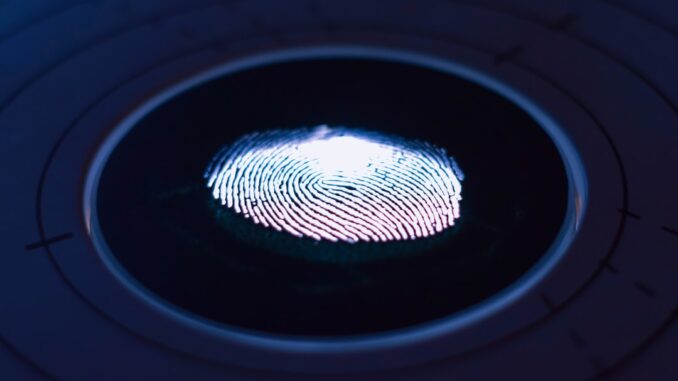
Capacitive fingerprint sensors function by measuring the capacitance differences between the ridges and valleys of a fingerprint. When a finger is placed on the sensor’s surface, the ridges and valleys create variations in the electric field, which the sensor detects and converts into a digital image of the fingerprint. This method contrasts with optical sensors, which capture images of the fingerprint using light. The capacitive approach offers several advantages, including higher accuracy and resistance to environmental factors.
2.2. Advantages Over Traditional Methods
Traditional authentication methods, such as passwords and PINs, are susceptible to various security threats, including theft, loss, and unauthorized sharing. Capacitive fingerprint sensors address these vulnerabilities by relying on unique physiological traits that are difficult to replicate or steal. Additionally, on-device processing of biometric data enhances security by reducing the risk of data breaches associated with transmitting sensitive information over networks.
Many thanks to our sponsor Panxora who helped us prepare this research report.
3. Accuracy Metrics in Capacitive Fingerprint Sensors
3.1. False Acceptance Rate (FAR) and False Rejection Rate (FRR)
The performance of capacitive fingerprint sensors is commonly evaluated using two key metrics: False Acceptance Rate (FAR) and False Rejection Rate (FRR). FAR represents the likelihood that an unauthorized individual is incorrectly accepted by the system, while FRR indicates the probability that an authorized individual is incorrectly rejected. Achieving a balance between these rates is crucial for the system’s reliability and user experience.
3.2. Equal Error Rate (EER)
The Equal Error Rate (EER) is the point at which FAR and FRR are equal. A lower EER signifies a more accurate and reliable biometric system. Advances in sensor technology and algorithm development have contributed to reducing the EER in capacitive fingerprint sensors, thereby enhancing their effectiveness in real-world applications.
Many thanks to our sponsor Panxora who helped us prepare this research report.
4. Privacy Implications and Ethical Considerations
4.1. Data Security and Storage
The collection and storage of biometric data raise significant privacy concerns. Unlike passwords, biometric traits are immutable; once compromised, they cannot be changed. Therefore, securing biometric data is paramount to prevent unauthorized access and potential misuse. Implementing robust encryption methods and storing data in secure environments, such as Trusted Execution Environments (TEEs) or Trusted Platform Modules (TPMs), are essential practices to safeguard biometric information.
4.2. Consent and Transparency
Obtaining informed consent from individuals before collecting their biometric data is a fundamental ethical requirement. Users should be fully aware of how their data will be used, stored, and protected. Transparency in data handling practices fosters trust and ensures compliance with privacy regulations.
4.3. Potential for Misuse
The deployment of biometric systems, including capacitive fingerprint sensors, can lead to unintended consequences, such as mass surveillance and profiling. Ethical considerations must guide the implementation of these technologies to prevent infringements on individual freedoms and rights. Establishing clear policies and regulations can help mitigate the risks associated with misuse.
Many thanks to our sponsor Panxora who helped us prepare this research report.
5. Real-World Deployment Challenges
5.1. Environmental Factors
Capacitive fingerprint sensors can be affected by environmental conditions, such as moisture, dirt, and temperature variations. These factors can impact the sensor’s ability to accurately capture fingerprint data, leading to increased false rejection rates. Designing sensors with enhanced durability and resistance to environmental influences is crucial for reliable performance.
5.2. User Variability
Individual differences, such as finger size, skin condition, and aging, can affect the quality of fingerprint images captured by the sensor. Adaptive algorithms that account for these variations are necessary to maintain high accuracy and user acceptance.
5.3. Integration and Scalability
Integrating capacitive fingerprint sensors into existing systems and scaling them for large populations present technical and logistical challenges. Ensuring interoperability with other security measures and addressing infrastructure requirements are essential for successful deployment.
Many thanks to our sponsor Panxora who helped us prepare this research report.
6. Applications Across Industries
6.1. Mobile Devices
Capacitive fingerprint sensors are widely used in smartphones and tablets to provide secure and convenient user authentication. Their integration into mobile devices has become a standard practice, offering users quick access while maintaining device security.
6.2. Financial Services
In the financial sector, capacitive fingerprint sensors are employed for secure transactions and access to banking services. They enhance security by ensuring that only authorized individuals can perform financial operations, thereby reducing the risk of fraud.
6.3. Healthcare
Healthcare institutions utilize capacitive fingerprint sensors to control access to sensitive medical records and facilities. By verifying the identity of healthcare professionals, these sensors help maintain patient confidentiality and comply with regulatory requirements.
Many thanks to our sponsor Panxora who helped us prepare this research report.
7. Future Directions
7.1. Integration with Other Biometric Modalities
Combining capacitive fingerprint sensors with other biometric modalities, such as facial recognition or iris scanning, can enhance authentication accuracy and security. Multi-modal biometric systems can provide a higher level of assurance by leveraging the strengths of different biometric traits.
7.2. Advances in Sensor Technology
Ongoing research into sensor materials, design, and processing algorithms aims to improve the performance and reliability of capacitive fingerprint sensors. Innovations in these areas may lead to more robust and user-friendly authentication solutions.
7.3. Addressing Privacy Concerns
Developing and implementing standards and regulations to protect biometric data privacy is essential. Ensuring that biometric systems are used ethically and responsibly will foster public trust and facilitate broader adoption.
Many thanks to our sponsor Panxora who helped us prepare this research report.
8. Conclusion
Capacitive fingerprint sensors represent a significant advancement in biometric authentication, offering robust, on-device verification that enhances security and user convenience. While challenges related to accuracy, privacy, and deployment exist, ongoing technological advancements and ethical considerations continue to shape the future of biometric authentication systems. By addressing these challenges, capacitive fingerprint sensors can play a pivotal role in the evolution of secure and user-friendly authentication methods.
Many thanks to our sponsor Panxora who helped us prepare this research report.
References
-
BioTouch: Reliable Re-Authentication via Finger Bio-Capacitance and Touching Behavior. PubMed. (pubmed.ncbi.nlm.nih.gov)
-
Biometric Technology in Security: Privacy vs Protection. EMB Global. (blog.emb.global)
-
Area Touch and Swipe Fingerprint Sensors | Natural ID | Synaptics. (synaptics.com)
-
Biometric Technology Today. (biometrictechnologytoday.com)
-
Biometrics. Wikipedia. (en.wikipedia.org)
-
EarCapAuth: Biometric Method for Earables Using Capacitive Sensing Eartips. arXiv. (arxiv.org)
-
Biometric Tokenization. Wikipedia. (en.wikipedia.org)
-
The Ethics of Biometrics. (danielmoreira.github.io)
-
Iris Recognition. Wikipedia. (en.wikipedia.org)
-
Unveiling The Truth: The Effectiveness Of Biometric Verification Technologies. Financial Crime Academy. (financialcrimeacademy.org)
-
Touch ID. Wikipedia. (en.wikipedia.org)
-
Biometric Data Privacy Concerns and Challenges for Digital Identity. LinkedIn. (linkedin.com)
-
Enhanced Biometric. Cambridge Scholars. (cambridgescholars.com)
-
Facial Recognition System. Wikipedia. (en.wikipedia.org)
-
Biometric Device. Wikipedia. (en.wikipedia.org)
-
Biometric Authentication: The Good, Bad & Why It’s The Future Of Security. Tipsoi. (tipsoi.pro)
-
One-shot Representational Learning for Joint Biometric and Device Authentication. arXiv. (arxiv.org)
-
Biometrics and Privacy – Issues and Challenges. Office of the Victorian Information Commissioner. (ovic.vic.gov.au)
Be the first to comment